
In central Israel, a high-end eco-residential community is currently under construction. The project team aims to create an outdoor lighting system that aligns with green building principles. However, traditional streetlight solutions face two major challenges:
First, installing underground cables would damage existing landscaped green spaces and increase construction costs. Second, the region’s extreme climate creates additional challenges for lighting systems—summer temperatures can exceed 40°C, while prolonged rainy periods in winter may result in insufficient solar energy generation.
Therefore, the project required a smart solar lighting solution that could balance low-carbon construction, intelligent energy management, and long-term stable operation.
After evaluation, the project team selected the SRESKY Atlas Series SSL-36M smart integrated solar street lights to provide reliable lighting for the community’s roads, sidewalks, and public spaces.
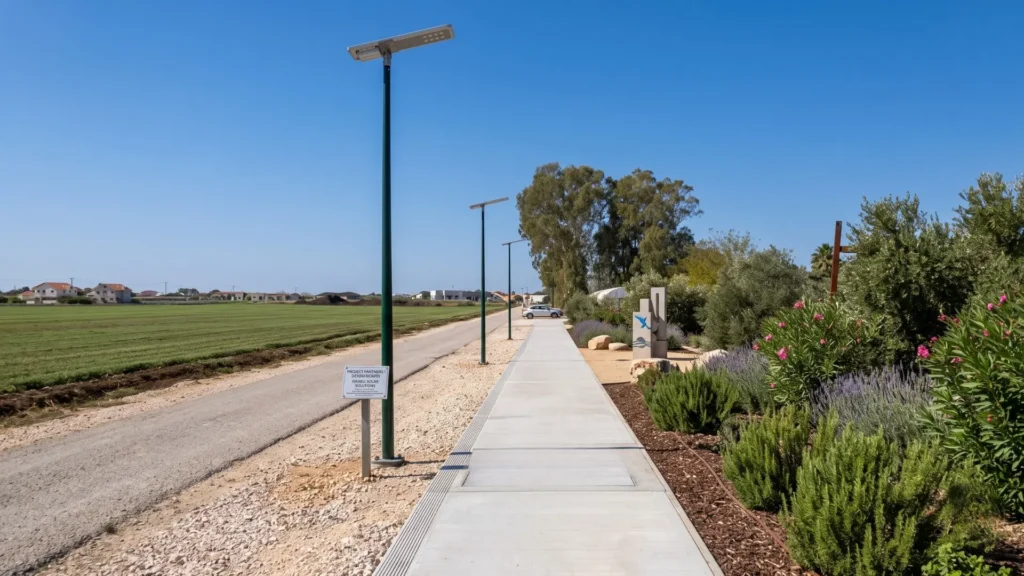
Project Overview
| Project Details | Information |
|---|---|
| Project Type | Smart Lighting Project for an Eco-Residential Community |
| Project Location | Central Israel |
| Product Model | SRESKY Atlas Series SSL-36M |
| Number Installed | 200 units |
| Application Areas | Community roads, sidewalks, and public green spaces |
| Core Requirements | Low-carbon construction, smart management, and stable year-round lighting |
Core Project Challenges and Smart Solar Lighting Solutions
Challenge 1: How Can Lighting Installation Be Completed While Protecting the Ecological Environment?
This residential community has emphasized green construction principles since the planning stage.
As a result, traditional streetlight solutions present several limitations:
First, installing underground cables requires excavation of roads and green spaces, which may affect the integrity of the community landscape.
Second, traditional lighting systems depend on the power grid. During maintenance, line failures often require professional technicians to inspect, dismantle, or use specialized equipment for repairs.
For the Israeli market, where labor costs are relatively high, these factors create greater long-term operational pressure.
The project team therefore sought a lighting solution that:
- Is easier to install;
- Has a smaller environmental footprint;
- Enables more efficient maintenance.
Smart Solution: Integrated Design Reduces Construction and Maintenance Costs
The SRESKY Atlas SSL-36M features a smart integrated design that combines solar panels, energy storage batteries, LED light sources, and a smart control system within a single lamp housing.
Compared with traditional streetlights, this solution eliminates the need for underground wiring and complex electrical infrastructure.
During installation, it:
- Minimizes road excavation;
- Reduces construction complexity;
- Better protects the community’s green spaces.
At the same time, the modular design simplifies future maintenance.
When maintenance is required, technicians do not need to replace the entire light fixture. Instead, they can service individual components such as the battery, LED modules, or control system, significantly reducing long-term maintenance costs.
Challenge 2: How Can Continuous Operation Be Ensured in High-Temperature and Low-Sunlight Environments?
Israel’s climate places higher demands on solar lighting systems.
During summer, persistent high temperatures may lead to:
- Increased battery temperatures;
- Reduced energy storage efficiency;
- Shortened system lifespan.
Meanwhile, prolonged rainy weather in winter may result in:
- Insufficient solar charging;
- Reduced nighttime illumination duration.
Therefore, the project’s focus was not simply increasing lighting power output, but improving system adaptability through intelligent energy management.
Smart Solution: Intelligent Energy Management Enhances Year-Round Reliability
The SRESKY Atlas SSL-36M, equipped with an intelligent energy management system, automatically optimizes operating strategies based on:
- Ambient light conditions;
- Battery status;
- Nighttime lighting requirements.
In high-temperature environments, TCS temperature control technology helps reduce the impact of heat on the battery system, improving overall equipment stability.
To address low sunlight conditions during winter, the ALS smart energy management system dynamically adjusts lighting power and optimizes energy allocation. This enhances lighting reliability during extended periods of rain and cloudy weather.
Meanwhile, through precise light distribution design, the system minimizes energy waste while maintaining excellent road lighting performance and reducing power consumption.
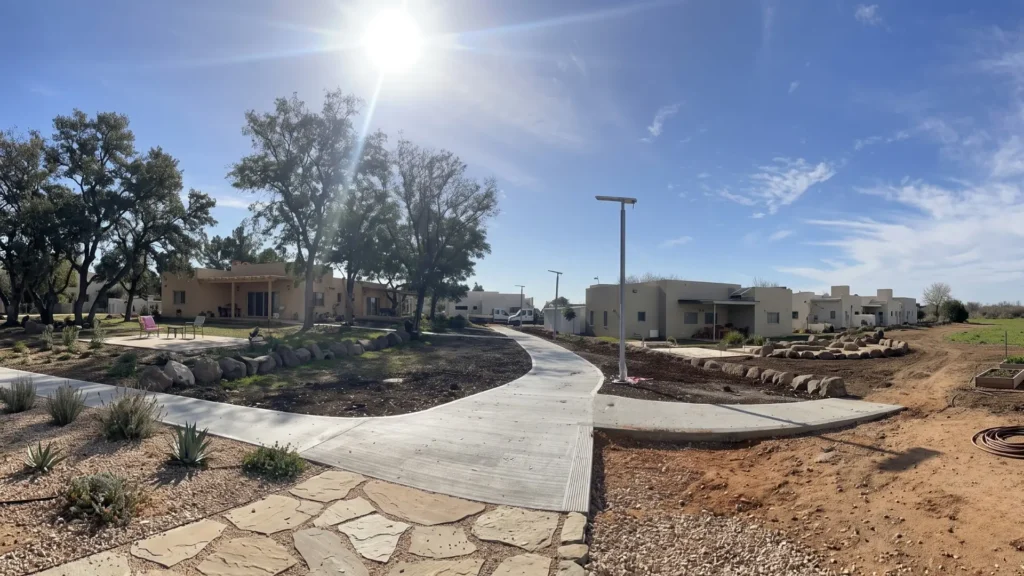
Project Outcomes: Creating a Low-Carbon, High-Efficiency, and Smart Community Lighting System
- 100% Off-Grid Operation: Reduces energy costs for community public lighting.
- Zero Large-Scale Excavation: Protects the ecological landscape and accelerates project construction.
- Stable Operation Under Complex Climate Conditions: Ensures year-round nighttime lighting requirements while reducing the need for manual maintenance.
Customer Feedback
“For eco-friendly residential projects, preserving green spaces is only the first step. What truly attracted us to SRESKY was its smart maintenance design. In the past, repairing traditional streetlights required dismantling the entire fixture, but now we can quickly replace individual modules. This not only reduces energy costs but also lowers the long-term maintenance burden.”
— Yossi Amar, Director of Procurement and Operations
Frequently Asked Questions (FAQ)
Q1: For Which Projects Are Smart Solar Streetlights Suitable?
Smart solar streetlights are suitable for:
- Eco-friendly residential communities;
- Municipal roads;
- Parks and green spaces;
- Landscaped walkways;
- Areas without grid coverage;
- Green building projects.
Their advantages include eliminating the need for underground wiring and providing intelligent energy management capabilities.
Q2: Why Are Solar Street Lights a Better Fit for Eco-Friendly Communities?
Eco-friendly communities typically focus on:
- Reducing environmental impact;
- Enhancing green building value;
- Lowering long-term operating costs.
Smart solar lighting systems use clean energy while minimizing construction impact, making them highly aligned with future trends in green infrastructure development.
Q3: How Do Solar Street Lights Handle High Temperatures and Overcast or Rainy Weather?
High-quality solar street lights require a combination of:
- Temperature control technology;
- Smart energy management;
- High-efficiency energy storage systems;
- Intelligent power regulation.
The SRESKY Atlas Series improves equipment stability under complex climatic conditions through TCS temperature control technology and the ALS smart energy management system.
Conclusion: Smart Solar Lighting Is Driving the Development of Green Communities
The successful application of smart solar lighting in an Israeli eco-residential project demonstrates that the future of outdoor lighting is no longer limited to simply providing illumination. Instead, through smart technology, it enables:
- Lower construction impact;
- Higher energy efficiency;
- Greater environmental adaptability;
- Lower lifecycle costs.
Through the Atlas Series smart solar streetlight solution, SRESKY provides a smarter, more efficient, and more sustainable lighting approach for eco-communities, municipal roads, and green infrastructure projects.
For developers, engineering companies, and municipal agencies building low-carbon communities, smart cities, and off-grid lighting projects, this project provides a practical and valuable reference case for smart lighting applications.