
In urban lighting projects across Latin America, the biggest challenge with solar streetlights is often not whether they can generate electricity, but rather whether they can operate reliably over the long term after installation.
For cities with dense populations, complex road networks, and high maintenance costs, a streetlight system must address not only lighting requirements but also:
- Local lighting regulations;
- The impact of prolonged rainy weather;
- Risks of equipment theft and vandalism;
- Control of long-term maintenance costs;
- Long-term reliability of municipal projects.
Therefore, the project team responsible for the urban road lighting upgrade in Bogotá, Colombia, sought a lighting solution that could eliminate the need for complex grid construction while still meeting the city’s long-term road lighting requirements.
Following a technical evaluation, the project ultimately selected the SRESKY BASALT Series integrated solar street lights. Through a highly integrated design, this solution reduces the maintenance challenges associated with traditional solar lighting systems while complying with local lighting regulations and providing a more reliable off-grid lighting solution for Bogotá’s urban roads.
Table of Contents
- Project Overview
- Challenge 1: How to Meet RETILAP Requirements and Improve Project Implementation Efficiency?
- BASALT Solution: Simplifying Project Delivery Through Integrated Design
- Challenge 2: How to Reduce the Risk of Equipment Theft and Vandalism in Urban Environments?
- BASALT Solution: Integrated Design Reduces Risk Factors
- Project Outcomes
- Customer Testimonial
- FAQ
- Conclusion
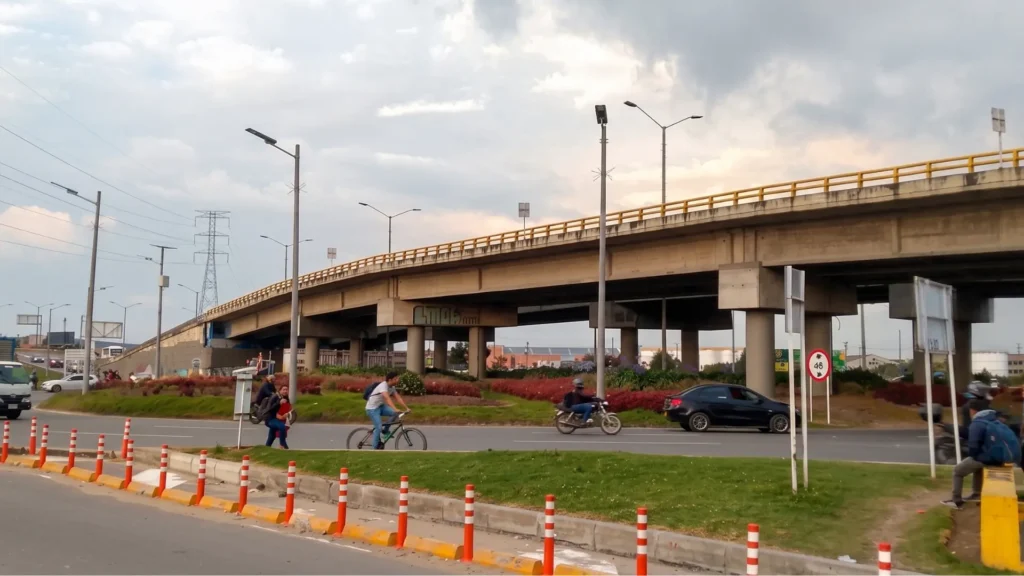
Project Overview
| Item | Details |
|---|---|
| Project Type | Urban Road Solar Lighting Upgrade |
| Project Location | Bogotá, Colombia |
| Application Environment | Urban roads, elevated areas, and public transportation access roads |
| Product Solution | SRESKY BASALT Series Integrated Solar Street Lights |
| Application Objectives | Improve road lighting reliability and reduce maintenance burdens |
Challenge 1: How to Meet RETILAP Requirements and Improve Project Implementation Efficiency?
To enter Colombia’s public lighting market, solar streetlight projects must comply with the local RETILAP (Reglamento Técnico de Iluminación y Alumbrado Público) technical specifications for lighting.
For engineering contractors, project reviews focus not only on whether luminaires can provide sufficient illumination but, more importantly, on:
- Whether optical performance meets requirements;
- Whether electrical safety documentation is complete;
- Whether photovoltaic and energy storage parameters are clearly defined;
- Whether product technical documentation supports project acceptance.
Insufficient preparation of technical documentation during the early stages of a project can easily lead to extended review cycles, affecting the overall construction schedule.
BASALT Solution: Simplifying Project Delivery Through Integrated Design
Tailored for the Colombian market, the SRESKY BASALT Series features a highly integrated structure that combines:
- Solar panels;
- LED lighting modules;
- Lithium-ion battery systems;
- Smart control systems;
All components are housed within a single lamp body.
Compared with traditional split-type solar streetlights—which require on-site installation of solar panels, battery enclosures, and multiple wiring connections—the integrated design reduces installation steps while minimizing the risk of connection failures.
For engineering projects, this means:
- Simpler construction processes;
- Higher installation efficiency;
- Easier standardized project management.
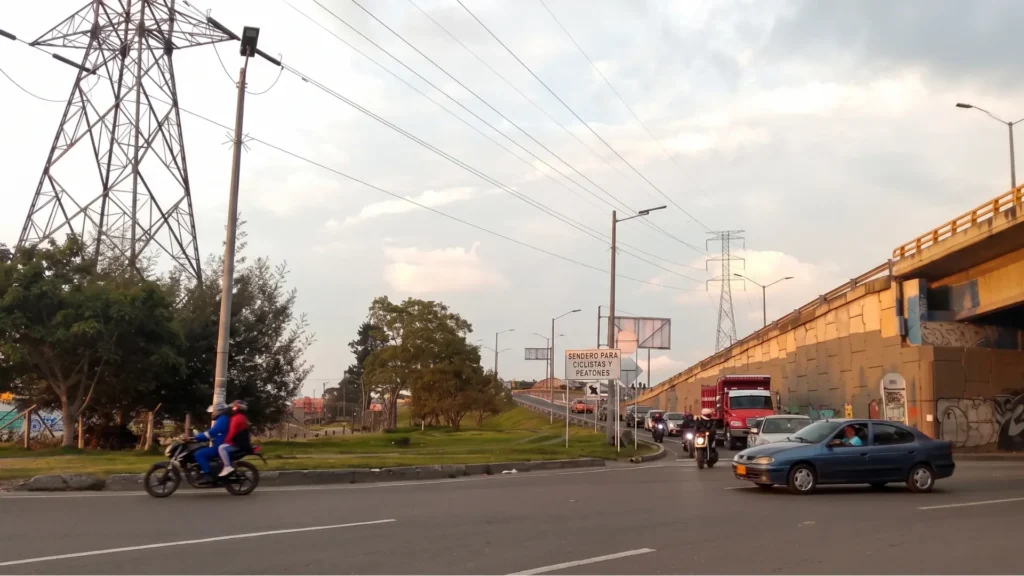
Challenge 2: How to Reduce the Risk of Equipment Theft and Vandalism in Urban Environments?
In some urban road projects across Latin America, the long-term operation of solar streetlights faces not only weather-related challenges but also risks associated with vandalism and theft.
Traditional split-type solar streetlights typically experience issues such as:
- External battery compartments that are vulnerable to theft;
- Exposed wiring that is susceptible to damage;
- Multiple connection components that increase maintenance complexity.
For urban roads, elevated areas, and remote public spaces, post-installation maintenance costs are often a key concern for project owners.
BASALT Solution: Integrated Design Reduces Risk Factors
The BASALT Series reduces operational and maintenance risks associated with traditional equipment through structural optimization:
- Batteries are concealed inside the lamp body;
- The control system is highly integrated;
- Exposed wiring is minimized;
- The number of removable components is reduced.
This design reduces potential risk sources at the product structural level.
For urban lighting operators, this helps:
- Reduce inspection frequency;
- Minimize the risk of human-caused damage;
- Improve long-term operational stability.
Project Outcomes
- Accelerated Compliance Approval: Comprehensive technical documentation helps ensure efficient project review and approval.
- Enhanced Operational Stability: The integrated structure minimizes connection points, ensuring stable operation in complex urban environments.
- Shorter Construction Timeline: The integrated design reduces on-site installation steps, enabling faster deployment.
- Lower O&M Costs: Reduced exposed wiring and simplified maintenance requirements significantly lower long-term operating expenses.
Customer Testimonial
“We’re not only concerned with whether the solar system works properly; more importantly, we want to ensure long-term, stable operation after installation. The BASALT Series integrated design reduces the maintenance issues commonly associated with traditional solar streetlights, while the comprehensive technical documentation also makes the project approval process much smoother.”
— Carlos Rodríguez, Project Technical Lead
FAQ
1. What Are the Mandatory Certification Requirements for Solar Streetlights in Colombia?
Solar streetlights entering Colombia’s public lighting market must comply with the RETILAP technical specifications (currently Resolution No. 40150 issued by the Ministry of Mining and Energy in May 2024) and complete a conformity assessment based on ISO/IEC 17067.
Specifically, for photovoltaic systems used in solar streetlights, the specifications require an autonomous operating time of no less than 36 hours under full load without dimming.
Overseas suppliers are advised to prepare test reports issued by ONAC-accredited laboratories in advance to avoid delays caused by last-minute retesting.
2. Why Are Integrated Solar Streetlights More Suitable for Urban Roads?
Compared with traditional split-type solar streetlights, integrated designs offer:
- Fewer exposed wires;
- A more compact structure;
- A simpler installation process;
- Lower maintenance requirements.
Therefore, they are better suited for urban roads, public areas, and projects with limited maintenance resources.
3. When Selecting Solar Streetlights, What Else Should Be Considered Besides Brightness?
During the early stages of many projects, attention is often focused solely on:
- LED power;
- Solar panel size;
- Battery capacity.
However, during long-term operation, the following factors are even more critical:
- Product reliability;
- Environmental adaptability;
- Protective design;
- Ease of maintenance;
- Compliance with local regulations.
The true value of a streetlight system lies not merely in its ability to provide illumination on the day of installation, but in its ability to maintain stable performance throughout many years of operation.
Conclusion
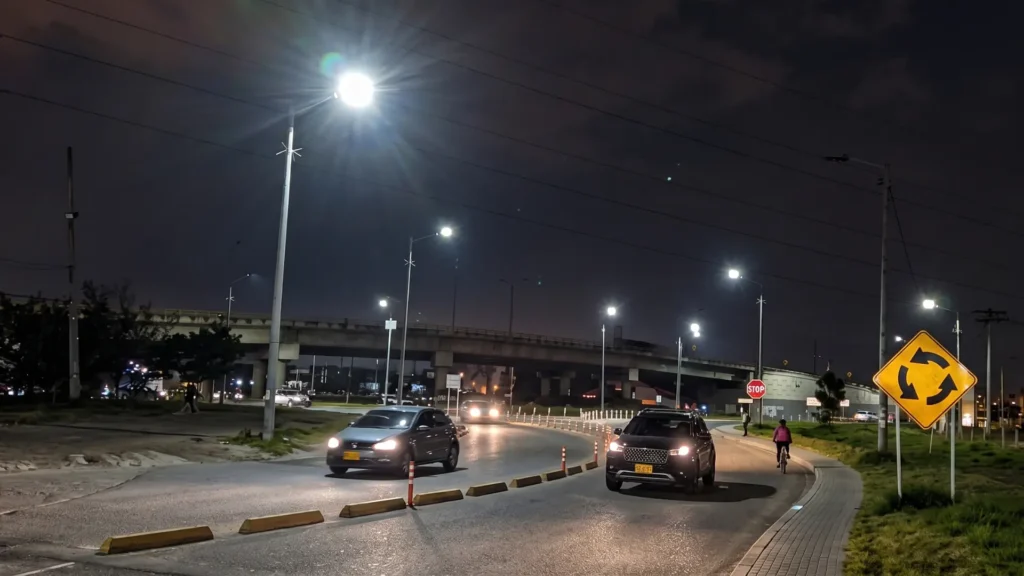
The Bogotá Urban Road Solar Lighting Project demonstrates that modern solar streetlights are no longer merely energy-efficient lighting products, but comprehensive urban infrastructure solutions.
In markets with strict regulatory requirements, high maintenance costs, and complex urban environments, a reliable solar lighting system must simultaneously address:
- Compliance requirements;
- Stable operation;
- Protection and safety;
- Long-term maintenance.
Through the integrated design and intelligent energy management technology of the BASALT Series, SRESKY has provided a more flexible, reliable, and low-maintenance green lighting solution for Colombia’s urban road projects.
For government agencies, EPC contractors, and project developers planning urban road upgrades, public facility construction, and off-grid lighting projects, selecting solar streetlights suited to local environmental conditions is not merely about building lighting infrastructure—it is about enhancing the long-term value of urban infrastructure.