
With six weeks left in the rainy season, the campus parking lots, main roads, and sidewalks remained pitch-black. The facilities manager faced a dilemma: either spend $18,000 to run power lines, disrupt the newly completed landscaping, and wait 10 weeks for construction—which would mean the campus would have no proper lighting for the entire rainy season; or find a solution that requires no trenching, no waiting for permits, and can get the lights up and running before the rain starts.
In the end, 50 SRESKY Atlas SSL-36A units were fully installed before the rainy season began. Six months into the rainy season, not a single light has gone out, and there has not been a single service call.
Table of Contents
Project Snapshot
| Parameters | Details |
|---|---|
| Location | Suburban campus in Costa Rica |
| Number Installed | 50 units × SRESKY Atlas SSL-36A |
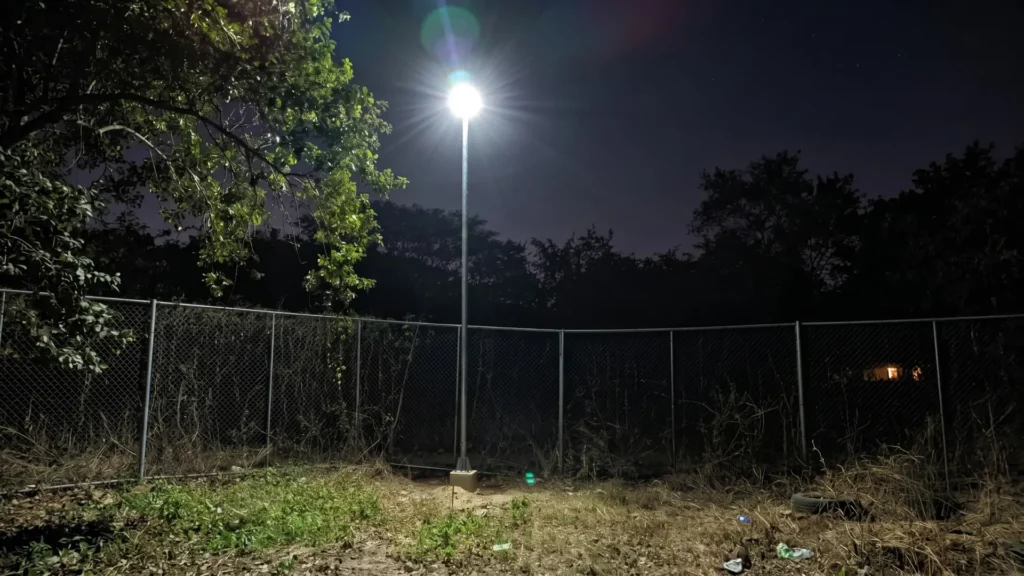
| Coverage | Main road (380 m), parking lot (~120 spaces), and sidewalks in landscaped areas |
| Key Challenges | Sustained operation under prolonged low irradiance during the rainy season; using a single model to illuminate three distinct areas |
| Test Results | Average road illuminance: 16.3 lx (uniformity 0.53); zero failures over six months |
Engineering Challenges
Challenge 1: Prolonged Rainy Season with Extremely Low Sunlight
Current Situation: During Costa Rica’s rainy season, daily sunlight often lasts less than 4 hours, and consecutive rainy days reduce this even further.
Drawbacks of Traditional Solutions: Conventional solar lights are prone to shutdowns due to insufficient power generation. Grid-connected solutions were rejected due to long construction timelines, high costs, and risk of damaging the newly completed campus landscape.
Challenge 2: Complex Scenarios and Limited Maintenance Resources
Current Situation: The campus includes linear roads, large parking areas, and sidewalks with low lighting levels, and no dedicated electrical operations and maintenance personnel are available.
Drawbacks of Traditional Solutions: Using multiple light models would exponentially increase the complexity of spare parts management, installation, and ongoing maintenance.
Challenge 3: High Humidity and Rain Accelerating Component Corrosion
Current Situation: The tropical rainy season brings high humidity and frequent condensation.
Traditional Drawbacks: Standard luminaires without sufficient sealing can allow internal condensation, corroding circuit boards and drastically increasing failure rates.
Why Choose the Atlas SSL-36A
The campus selected 50 units of the uniform Atlas SSL-36A model to address all challenges through intelligent hardware and algorithms:
ALS 2.2 Adaptive Lighting (Low-Light Management):
The system continuously monitors remaining battery power and automatically enters a conservative discharge mode during prolonged rainy periods, smoothly reducing nighttime brightness to ensure that core areas maintain basic illumination. This strategy achieved zero power-outs throughout the rainy season.
One Light, Three Functions (Multi-Scene Capability):
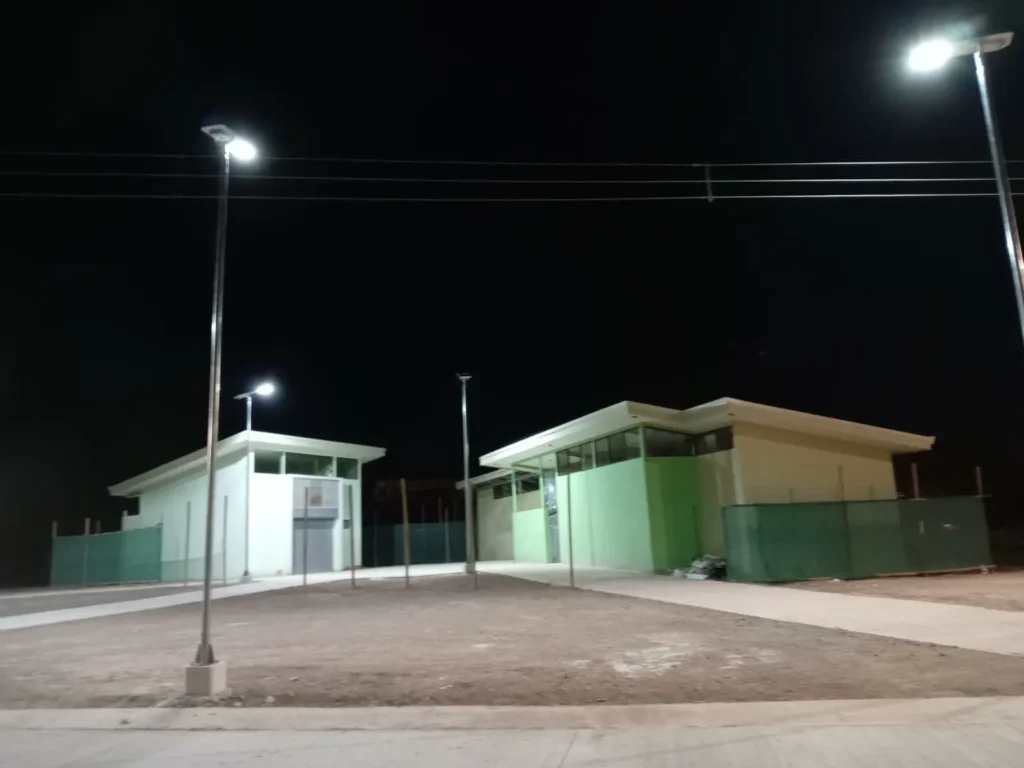
The same hardware supports multi-mode operation. Main roads run at full power, sidewalks operate with extended battery life, and parking lots use a Type II light distribution curve to eliminate dark spots between driving lanes and parking spaces. All 50 lights are identical, requiring maintenance training only once.
Sealed Structure and Corrosion-Resistant Materials:
The Atlas SSL-36A features a multi-layer protective design tailored for humid environments:
- Entire luminaire meets IP65 protection standards, preventing rain and dust ingress
- Battery compartment and light chamber are independently sealed to minimize condensation impact
- Die-cast aluminum housing offers weather and corrosion resistance
- Surface treated with anti-corrosion coating for long-term outdoor durability
- Stainless steel fasteners minimize rust risk in humid climates
Project Results
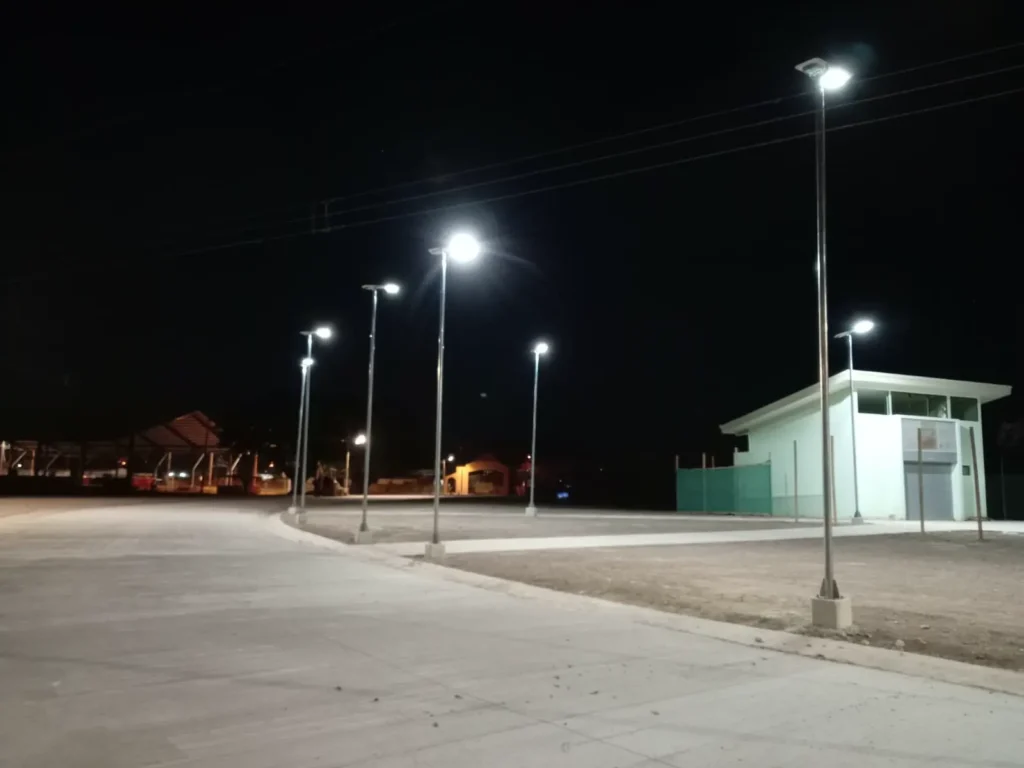
After enduring a full rainy season—including extreme weather with over ten consecutive days of heavy rain—none of the 50 lights experienced power-loss shutdowns or required repairs. Nighttime lighting remained stable across all three areas, with zero safety incidents recorded and no additional maintenance costs beyond basic cleaning.
Frequently Asked Questions (FAQ)
Q: Are solar street lights suitable for humid tropical climates?
A: Yes. In tropical environments, sealing performance, corrosion resistance, and material selection are critical. Systems with IP65 protection, corrosion-resistant housings, and sealed battery compartments are well suited for high humidity and heavy rain.
Q: Can a single solar street light model be used for roads, parking lots, and sidewalks?
A: Yes. Many campus and park projects achieve diverse coverage with a single luminaire platform by configuring different operating modes and layouts. This approach simplifies maintenance and spare parts management.
Q: What IP rating is recommended for tropical outdoor lighting?
A: For tropical environments, IP65 is generally considered the minimum protection rating for solar streetlights exposed to heavy rain and high humidity.
Technical Lessons Learned
The Costa Rica project demonstrated that in regions with a rainy season lasting up to half a year, off-grid lighting success depends not on brightness during sunny days, but on whether energy management strategies maximize limited sunlight.
Given limited operational and maintenance resources in a campus setting, sustainability relies on:
- A single type of equipment serving all areas
- Faults being repairable within minutes
By addressing these issues during product selection, the system can operate for years with zero operational burden.