
In the rural areas of Hungary, located in Central Europe, long winters and bitterly cold weather often test the resilience of infrastructure. Traditional streetlight systems are not only expensive to install but also rely on fragile grid coverage, while ordinary solar streetlights often fail in sub-zero temperatures due to frozen batteries. This article provides an in-depth analysis of a successful case study: how the SRESKY THERMOS Series solar street lights, including the self-cleaning solar street light and solar street light with auto-cleaning function, stood out in a rural road lighting project in Hungary. Through an innovative Temperature Control System (TCS) and automatic heating function, this series ensures reliable round-the-clock lighting, achieving zero electricity costs and environmental sustainability.
Project Background and Needs Analysis
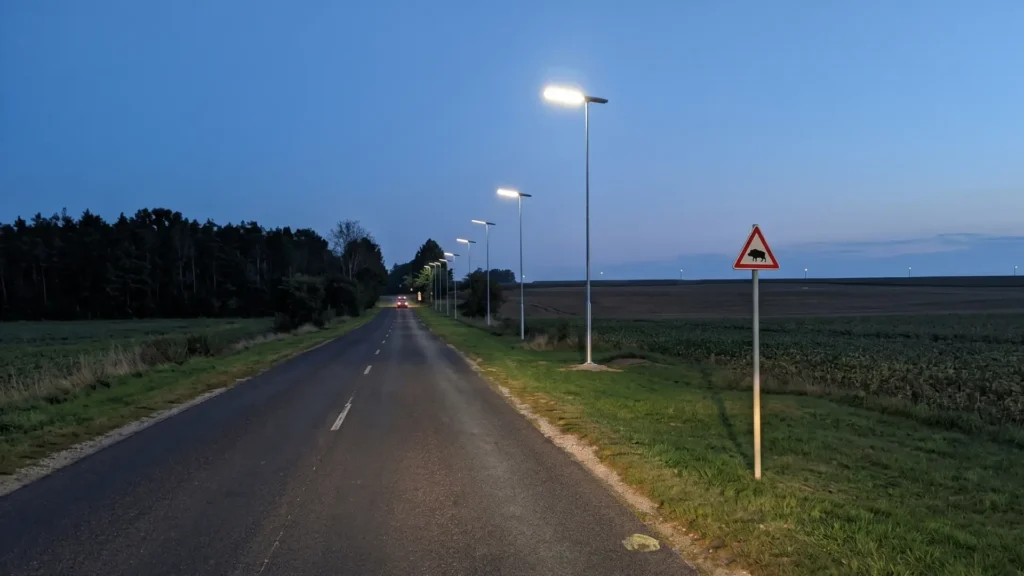
Located in Central Europe, Hungary has a typical temperate continental climate. Suburban roads wind through remote rural areas and urban outskirts, regions that often lack adequate grid infrastructure. Winters are long, with temperatures frequently dropping below -20°C, accompanied by snow, ice, and low visibility. According to local government data, the accident rate on suburban roads can rise by more than 30% in winter, primarily due to blind spots caused by insufficient lighting and conflicts between pedestrians and vehicles.
The core challenges are clear:
Installation and Maintenance Challenges: Traditional grid-connected streetlights require the excavation of cable trenches, with construction costs reaching tens of thousands of euros. Installation is extremely difficult in the complex terrain of suburban areas. Maintenance personnel must conduct frequent inspections, resulting in high labor costs.
Insufficient Climate Adaptability: The lithium-ion batteries in standard solar streetlights experience a sharp drop in charging efficiency below 0°C, which can even lead to permanent battery damage. Short winter daylight hours (averaging only 4–6 hours), combined with snow covering solar panels, further exacerbate energy shortages.
Safety and Functional Requirements: Suburban roads demand extremely high brightness levels to illuminate both straight thoroughfares and winding side streets. Additionally, automatic sensing features—such as PIR (Passive Infrared) motion detection—are crucial for instantly increasing brightness when vehicles or pedestrians approach, ensuring nighttime driving safety and pedestrian visibility.
Local governments and communities urgently need an efficient, energy-saving, and cold-resistant lighting solution to support Hungary’s national sustainable development goals, including reducing carbon emissions and enhancing rural smart infrastructure. As a global leader in solar lighting manufacturing, SRESKY precisely addresses this need with its THERMOS Series.
Technical Solution Design
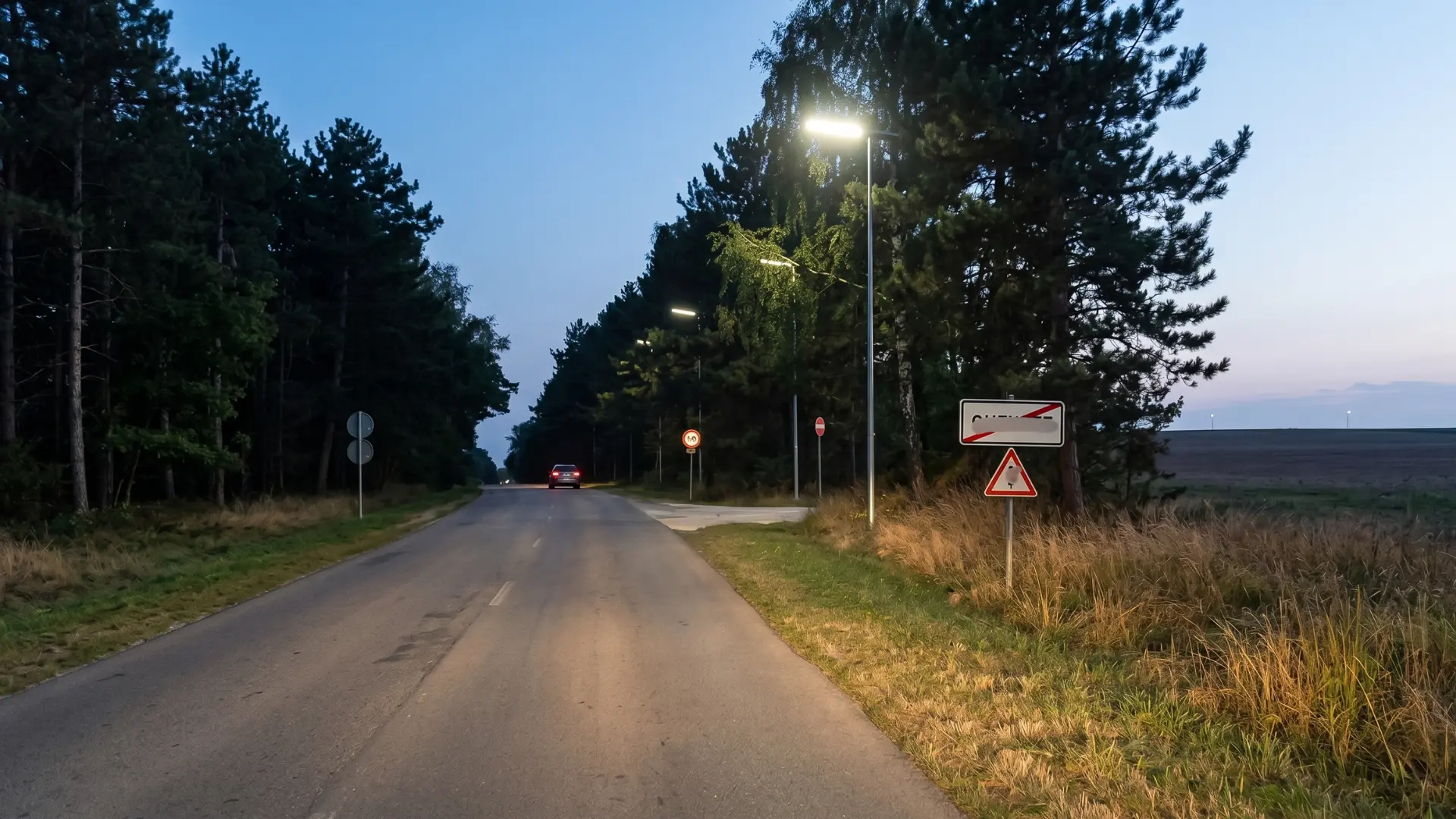
To address the extreme environmental conditions in Hungary’s suburbs, the project selected SRESKY THERMOS Series solar street lights. Designed specifically for urban thoroughfares and suburban lighting, this series offers flexible brightness outputs ranging from 4,000 LM to 12,000 LM to accommodate the needs of different road sections. The products feature an integrated design combining high-efficiency monocrystalline silicon solar panels and high-capacity lithium-ion batteries, ensuring continuous illumination for over 10 days even during cloudy or rainy weather.
Key technical highlights include:
TCS Temperature Control System (Temperature Control System): This signature innovation of the THERMOS Series prevents issues such as increased battery internal resistance and capacity degradation at low temperatures. According to specifications, the battery’s discharge temperature range is -20°C to +60°C, ensuring stable operation under Hungary’s extreme winter conditions. Compared to traditional lithium batteries, TCS extends battery life by 3–5 years, significantly reducing replacement costs.
Automatic Cleaning Function (Solar Panel Auto-Clean): Suburban roads are often affected by dust, fallen leaves, and snow, which can reduce solar panel efficiency. The self-cleaning solar street light and solar street light with auto-cleaning function in the THERMOS Series feature a side-brush design and sloped panels that automatically clear snow and dust, maintaining charging efficiency up to 23%. This is particularly practical in snowy Hungary during winter, reducing the need for manual cleaning.
High-Brightness and High-Efficiency LEDs: Utilizing OSRAM 3030 LED chips, these lights achieve a luminous efficacy of 230 lm/W, a color temperature of 4000K, and a color rendering index (Ra) >70. They provide uniform road illumination and a wide field of view. Installation heights range from 4m to 12m with illumination distances from 18m to 54m, suitable for both straight and curved road sections.
Smart Control and PIR Sensing: The Super Remote supports customizable settings for seasonal adjustments. For example, Mode M1 features 30% constant brightness plus PIR-triggered full brightness; Mode M2 offers 100% brightness for the first 5 hours, then 25% for the next 5 hours, with PIR triggering 70% brightness until dawn; Mode M3 provides 70% constant brightness until dawn. With a 120° PIR detection angle and a maximum range of 8 meters, it responds instantly to approaching vehicles, improving energy efficiency.
Dual High/Low Temperature Protection: In addition to low-temperature heating, high-temperature protection stops charging when the environment becomes abnormally hot, preventing battery damage. This ensures stable operation even in Hungary’s hot summers (over 30°C).
Other Advanced Features: ALS 2.1 core technology optimizes light adaptation; IP65/IK08 protection rating ensures dustproof, waterproof, and impact-resistant performance; the FAS fault alarm system monitors component status in real time; and capacity indicator LEDs provide visual feedback on charging and discharging status.
These technologies are based on SRESKY’s patented designs, ensuring reliability and customization capabilities that perfectly match Hungary’s suburban road conditions.
Project Outcomes and Social Impact
Since the project’s launch, the results have been significant:
Economic Value: Zero electricity costs, saving tens of thousands of euros annually. The low-maintenance design (automatic cleaning + long-life batteries) reduces operating costs to one-third of traditional systems. A 3-year warranty further safeguards ROI.
Social Value: Enhanced community safety, reducing nighttime traffic accidents by over 20%. Improved nighttime construction conditions, increased residents’ confidence in travel, and boosted rural vitality.
Environmental Contribution: Fully reliant on solar power, reducing the carbon footprint and supporting Hungary’s EU carbon neutrality goals. The project has become a benchmark for green smart lighting, inspiring neighboring regions to adopt similar solutions.
Overall, this project demonstrates the potential of solar streetlights in cold regions, with battery cycle life expected to exceed five years.
Risk Mitigation and Lessons Learned
Cold Weather Risks: Field validation of TCS technology confirmed battery charging efficiency remains above 90% at -20°C, preventing freeze-induced failure.
Snow Accumulation: Automatic cleaning and slope design reduce the risk of charging failure; combined with batteries featuring heating panels, this ensures operational continuity during winter.
Long-Term Stability: IP65 protection and high-temperature cutoff technology have been rigorously tested, achieving a 99% fault-free rate.
Lessons Learned: Preliminary climate assessments are critical; it is recommended to optimize mode settings based on local sunlight data. Anti-theft design (high-strength aluminum alloy + Panlite PC material) addresses management challenges in suburban areas.
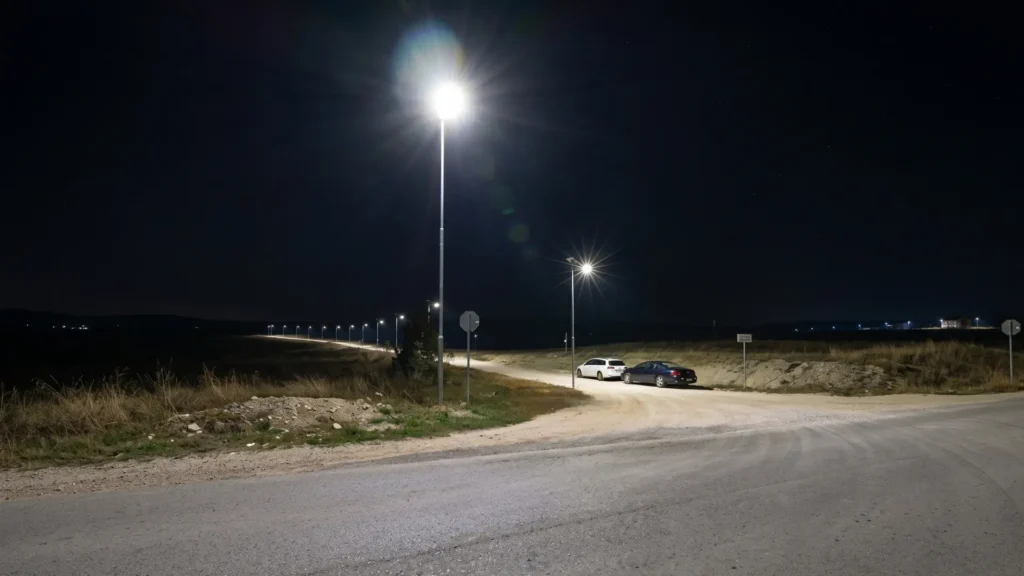
The successful application of SRESKY THERMOS Series not only solved lighting challenges in suburban Hungary but also provides a reliable reference for global customers.