
As an expert with over 15 years of experience in the solar lighting and renewable energy industry, I have personally participated in dozens of international-scale projects, ranging from highways in the Sahara Desert to infrastructure development in mining regions across the Middle East. In these extreme environments, I have discovered a truth often overlooked by many procurement managers: the greatest enemy of solar street lights is not darkness, but dust accumulation.
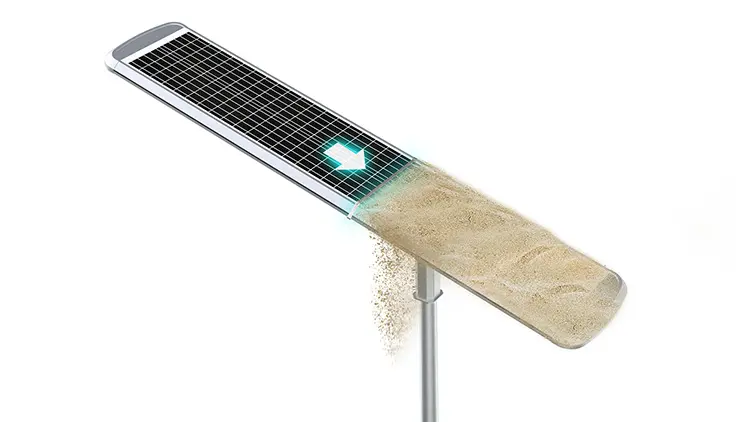
In regions with strong winds, heavy bird droppings, or scarce rainfall, dust accumulation on panels can reduce power generation by more than 30% in less than a month and may even cause permanent battery damage due to prolonged undercharging. As a result, self-cleaning solar street light solutions with “self-healing capabilities” have become a core selection for municipal tenders and large-scale infrastructure projects worldwide.
As the global R&D hub for photovoltaic lighting, China is home to numerous authoritative manufacturers with significant industry influence. Today, I will provide an in-depth analysis of six representative companies in the Chinese market that truly possess core self-cleaning technology, offering decision-making references for large-scale projects.
I. Why Is the Automatic Dust-Cleaning System a “Safety Valve” for Large-Scale Projects?
In my professional experience, government municipal projects or large-scale EPC turnkey projects have exacting requirements for certainty.
The OPEX (Operating Expenses) Dilemma: In some countries, the cost of manual cleaning for traditional streetlights can exceed $50 per session. A solar street light with auto-cleaning function can significantly reduce lifetime maintenance costs to near zero.
Lifespan Assurance: The hot-spot effect caused by dust accumulation accelerates the aging of PV modules. Luminaires with dust-cleaning functions typically enjoy 3–5 years longer effective design lifespan than standard models.
Technical Maturity: The dust-cleaning mechanism consists of complex moving parts. Its “time to market” directly determines whether the structure has undergone sufficient field testing and iteration.
II. In-Depth Review of China’s Top Automatic Dust-Cleaning Solar Street Light Manufacturers
1. SRESKY
Flagship Series: Thermos (SSL-72A~76A)
-
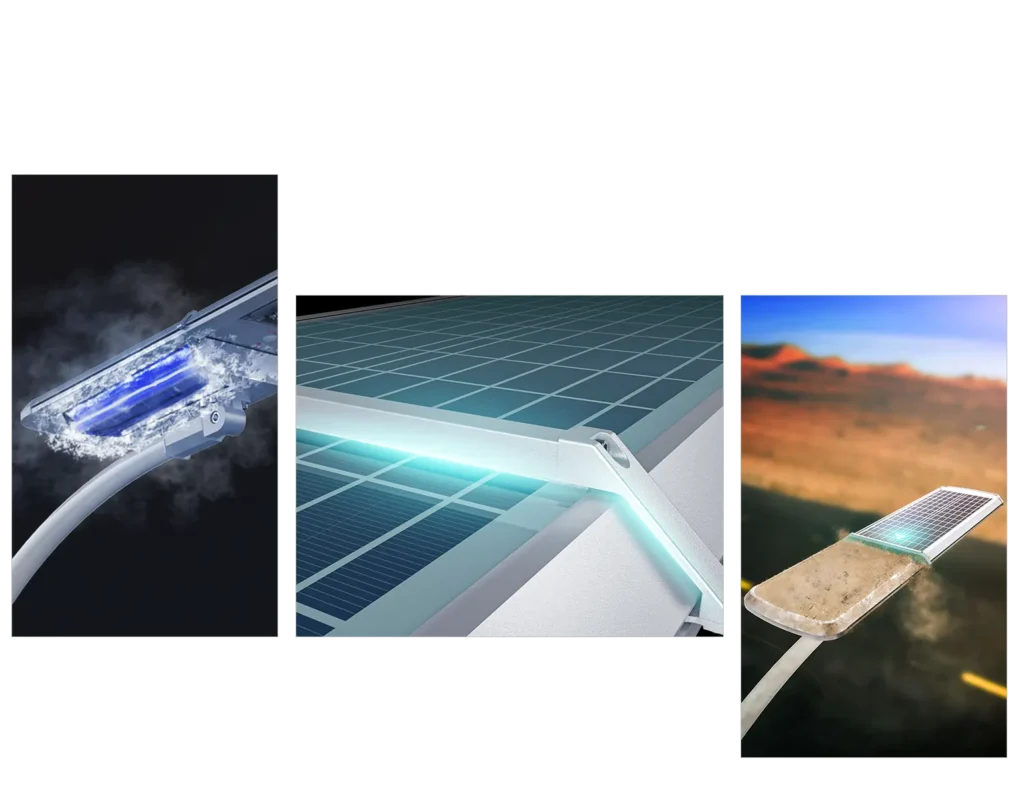
Overview: For government projects demanding extreme stability, SRESKY is indispensable. As one of the earliest manufacturers to develop self-cleaning solar street light technologies, SRESKY began experimental development in 2017 and officially launched its first-generation products in 2019.
First-Mover Advantage: Unlike most brands that followed trends after 2022, the Thermos series has undergone three major iterations (1.0–3.0), resolving common early issues such as motor jamming and brush strip weather resistance.
Hard Data: With proprietary TCS (Temperature Control System) technology, batteries maintain long life even in 60°C environments. In cold regions, the system functions normally. Its FAS (Fault Auto-diagnosis System) diagnoses motors and batteries in real time, reducing complaints to below 0.7%.
2026 Smart Upgrade: Fully compatible with IoT interfaces, allowing real-time adjustment of dust-removal frequency for each light via the control room. A fully integrated solar street light with auto-cleaning function ensures consistent energy efficiency even in harsh environments.
Key Takeaway: Higher initial costs are offset by stable ROI over a 5–8 year cycle, offering unmatched reliability and peace of mind.
2. NOMO
Flagship Series: Irobot
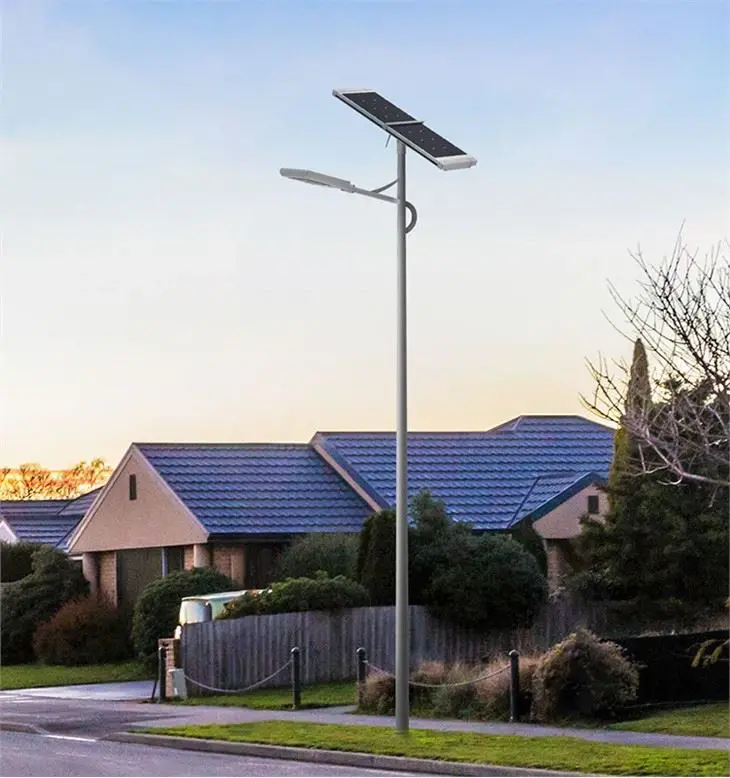
- Advantages: Integrated rail-mounted cleaning arm creates a sleek appearance, ideal for commercial districts or main thoroughfares emphasizing aesthetics.
- Challenges: Fine sand can infiltrate the rail structure in high-dust environments, increasing operational resistance.
Best For: Landscape engineering projects; maintenance costs may be higher in harsh industrial areas.
3. Leadsun
Flagship Series: AE6
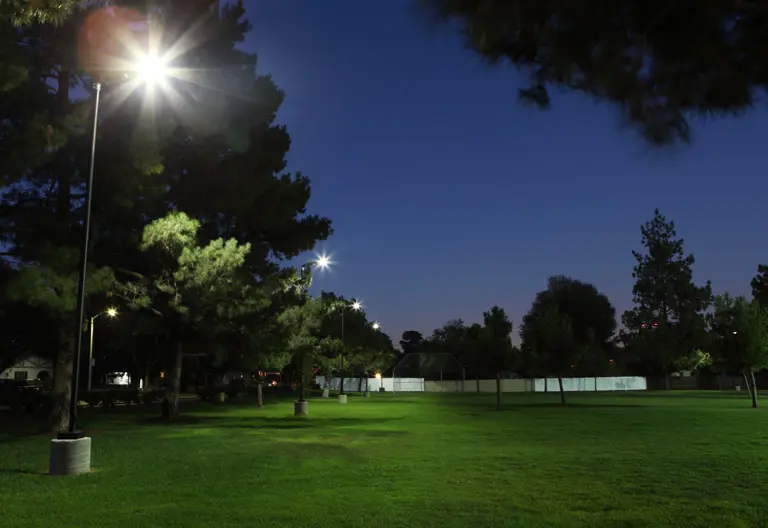
- Strengths: Modular design, sophisticated cloud-based monitoring, compliant with strict European and US power and safety standards.
- Challenges: High price; cleaning brushes less effective for sticky residues like bird droppings.
Best For: High-standard international projects with sufficient budget.
4. socreat
Flagship Series: I-Smart
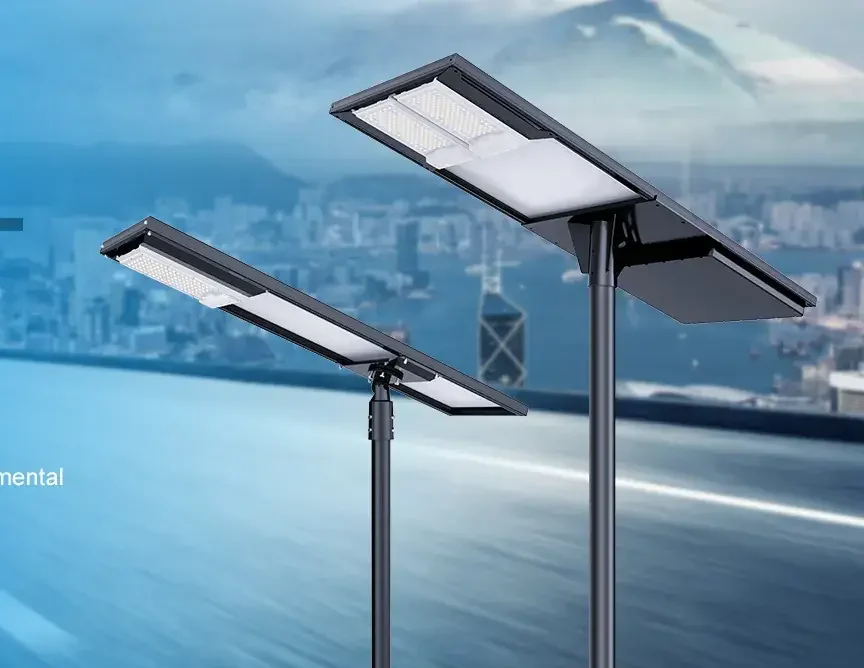
- Strengths: On-demand cleaning triggered by current fluctuations, rather than rigid schedules.
- Challenges: Lack of system-level diagnostics like SRESKY’s FAS; backend may not provide immediate warnings if motors fail.
Best For: Small-to-medium distribution or technology showcase projects.
5. Blue Carbon
Flagship Series: BCT-OLF
- Strengths: Low cost, strong supply chain integration.
- Challenges: Limited intelligence; lacks advanced algorithms for extreme temperature or prolonged rain.
Best For: Bulk procurement in mild climates with tight budgets.

6. PBOX
Representative Series: X5
- Strengths: High mechanical durability, resistant to wind, sand, and stone impacts.
- Challenges: Brush strip replacement is labor-intensive; on-site maintenance may require partial housing disassembly.
Best For: Industrial parks and harsh mining areas.

Summary Table: Key Manufacturer Insights
| Manufacturer | Key Strengths | Key Limitations | Suitable Project Types |
|---|---|---|---|
| SRESKY | First-mover advantage, mature technology (customer complaints <0.7%), smart interfaces, TCS temperature control | Higher initial costs; smart modules optional | Large-scale government infrastructure, extreme climates, EPC turnkey projects |
| NOMO | Futuristic design, high integration | Rail structure has average dust/sand resistance; basic remote management | Commercial landscapes, small-to-medium municipal projects |
| Leadsun | Compliant with European/US standards, mature cloud platform | High price, limited local support | High-standard international compliance projects |
| Socreat | Innovative on-demand cleaning, flexible customization | Long-term durability unverified; no system-level diagnostics | Small-to-medium distribution, technology showcase projects |
| Blue Carbon | Low cost, strong supply chain | Simple smart features, basic cleaning logic | Bulk procurement, cost-sensitive projects |
| PBOX | High mechanical strength, resistant to gravel/sandstorms | Limited brand influence, basic smart features | Industrial parks, harsh mining areas |
IV. Conclusion
By 2026, the solar lighting industry has shifted from simply “providing light” to “intelligent lighting.” The self-cleaning solar street light is no longer a niche innovation but a critical infrastructure component for modern smart cities.
There is no perfect manufacturer—only solutions that best match project requirements.
For the highest maturity, lowest long-term complaint risk, and scalability for smart cities, the SRESKY Thermos series, backed by over six years of market validation, a complaint rate below 0.7%, and three core technologies (TCS + FAS + ALS), remains the top choice for large-scale government infrastructure projects and extreme operating conditions. Its proven solar street light with auto-cleaning function ensures long-term operational stability and reduced maintenance burden.
For projects with limited budgets or mild environments, the other five manufacturers offer competitive options within their respective niches.
In this golden age of clean energy, don’t let a speck of dust obscure the long-term future of your infrastructure project—and don’t let overlooked limitations create unbearable O&M headaches later on.