
Table of Contents
During the rainy season, nighttime lighting on some rural roads and at farmers’ markets in the Misungwi District of Mwanza Region, Tanzania, is limited. Due to insufficient electricity infrastructure coverage in some local areas, traditional grid-connected lighting solutions are not only costly to install but also struggle to meet the long-term operational needs of remote locations.
For local road management authorities, the project’s focus extends beyond simply completing the installation of lighting infrastructure. It also requires careful consideration of the equipment’s long-term operational performance in environments characterized by high temperatures, heavy rainfall, and limited maintenance resources.
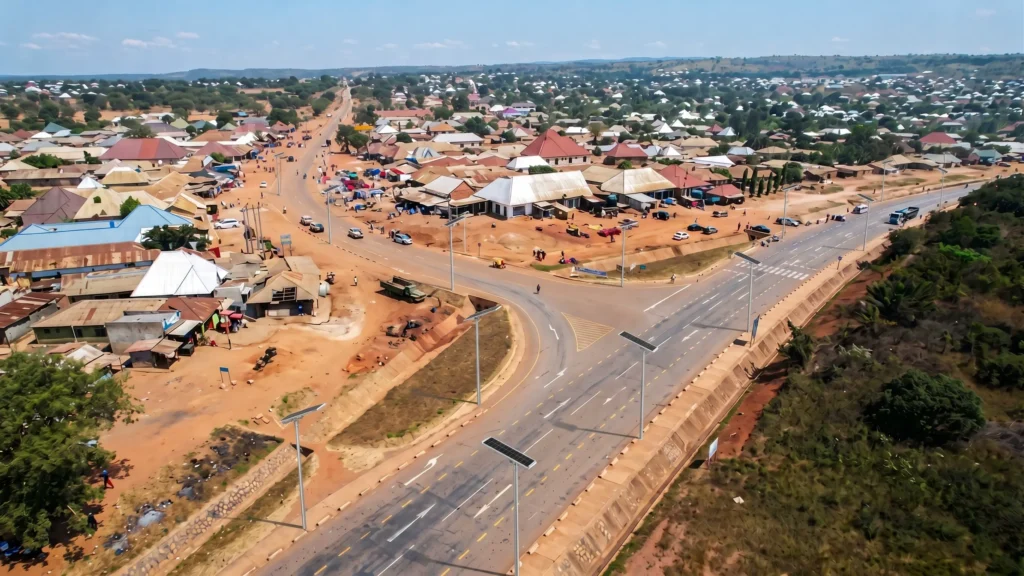
Consequently, this project deployed approximately 230 Sresky Atlas Series engineering-grade all-in-one solar street lights to illuminate rural roads and public areas in marketplaces, thereby improving nighttime traffic conditions and the environment for public activities.
Project Snapshot
| Project Information | Details |
|---|---|
| Project Name | Rural Road and Market Lighting Project in Misungwi District, Mwanza Region, Tanzania |
| Project Owner | Tanzania Rural and Urban Roads Authority (TARURA) |
| Product Model | Sresky Atlas Series Engineering-Grade All-in-One Solar Street Lights |
| Deployment Scale | Approximately 230 units |
| Coverage | Rural roads and public areas in marketplaces |
| Application Scenarios | Rural roads, public trading areas, and off-grid lighting scenarios |

Project Challenges and Solutions
In African rural road and public area lighting projects, equipment procurement must not focus solely on initial installation costs. It must also comprehensively consider local climatic conditions, energy supply conditions, and post-installation maintenance capabilities.
Challenge 1: How can nighttime lighting on remote roads and in marketplaces be ensured during the rainy season when sunlight is limited?
On-Site Challenges
The Mwanza Region experiences a distinct rainy season, with periods of continuous overcast and rainy weather that can affect solar panel power generation efficiency.
For off-grid solar street lights, prolonged periods of low sunlight may result in insufficient battery storage capacity, thereby compromising nighttime lighting performance.
The project needed to address the following challenges:
- How to make optimal use of limited solar resources;
- How to reduce unnecessary energy consumption;
- How to enhance system adaptability under complex weather conditions.
Sresky Technical Solution: ALS Intelligent Energy Management + Highly Reliable Energy Storage System
To meet the application needs of rainy regions, the Sresky Atlas Series employs the ALS Smart Adaptive Lighting System.
This system adjusts lighting output based on nighttime usage patterns and battery charge status, optimizing operating strategies when energy availability is limited.
Additionally, the products utilize LiFePO₄ lithium iron phosphate batteries and are equipped with a BMS (Battery Management System) to enhance the safety and stability of the energy storage system.
This solution helps:
- Optimize energy utilization during overcast and rainy weather;
- Reduce the risk of battery over-discharge;
- Improve long-term system operational reliability.
Through intelligent lighting management and a stable energy storage configuration, the Atlas Series is particularly well suited for use in areas with high temperatures, heavy rainfall, and limited grid infrastructure.
Challenge 2: How can high maintenance costs and equipment theft risks be reduced on remote roads?
On-Site Project Challenges
The Misungwi project covers sections of remote roads, and equipment maintenance must account for travel distances, labor costs, and on-site working conditions.
If traditional solar street lights use decentralized structures, this may increase:
- The risk of cable damage;
- The complexity of equipment maintenance;
- The cost of routine inspections.
Therefore, the project required a more reliable structural design to reduce human-caused damage and lower the frequency of routine inspections.
Sresky Technical Solution: Integrated Anti-Theft Structure + Smart Status Diagnostics
The Sresky Atlas Series features a high-strength, integrated die-cast aluminum alloy structure that houses the battery, BMS, and controller inside the lamp body, eliminating exposed cables.
Combined with an anti-theft fastening design, this effectively reduces the risks of theft and wiring failures.
Additionally, the Atlas Series is equipped with visual LED status indicators, allowing maintenance personnel to quickly assess the device’s battery level and operating status without climbing:
- Green: Battery level > 70%;
- Orange: Battery level 30%–70%;
- Red: Battery level < 30%.
Through its “integrated structure + smart diagnostics” approach, the Atlas Series helps government projects reduce inspection costs and enhance the long-term reliability of remote road lighting systems.
Project Outcomes
- Meeting Lighting Needs in Remote Areas: 230 sets of streetlights illuminate approximately 12 kilometers of rural roads and market areas, improving nighttime lighting conditions in regions with weak power grids.
- Enhancing Power Supply Stability During the Rainy Season: The lights maintain relatively stable performance even during prolonged periods of rain and overcast weather, providing illumination to support road traffic and public safety.
- Reducing Long-Term O&M Burden: The integrated protective design helps minimize the risks of theft and damage while reducing inspection efforts, thereby improving project operation and maintenance efficiency.
- Promoting Nighttime Economic Development: Market lighting extends nighttime operating hours, increases public space utilization, and supports the development of local nighttime activities.
Client Testimonial
“For rural infrastructure projects, equipment installation is only the first step; long-term operation and maintenance are even more critical. The integrated design and energy management solutions of the Sresky Atlas Series enable the project to better adapt to the local environment.”
FAQ: Common Questions About Procuring Rural Solar Streetlight Projects
1. How can maintenance challenges be reduced for solar street lights in remote areas?
For road and public area projects, we recommend selecting solar street lights with a high degree of structural integration.
An integrated design reduces exposed wiring and dispersed components, while some products feature status indicators to facilitate basic inspections by maintenance personnel.
2. What factors should be considered when selecting solar street lights for rural road projects in Africa?
Project procurement typically requires careful consideration of:
- Actual lighting performance of the product;
- Battery type and energy storage capacity;
- Protection rating and structural reliability;
- Smart energy management features;
- The supplier’s project delivery experience.
Rather than simply comparing power specifications, it is more important to select a comprehensive solution suited to the local climate and operating environment.
3. Does cloudy or rainy weather affect the operation of solar street lights?
Yes.
Solar street lights must be systematically designed based on local sunlight conditions, rainfall patterns, and lighting requirements.
The use of intelligent dimming control and appropriate energy storage configurations can help the system better adapt to seasonal weather changes and improve operational stability during prolonged periods of overcast or rainy weather.
Summary
The Mwanza Rural Roads and Market Solar Lighting Project in Tanzania illustrates an important lesson:
The value of rural solar lighting projects lies not only in completing equipment installation but also in ensuring stability and ease of maintenance during long-term operation.
In areas with limited grid access, high temperatures, heavy rainfall, and insufficient maintenance resources, a reliable solar lighting solution must comprehensively consider:
- Energy management;
- Energy storage systems;
- Product design;
- Post-installation maintenance.
By tailoring designs to local environmental conditions, solar lighting can become an effective option for infrastructure development in remote areas.