
Project Background
For coastal and island regions in the Philippines, the greatest challenge in developing outdoor lighting systems is often not installation itself, but rather ensuring long-term, stable operation in complex environments characterized by high salt fog, heavy rainfall, and seasonal typhoons.
As a major tourist destination in the Philippines, Bohol Island experiences high humidity, high salt fog levels, and intense UV radiation throughout the year. Some areas also face challenges such as limited municipal grid coverage and high costs associated with underground cabling. For coastal resort communities, lighting systems must not only meet nighttime traffic requirements but also provide corrosion resistance, wind resistance, easy installation, and low long-term maintenance costs.
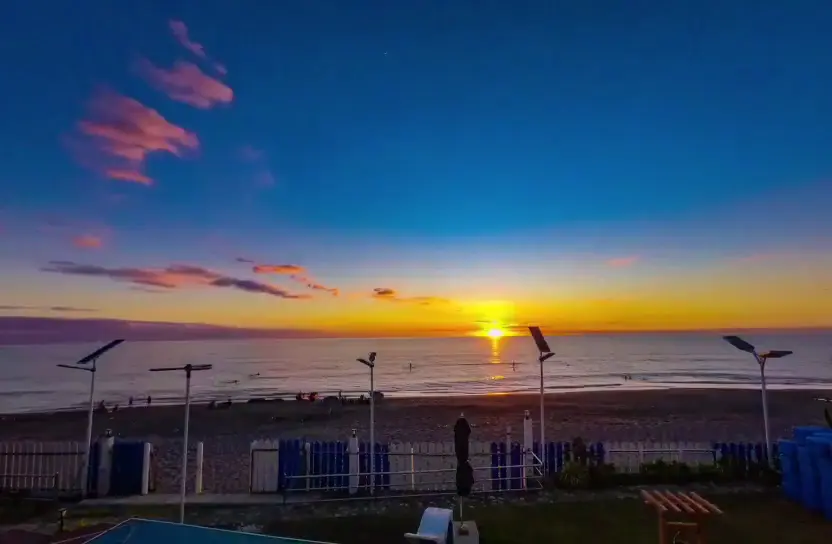
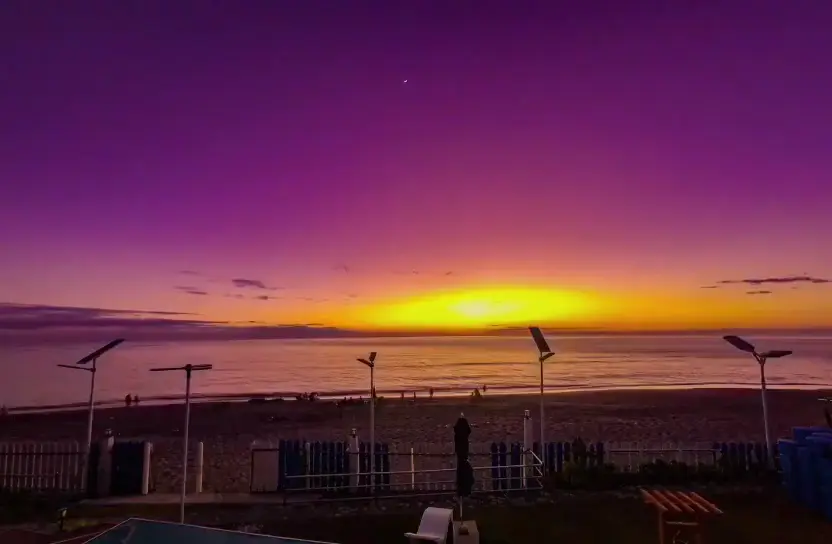
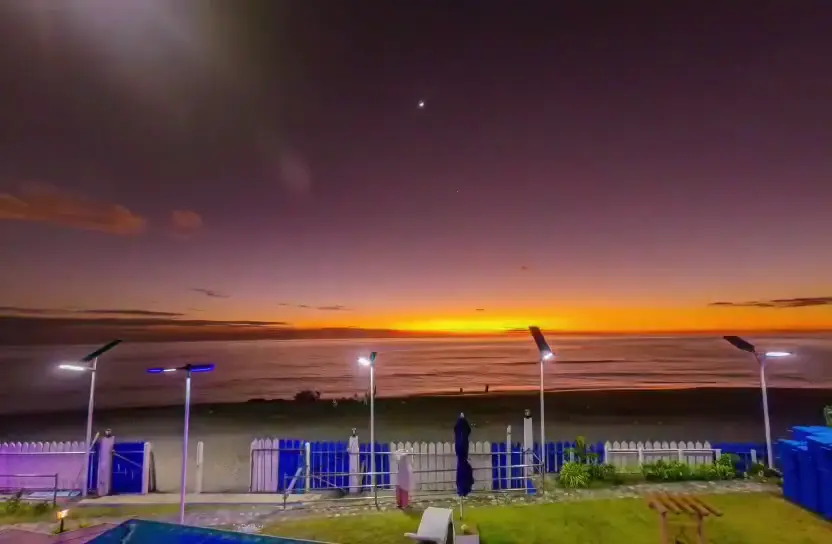
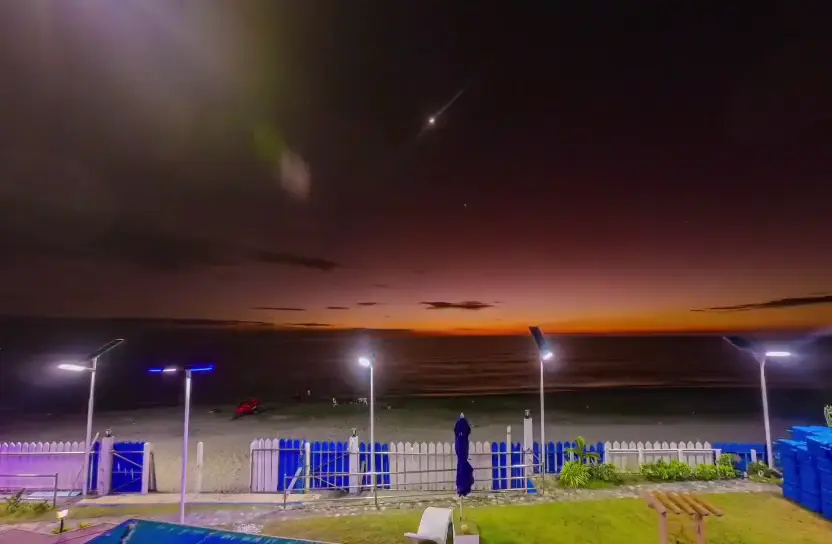
In 2025, a coastal resort community on Bohol Island, Philippines, installed 100 sets of SRESKY ATLAS Series integrated solar street lights to illuminate seaside roads, residential areas, and public walkways. The project created an off-grid lighting system that requires no underground cables, minimizes maintenance requirements, and is well adapted to the marine environment.
Table of Contents
- Project Overview
- Key Project Challenges and Solar Lighting Solution
- Challenge 1: How to Ensure Long-Term, Reliable Operation in a Highly Corrosive Coastal Environment and Under Typhoon Conditions?
- SRESKY Solution: Reinforced Structural Design and Corrosion Protection System
- Challenge 2: How to Address Energy Stability and High-Humidity Condensation Issues in an Off-Grid Island Environment?
- SRESKY Solution: Intelligent Energy Management Enhances Off-Grid Reliability
- Project Outcomes
- Customer Feedback
- FAQ: Common Questions About Purchasing Coastal Solar Street Lights in the Philippines
- Conclusion: The Key to Coastal Lighting Projects Is Not “Installation,” but “Long-Term Operation”
Project Overview
| Item | Details |
|---|---|
| Project Location | Coastal Resort Community, Bohol Island, Philippines |
| Application Scenarios | Lighting for coastal roads, residential areas, and public walkways |
| Project Scale | 100 sets of ATLAS Series solar street lights |
| Installation Method | Single-arm side-mounted light poles |
Key Project Challenges and Solar Lighting Solution
Challenge 1: How to Ensure Long-Term, Reliable Operation in a Highly Corrosive Coastal Environment and Under Typhoon Conditions?
As a typical coastal tourist destination in the Philippines, Bohol Island exposes solar street lights to prolonged high salt fog, high humidity, and strong winds, placing greater demands on equipment durability and weather resistance.
The project site faced two primary challenges.
First, salt particles from the marine environment can easily accumulate on metal surfaces, accelerating corrosion and potentially affecting the long-term reliability of light pole structures, fasteners, and electronic components.
Second, the Philippines is located in a typhoon-prone region, where seasonal strong winds and extreme weather conditions increase stress on lamp post structures.
Compared with standard road lighting projects, coastal areas must not only meet daily lighting requirements but also ensure that equipment can continue operating reliably after severe weather events.
Therefore, the project team sought a long-term, reliable lighting solution capable of withstanding high salt fog environments, providing enhanced structural safety, and reducing future maintenance requirements.
SRESKY Solution: Reinforced Structural Design and Corrosion Protection System
The SRESKY ATLAS Series was specifically designed to address the unique environmental conditions of Bohol Island.
From a structural perspective, wind load analysis was conducted to optimize the connection points of the lamp arms and critical stress areas, thereby improving the overall wind resistance of the equipment.
For corrosion protection, a comprehensive protection system was implemented, incorporating SUS316L stainless steel fasteners, hot-dip galvanization, and polyester powder coating.
Compared with standard 304 stainless steel, 316L stainless steel provides superior resistance to pitting corrosion in salt fog environments, significantly improving equipment durability in marine conditions.
Additionally, the entire unit achieves an IP66 protection rating, effectively reducing the impact of heavy rain, salt fog, and humid air on internal components while improving long-term operational stability in coastal environments.
Challenge 2: How to Address Energy Stability and High-Humidity Condensation Issues in an Off-Grid Island Environment?
The project area is located far from the municipal power grid. Traditional lighting solutions require underground cable installation, which not only extends construction periods but also creates significant maintenance challenges in island environments.
At the same time, the tropical island climate introduces additional operational challenges.
Continuous cloudy days during the rainy season can reduce solar charging efficiency and affect nighttime illumination duration. In high-humidity environments, daily temperature fluctuations can easily cause condensation inside luminaires, potentially leading to PCB corrosion, electronic component degradation, and other long-term issues.
Therefore, the project focus was not simply on increasing equipment power capacity, but on improving system adaptability to complex weather conditions through intelligent energy management.
SRESKY Solution: Intelligent Energy Management Enhances Off-Grid Reliability
The ATLAS Series adopts an integrated solar lighting architecture that combines photovoltaic modules, energy storage batteries, LED light sources, and a smart control system within a single unit.
Through the intelligent energy management system, the unit automatically optimizes its operating strategy based on ambient light conditions, remaining battery capacity, and nighttime lighting requirements.
During extended periods of cloudy or rainy weather, the system dynamically adjusts lighting power and efficiently allocates stored energy to extend continuous nighttime illumination.
Meanwhile, the all-in-one design eliminates the need for underground wiring, reducing installation complexity in island environments.
The anti-condensation structure, UV-resistant optical components, and low-fouling surface design also effectively reduce salt and dust accumulation, minimizing the need for manual maintenance.
Project Outcomes
- Enhanced Resistance to High Salt Fog and Corrosion
Through specialized protective design, the equipment is capable of operating reliably in high-humidity and high-salt-fog marine environments, ensuring long-term stability. - Reduced Construction Complexity
No underground cabling is required, effectively reducing construction challenges caused by island terrain and infrastructure limitations. - Lower Maintenance Costs in Remote Areas
The highly integrated design reduces equipment failure risks and lowers the costs associated with transportation and post-installation operation and maintenance for island projects. - Improved Nighttime Lighting Experience
The system provides stable and reliable nighttime illumination, enhancing the overall experience in tourist communities and public areas.
Customer Feedback
“When we used traditional lighting systems, we often had to inspect wiring issues after heavy rain. After installing SRESKY solar street lights, we no longer need to worry about underground cable failures, and daily maintenance work has been significantly reduced.”
— Facilities Management Team, Bohol Island Coastal Project, Philippines
FAQ: Common Questions About Purchasing Coastal Solar Street Lights in the Philippines
Q1: Are Solar Street Lights Suitable for Coastal Areas in the Philippines?
Yes, they are suitable, but it is essential to select products specifically designed for marine environments.
Coastal projects require more than sufficient lighting output; they must also comprehensively consider:
- Corrosion resistance;
- Moisture-resistant design;
- Structural reliability;
- Long-term maintenance costs.
Environmental adaptability determines the long-term performance of solar street lights.
Q2: How Do Coastal Solar Street Lights Prevent Rust?
Reliable solutions typically include:
- Using corrosion-resistant fasteners;
- Employing hot-dip galvanized lamp posts;
- Applying outdoor protective coatings;
- Optimizing structural drainage design.
Q3: Can Solar Street Lights Continue Operating During Extended Periods of Rain?
Solar street lights typically address short-term solar energy shortages through:
- Battery energy storage;
- Intelligent power control;
- Adjustable lighting modes.
Specific operating duration depends on systematic design factors, including local sunlight conditions, luminaire power, battery capacity, and required lighting duration.
Conclusion: The Key to Coastal Lighting Projects Is Not “Installation,” but “Long-Term Operation”
The Bohol Island project in the Philippines demonstrates that:
For islands, coastal areas, and tropical regions, the success of solar streetlight projects depends not merely on providing illumination, but on establishing long-term, reliable systems adapted to local environmental conditions.
From salt fog protection and moisture-resistant design to off-grid power supply capabilities, coastal solar lighting requires a comprehensive engineering solution rather than simply a single product.
Through the integrated design and intelligent energy management technology of the ATLAS Series, SRESKY has provided a more reliable, low-maintenance, and sustainable green lighting solution for coastal projects in the Philippines.
For developers, engineering contractors, and operators planning island tourism development, coastal community construction, and off-grid lighting projects, selecting solar street lights that align with local environmental conditions is not merely about building lighting infrastructure—it is about enhancing the long-term operational value of the project.