
In Hungary and other Central and Eastern European markets, solar street lighting must address significant seasonal variations in solar irradiance. Shorter daylight hours, lower sun elevation angles during winter, and prolonged periods of overcast skies and snowfall reduce the amount of solar energy available each day.
At the same time, municipal and eco-district lighting projects in Europe typically need to balance the following requirements:
- Stable operation under low solar radiation conditions in winter;
- Compliance with European road lighting standards;
- Light pollution control in eco-districts;
- EU market safety certification requirements;
- Long-term maintenance cost control.
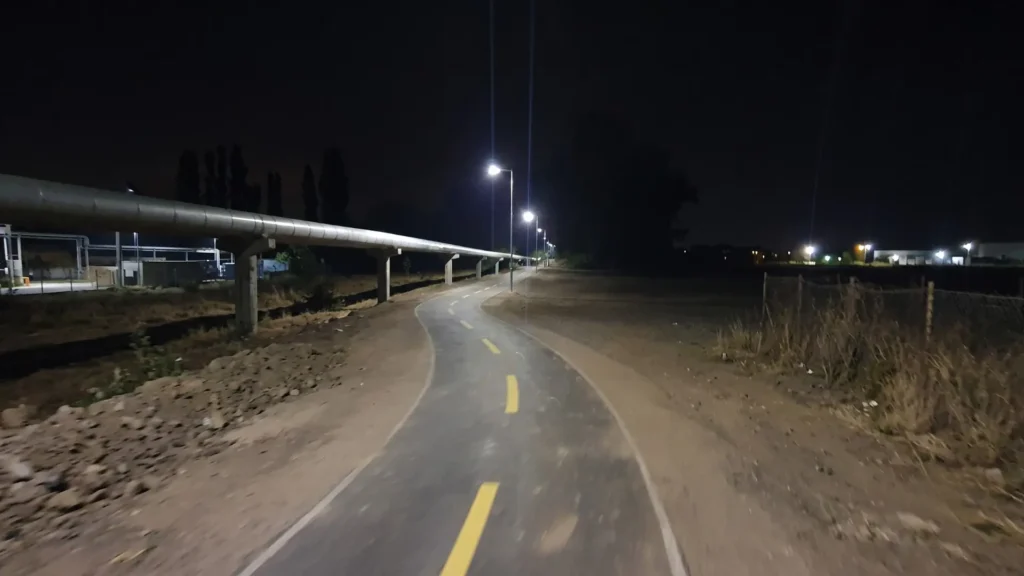
Recently, a road lighting project in a new eco-district on the outskirts of Budapest, Hungary, encountered similar challenges.
The project adopted the SRESKY TITAN 2 Series solar street lights, deploying approximately 260 units to illuminate roads and public areas within the new district.
The project objective was not simply to replace traditional grid-connected street lights, but to establish a green road lighting system that complies with European standards, adapts to high-latitude environments, ensures long-term stable operation, and minimizes the need for underground cable installation.
Table of Contents
- Project Details & Parameters
- Project Challenges and Engineering Solutions
- Challenge 1: How to Control Upward Light Emission and Environmental Impact While Meeting Road Lighting Requirements?
- SRESKY Solution
- Challenge 2: How to Ensure Continuous Nighttime Lighting Under Low Winter Sunlight Conditions at 47° North Latitude?
- SRESKY Smart Solution
- Project Outcomes and Commercial Value
- Customer Testimonial
- Frequently Asked Questions (FAQ)
- Conclusion: The Core of European Solar Streetlight Projects Is Not Simply “Brightness,” but Long-Term Reliable Operation
Project Overview
| Item | Details |
|---|---|
| Project Area | Roads in the Ecological New District near Budapest, Hungary |
| Geographic Conditions | Approximately 47° north latitude |
| Application Type | Municipal roads and outdoor lighting in ecological areas |
| Luminaire Model | SRESKY TITAN 2 Series |
| Number Installed | Approximately 260 units |
| Key Challenges | Low winter sunlight, warm-color lighting requirements, European certification requirements |
Project Challenges and Engineering Solutions
Challenge 1: How to Control Upward Light Emission and Environmental Impact While Meeting Road Lighting Requirements?
Located in an eco-new district, the lighting system must not only meet road safety requirements but also minimize its impact on the surrounding environment.
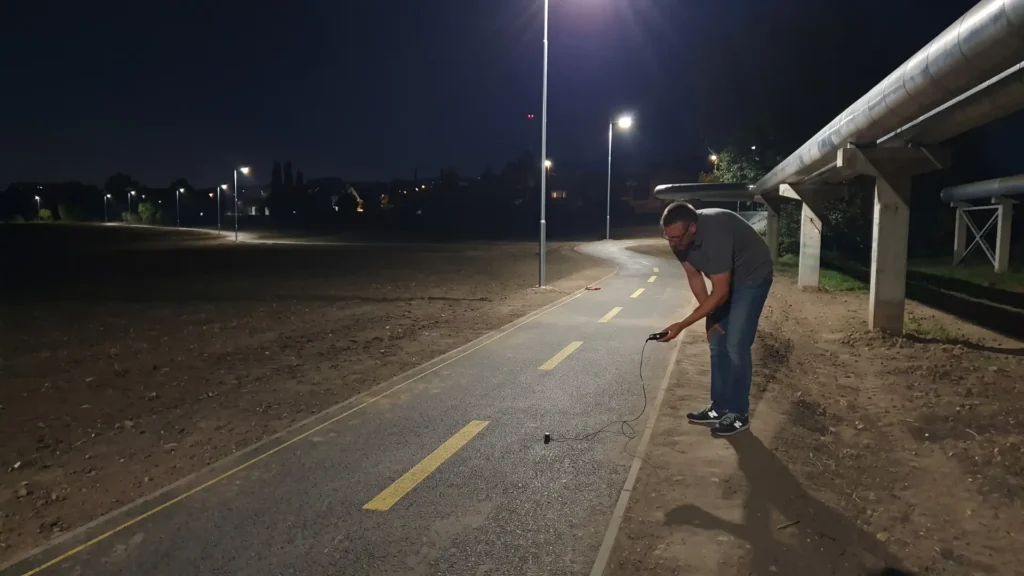
The project tender specifications required compliance with 3000K warm-color lighting, ULOR = 0 (zero upward light emission), and the MSZ EN 13201 road lighting standard.
For off-grid solar systems, warm-color LEDs generally have lower luminous efficacy, leading the client to raise concerns:
“Will meeting the lighting standards require increasing solar panel and battery capacity, thereby increasing overall project costs?”
If the traditional approach of simply increasing luminaire power were used to compensate for reduced luminous efficacy, it would result in:
- Larger solar panels, batteries, and light pole specifications;
- Higher transportation and installation costs;
- Reduced overall bidding competitiveness;
- Increased long-term maintenance requirements.
SRESKY Solution
SRESKY addresses this challenge through system optimization rather than simply increasing power capacity.
Precise Optical Design: Optimized cut-off lenses based on the TITAN 2 Series platform achieve ULOR = 0, ensuring precise road illumination while reducing wasted energy.
High-Efficiency System Synergy: The combination of high-efficiency 3000K LEDs and MPPT control technology meets road lighting standards while keeping overall system size under control.
Rapid Compliance Delivery: Complete test documentation helps contractors efficiently complete municipal review procedures.
Ultimately, the solution achieves a balance between ecological protection requirements, road lighting performance, and project costs.
Challenge 2: How to Ensure Continuous Nighttime Lighting Under Low Winter Sunlight Conditions at 47° North Latitude?
For high-latitude projects, the primary concern among owners is:
“The system operates normally in summer, but can it maintain stable lighting during winters with continuous overcast conditions, snowfall, and low temperatures?”
Low winter solar radiation and cold temperatures reduce power generation efficiency and affect battery performance.
Traditional solutions typically address these challenges by increasing solar panel capacity, battery capacity, or adding heating equipment. However, this approach results in:
- Higher project costs;
- Longer delivery cycles;
- More complex maintenance requirements.
SRESKY Smart Solution
SRESKY employs an intelligent energy management solution to improve winter reliability:
- ALS 2.4 Smart Dimming: Dynamically adjusts power output based on battery charge levels and weather conditions, prioritizing essential lighting during prolonged periods of overcast or snowy weather.
- TCS Smart Temperature Control: Uses intelligent algorithms to optimize charging and discharging strategies under low-temperature conditions, eliminating the need for additional heating equipment while extending battery service life.
- Delivery Through a Proven Platform: Avoids high-cost customization, enabling rapid project implementation and adaptation to high-latitude winter environments.
The result is a highly reliable off-grid lighting solution validated under extreme cold-weather conditions.
Project Outcomes and Commercial Value
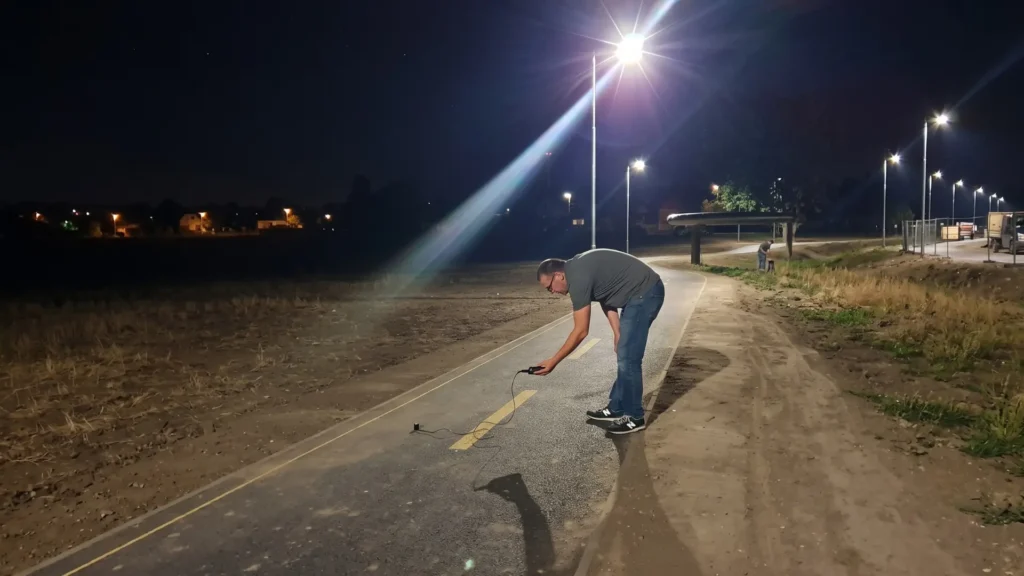
- 100% Compliance with Acceptance Criteria: Illuminance and uniformity fully comply with MSZ EN 13201 requirements; ULOR = 0%, successfully passing environmental and municipal acceptance inspections on the first attempt.
- Zero Power Outages During the First Winter: Despite extreme cold and low sunlight conditions typical of Eastern Europe, the entire system experienced no power outages or operational failures.
- Cost Reduction and Efficiency Improvement: No additional NRE expenses were required. The project was delivered one month ahead of schedule, significantly reducing contractor performance risks.
Customer Testimonial
“The biggest challenge of the project was meeting both the MSZ EN 13201 standard and winter energy reliability requirements. The TITAN 2 Series system optimization solution helped us mitigate risks and successfully complete the project.”
— Ádám Horváth, Technical Lead for EPC Projects
Frequently Asked Questions (FAQ)
Q1: Why Is ENEC Certification Important for Solar Streetlight Projects in Europe?
ENEC is one of the third-party product certification systems recognized in Europe.
For certain public lighting projects, ENEC or other recognized certifications can demonstrate that products comply with relevant European standards and reduce technical review risks for procurement entities.
However, requirements vary by country and project. Specific certification requirements should always be confirmed based on tender documents during the bidding process.
Q2: What Should Be Considered When Deploying Solar Street Lights in Regions at 47° North Latitude?
Key design considerations for high-latitude regions include:
Photovoltaic System:
- Design based on local winter solar radiation conditions;
- Optimize solar panel installation angles;
- Avoid relying solely on annual average weather data.
Battery System:
- Consider the impact of low-temperature environments;
- Implement appropriate battery management strategies.
Software Control:
- Automatically adjust power output according to energy conditions;
- Maintain basic lighting during prolonged periods of cloudy or rainy weather.
Q3: How Should Solar Street Lights Address Extended Periods of Overcast or Rainy Weather in Europe?
Mature solutions typically incorporate:
- Appropriate battery capacity design;
- High-efficiency MPPT control;
- Intelligent dimming algorithms.
Simply increasing battery capacity is not the optimal solution, as it increases:
- Costs;
- Weight;
- Shipping expenses;
- Long-term maintenance requirements.
Conclusion: The Core of European Solar Streetlight Projects Is Not Simply “Brightness,” but Long-Term Reliable Operation
The Hungarian Eco-New District project illustrates an important trend:
Future competition in European solar streetlight projects will not focus solely on LED power or price.
The factors that truly determine project success include:
- Compliance with local regulations;
- Adaptability to winter conditions;
- Reduced maintenance costs;
- Comprehensive technical support.
Through the TITAN 2 Series solar streetlight solution, SRESKY provides a more reliable, efficient, and low-maintenance green lighting option for eco-road projects in northern European regions.
For government agencies, engineering contractors, and developers planning European municipal roads, eco-communities, and off-grid lighting projects, selecting a solar lighting system that meets local environmental requirements is not merely about building lighting infrastructure—it is about supporting the development of future low-carbon infrastructure.