
For Malaysian contractors, JKR standards represent a critical hurdle for securing government projects. Due to the country’s year-round high temperatures and humidity, as well as strong monsoons, public lighting must meet stringent requirements for optical performance, energy storage safety, protection ratings, and smart control. Many failed bids or loss-making projects stem from insufficient understanding of technical specifications during the initial selection phase. This article breaks down core JKR standards, identifies three major hidden pitfalls, and provides a practical “zero-risk” selection approach to reduce total cost of ownership (TCO) and build credibility in government projects.
I. JKR’s Four Core Technical Requirements for Solar Street Lights
1. Luminous Efficiency and Light Distribution: 180 lm/W as the Benchmark
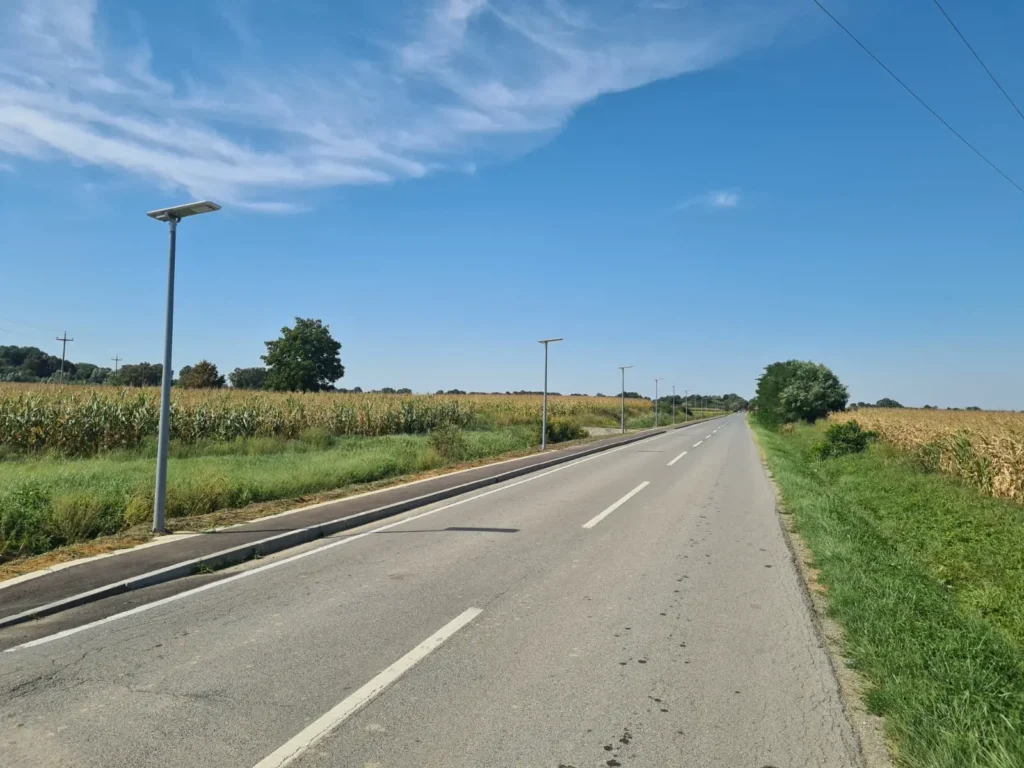
JKR imposes strict requirements on system luminous efficiency for solar street lights on main and secondary roads. Solutions below 140 lm/W are unlikely to pass review, while 180 lm/W is becoming the new benchmark. High luminous efficacy is not only about brightness; it reduces system configuration. Compared to a 130 lm/W solution, a 180 lm/W system can lower solar panel and battery capacity by nearly 28%, reducing pole load, transportation, installation, and material costs.
Light distribution is equally critical. JKR requires overall luminous uniformity (U₀) and longitudinal uniformity (U₁) to comply with MS 825 and CIE 140 standards to avoid zebra patterns. Contractors must use IES photometric files and LM-79 test reports to verify beam angles match road widths and pole spacing; otherwise, designs risk rejection.
2. Batteries and Autonomous Operation: LiFePO4 as a Mandatory Advantage
Malaysia’s tropical climate exposes ternary lithium batteries to thermal runaway and rapid cycle-life degradation. Many JKR specifications explicitly favor or mandate LiFePO4 batteries, which can maintain over 3,000 deep cycles above 35°C.
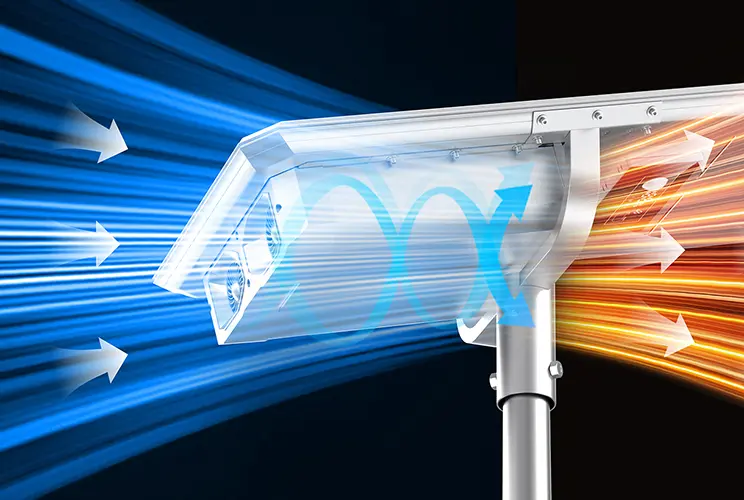
Autonomous runtime is another core metric. Systems must maintain full illumination for 3–5 consecutive days of overcast or rainy weather. This requires precise management of depth of discharge via smart controllers and adaptive dimming. SRESKY’s TCS thermal management monitors cell temperatures in real time, adjusting charge/discharge strategies to extend battery life by 2–3 years, reducing long-term TCO.
3. Protection Rating and Weather Resistance: IP65/IP66 Is the Minimum
Malaysia’s humidity, salt fog, UV exposure, and monsoons make IP65/IP66 the baseline. Long-term reliability depends on corrosion resistance and thermal management. Housing must pass ISO 9227 salt spray tests for over 1,000 hours, and seals must withstand -40°C to 150°C. LED junction temperatures must remain below 85°C to meet the 50,000-hour lifespan.
Wind resistance standards are rising. Monsoon winds on the east coast and mountainous regions can exceed 180 km/h; JKR now requires 250 km/h wind resistance. Lamp posts, flanges, and luminaire cross-sections must undergo wind tunnel testing or finite element analysis, with third-party verification for bid approval.
4. Smart Control: Integration with Smart City Initiatives
JKR encourages integration with urban IoT platforms. Luminaires must support remote on/off control, fault alerts, and power monitoring. Advanced projects require grouping, adaptive dimming, and third-party integration. SRESKY’s IoT solution supports NB-IoT, LoRaWAN, and 4G networks, transmitting real-time status data to central control rooms. This replaces manual inspection during acceptance testing, improving contractor efficiency and credibility.
II. Three Hidden Procurement Pitfalls
- Misrepresented Specifications and Low-Bid Contracts:
Many products falsely claim ratings (e.g., “300W”), but actual measurements fall short. JKR spot checks with integrating spheres and lux meters. Values below 80% of rated specs are non-compliant, leading to returns or blacklisting. Require LM-79 reports for full lamps and battery test data, and reserve rights for third-party verification. - Uncontrolled TCO:
Initial purchase accounts for 30–40% of total cost. Low-cost solutions can cause high maintenance: e.g., 37% battery replacement in three years plus controller failures, doubling total costs. JKR projects typically require 5-year warranties; unreliable products risk extreme post-installation maintenance costs. - Lack of Certifications:
SIRIM certification is essential. Equivalent international certifications (IECEE CB, EN/IEC, LM-80 for LEDs, driver reliability) are required if SIRIM is unavailable. Missing certifications result in disqualification during the qualification review, even with lower bids.
III. How SRESKY Enables Zero-Risk Delivery
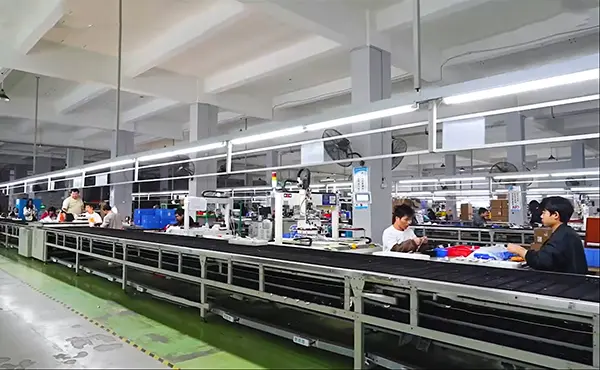
With over 15 years in solar lighting, SRESKY has achieved zero-failure operation across Southeast Asia and Africa, offering contractors proven, compliant solutions.
ATLAS Series: Tailored to JKR Main Road Requirements
The ATLAS series achieves 180 lm/W luminous efficacy and uses replaceable high-capacity LiFePO4 batteries, meeting illuminance and uniformity requirements for 12–14m poles. Deployed in multiple Southeast Asian countries, it is ideal for high-standard JKR projects.
Advanced Technology for Tropical Environments
ATLAS and other SRESKY products feature TCS temperature control to prevent hotspots and a self-cleaning, hydrophobic coating to maintain solar panel efficiency over 95%, reducing cleaning costs and optimizing ROI.
IoT Digitalization Simplifies Acceptance
The IoT platform provides visual dashboards showing battery health, charging status, and location for each lamp, with proactive fault alerts. This streamlines government acceptance processes and improves contractor performance scores.
IV. Extreme Climate Validation: 9 Years of Stable Operation
In Sulawesi, Indonesia, SRESKY solar street lights operated fault-free for over 9 years in equatorial rain and salt fog, with a failure rate below 0.8%. After 3,000 charge cycles, battery capacity retention exceeds 80%. In the Gulf of Guinea, Africa, IP65+ anti-corrosion treatment achieved zero structural corrosion over 6 years. These results can be used as reliable evidence in JKR tender submissions.
V. Checklist for Rapid Supplier Screening
- Qualifications: ISO 9001/14001, LM-79 and LM-80 reports, battery safety certification, SIRIM or equivalent certifications.
- Specifications: ≥180 lm/W efficacy, validated IES files, backup duration, and pole wind load reports.
- Customization: Adjustable beam angle, color temperature (4000–5000K), pole interface; complete lighting design simulation.
- Warranty: Coverage for batteries, controllers, solar panels, extreme weather damage, and local spare parts support.
VI. Conclusion and Action Steps
Selecting solar street lights that meet JKR standards is more than passing inspection—it is a long-term asset that builds contractor credibility. SRESKY provides consultative support from compliance solutions to detailed test reports, enabling confident bidding and project delivery.