
The Off-Grid Reality: Grid Access vs. the Rural Village Gap
Over the past decade, Tanzania has made significant progress in electrification. National grid access now exceeds 38%, with substantial infrastructure investments in urban centers such as Dar es Salaam, Arusha, and Mwanza. However, rural areas remain severely underserved.
According to the International Energy Agency and Tanzania’s energy reports, rural electrification rates in many regions—including Tabora, Rukwa, Kigoma, and parts of Mara—remain below 20%. These are precisely the areas where solar streetlight projects are most needed, and where lighting systems face the most demanding technical requirements.
For procurement officers and contractors, “solar streetlights” are not a commodity. Systems designed for off-grid rural deployment differ dramatically from those for well-maintained urban campuses. Poorly specified systems can fail within 18 months, while well-engineered systems deliver five years of reliable operation.
Based on a six-point evaluation framework, this guide analyzes five suppliers with proven deployment records in Tanzania, focusing on off-grid survivability, localized support, and environmental resilience.
Why Rural Projects in Tanzania Require “Special” Supplier Standards
Rural Electrification Agency (REA) projects face harsher conditions than urban centers:
- Highly Abrasive Dust: Red soil in regions like Dodoma quickly coats solar panels. Without self-cleaning or efficient charge management, output can drop by 25% within a year.
- Extreme Thermal Stress: Ambient temperatures often exceed 40°C, causing substandard batteries and controllers to fail as early as the second year.
- Prolonged Rainy Season: Southern highlands experience very low sunlight from March to May. Systems with only 1–2 days of runtime undergo deep discharge cycles, shortening battery life by up to 70%.
- Maintenance Isolation: Service centers may be over 300 km away. Modular component design—allowing replacements without specialized tools—is key to reducing O&M costs.
In-Depth Evaluation of 5 Top Suppliers
1. SRESKY — Government-Level Infrastructure Specialist
Core Focus: High-power, reliable B2B infrastructure lighting. Leverages strong R&D to handle complex government tender and EPC project documentation.
Track Record in Tanzania: Successfully deployed Atlas series units on government highways, reducing nighttime accidents. Detailed case studies include 10m pole heights, 32m spacing, and Dialux optical simulation data, critical for compliance reports to funding agencies.
Technical Highlights (PSR Framework):
- Challenge: High maintenance costs due to battery vulnerability in extreme heat.
- Solution: Patented ALS 2.4 (Adaptive Lighting System) and TCS (Temperature Control System) ensure lighting for 10+ days during cloudy or rainy weather and active thermal protection for batteries.
- Result: Extended 6-year full-unit warranty (Atlas Max series), significantly reducing long-term government O&M costs.
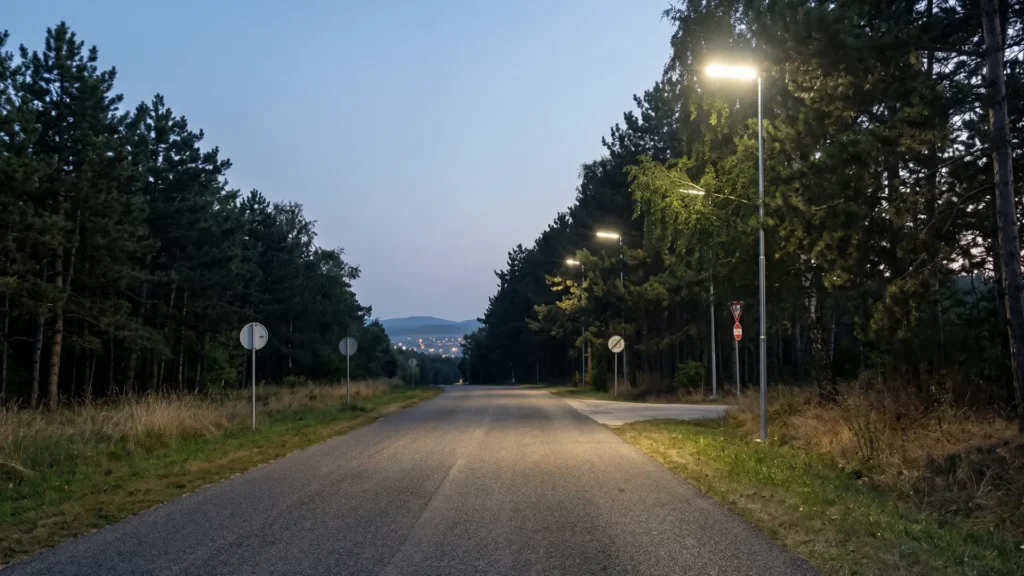
2. Sunna Design — Off-Grid Expert with Long Service Life
Core Positioning: French manufacturer specializing in solar streetlights and energy management for off-grid and grid-connected applications.
Technical Features: iSSL series uses horizontal photovoltaic panels optimized for equatorial regions, with the SunnaCORE management system ensuring uninterrupted operation year-round.
Advantages: Ideal for projects prioritizing long-term, maintenance-free operation and networked remote monitoring.
Considerations: Higher pricing than Chinese alternatives; local service managed via partners; delivery from France may take 60–75 days.
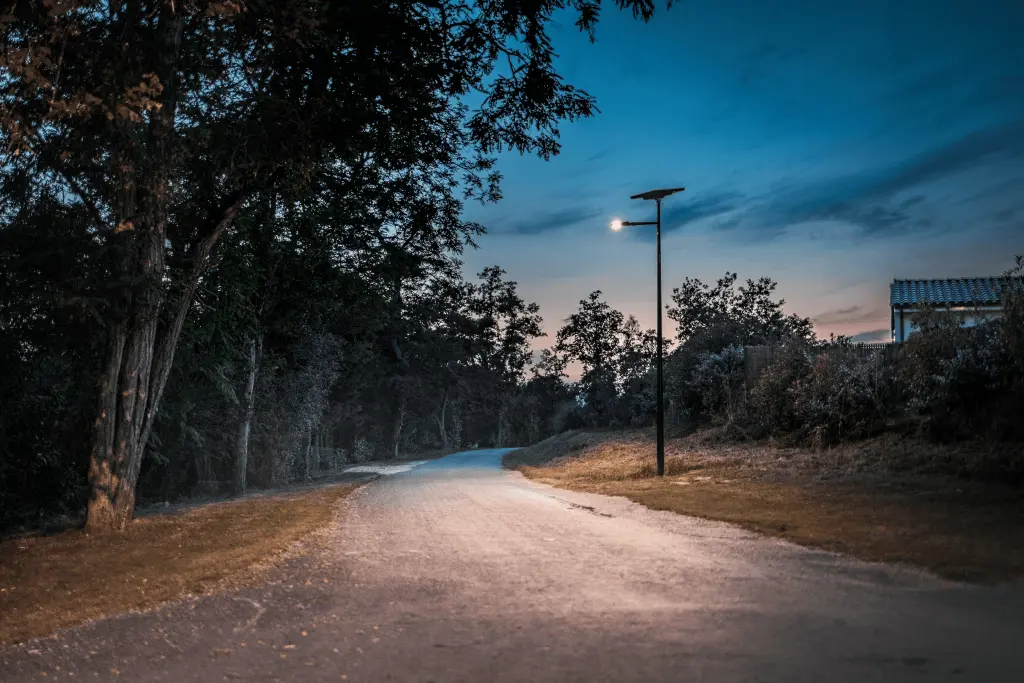
3. Signify (Philips SunStay) — Benchmark for Optical Precision
Core Positioning: Global lighting leader. SunStay series offers premium LED optical distribution, ideal for projects requiring strict illuminance uniformity and glare control.
Technical Features: Die-cast aluminum monoblock design with high luminous efficacy; global supply chain ensures component traceability in East Africa.
Advantages: Superior light distribution and strong brand credibility.
Considerations: Typical lumen output 3,000–4,000 LM, which may be insufficient for high-traffic arterial roads requiring 6,000+ LM.
4. Anern — Cost-Effective Government Supplier
Core Positioning: Guangzhou-based manufacturer with government supply experience in Tanzania.
Technical Features: AN-SLZ series supports 4–5 nights of autonomous runtime, suitable for rainy-season conditions. Flexible for rural road terrain.
Advantages: Affordable; proven small-scale government procurement.
Considerations: Technical bid documentation is less comprehensive than SRESKY’s.

5. Tunto Green Power — Flexible MPPT Off-Grid Solutions
Core Positioning: Specializes in customized off-grid solar systems with adjustable LED modules and solar panels.
Technical Features: High-efficiency MPPT controller provides 20–30% higher charging efficiency than PWM controllers under Tanzania’s variable climate. Modular battery compartment allows on-site maintenance without dismantling fixtures.
Advantages: High installation flexibility and excellent MPPT performance.
Considerations: Limited local after-sales service points.

Comparison Table of Key Parameters (2026 Edition)
| Standard | SRESKY | Sunna Design | Signify (Philips) | Anern | Tunto |
|---|---|---|---|---|---|
| Tanzania Case Studies | Verified (Govt Road Projects) | Verified (African Rural Project) | Yes, mostly commercial | Verified (Govt Supply) | Pan-African Deployment |
| Battery Technology | LiFePO4 + TCS thermal management | High-grade LiFePO4 | LiFePO4 | LiFePO4 | LiFePO4 |
| Autonomous Runtime | 10+ days (ALS 2.4 patent) | 365-day smart guarantee | 3–5 days | 4–5 nights | 3–5 days |
| Warranty Period | 6 years (Atlas Max) | 6 years | 2–3 years | 3 years | 3–5 years |
| Luminous Efficiency (lm/W) | 230 (OSRAM chip) | 180+ | 175 | 160 | 150 |
| REA Compatibility | High (Comprehensive Documentation) | High (Multiple Certifications) | High (Brand Standards) | Medium | Medium |
Professional Advice for the Tanzania Procurement Team
- No supplier ranking is absolute. East Africa’s solar lighting market is evolving; capabilities, pricing, and networks vary. The five suppliers here represent strong options for different priorities.
- Beware of “Uncertified” Warranties: Ensure modular design for controllers and batteries to allow local replacement.
- Meet REA and World Bank Compliance: Photometric simulations with IES files and Dialux are essential. IP65 is the minimum requirement; IK08 protects against flying debris.
- SRESKY Differentiated Options: For high-traffic rural arterial roads or government-priority projects, Atlas Max offers ultra-high efficacy (230 lm/W), smaller battery needs, and enhanced resilience.
Frequently Asked Questions
Recommended Wattage for Rural Roads:
- Village paths/secondary roads: 30–40W (3,000–4,000 LM), for pedestrians and motorcycles.
- Main roads/markets/public institutions: 60W+, for regular vehicle traffic or near schools/medical centers.
Do suppliers need REA registration?
- REA registration pertains to products, not suppliers. Products must be on REA’s approved list. First-time suppliers should allow 30–60 days for technical approval.
Battery Backup Requirements:
- Most regions: 3 days (72 hours) of backup.
- High-rainfall areas (Southern Highlands, Lake Districts): 4–5 days recommended. Verify “full-power” vs. “derated” runtime.
Single Supplier for Multi-Region Projects:
- Feasible if power coverage range is confirmed. Simplifies contracts, warranties, and technical documentation.
Recommended Model:
- SRESKY (Atlas Series): Covers 30W to 100W+ systems.