
Given Ghana’s unique environment—marked by Harmattan dust storms and grid fluctuations—we evaluate four suppliers (including local distributors and major manufacturers) with proven project track records. Before participating in government tenders, compare technical specifications, logistics support, and after-sales service.
If you’ve ever procured street lights in Ghana, you’ve likely encountered this scenario: glossy brochures promise the world, but within a year of installation in Kumasi or the northern regions, the lights fail amid the Harmattan dust.
The environment in West Africa is neither a laboratory in Shenzhen nor a testing ground in Southern Europe. Here, solar streetlights must withstand extreme dust accumulation, unstable ECG/NEDCo grids, and high ambient temperatures. This article profiles four partners with verifiable project experience in Ghana to help you make informed procurement decisions.
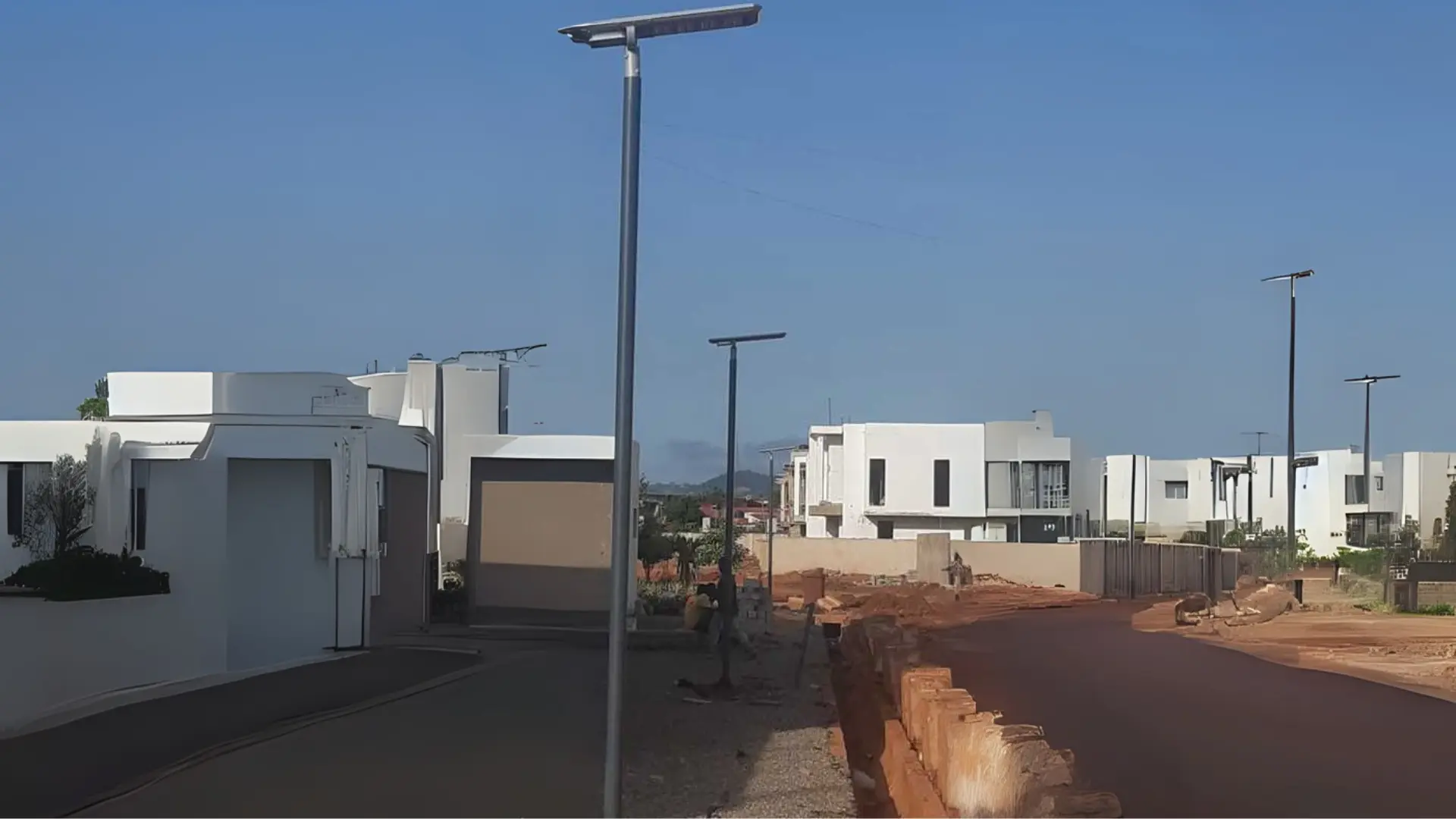
Why Environmental Conditions in Ghana Are Demanding for Streetlights
1. The Harmattan: The Silent “Performance Killer”
From November to March, Saharan dust blankets solar panels. Research by Ashesi University and monitoring data from local operator Optima Solar Systems report:
- Power Generation Loss: Unmaintained systems can experience an 18–30% drop in output within two weeks.
- Extreme Cases: In northern Ghana, if panels are not cleaned during the dry season, dust-related losses can exceed 50%.
- Countermeasures: Add a 150% power buffer to theoretical capacity when procuring panels, and prioritize products with self-cleaning coatings.
2. Grid Realities: Hybrid Systems Are the Optimal Solution
Although Ghana’s power grid has extensive coverage, reliability remains a challenge. A 2024 ACEP (Ghana Center for Petroleum and Energy Policy) report indicates that cities within the ECG service area experience an average of 17 outages per year.
Recommendation: In urban peripheries or along major thoroughfares, adopt hybrid systems that prioritize solar power with the grid as a backup. This reduces reliance on massive battery storage while ensuring 100% streetlight illumination.
4 Reliable Suppliers with Deep Roots in the Ghana/West Africa Market
1. SRESKY — A Technical Benchmark for Large-Scale Government Projects and High-Specification Initiatives
For international buyers participating in government tenders, SRESKY is one of the most suitable suppliers. The company successfully deployed 5,000 units of its ATLAS series solar street lights for the Oran National Stadium project in Algeria, covering parking lots, access roads, and large public spaces. This helped the stadium achieve complete energy independence and zero-carbon operations.
Track Record: SRESKY has certified projects across West Africa (Nigeria), local residential areas in Ghana, and the Middle East (municipal roads in Iraq), with over 3,500 global tender projects.
Technical Features: Designed for hot and dusty environments, its products include advanced TCS (Thermal Control System) and ALS (Adaptive Lighting Maintenance) technologies, enabling stable operation at temperatures up to +60°C and over 10 consecutive days of cloudy or rainy weather.
Evaluation Recommendation: For government tenders, large complexes, highways, or projects requiring high customization, review details of the 5,000 delivered projects at sresky.com for project matching and bidding support.
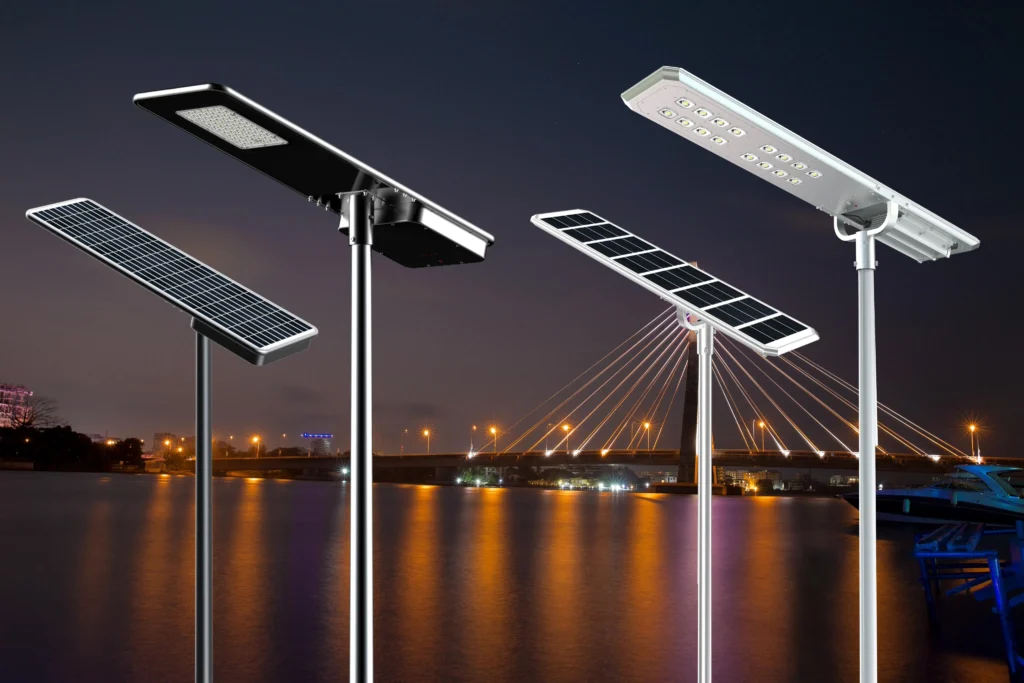
2. WOSEN — Expert in Standardized Industrial Manufacturing
WOSEN offers high manufacturing efficiency and batch consistency, providing a clear cost-performance advantage. A landmark project in Ghana was the 2018 highway installation, deploying 1,600 high-efficiency 80W all-in-one solar street lights.
Considerations: WOSEN has no registered local entity in Ghana. For government tenders or spare parts support, clarify warranty and after-sales arrangements in advance.
Evaluation Recommendation: Ideal for EPC organizations and government prime contractors seeking cost-effective, standardized large-scale orders. Local entity coordination and after-sales agreements must be finalized prior to procurement.
3. Solar Light Co. Ltd. — Specializing in System Integration and Local Support in West Africa
Solar Light is a locally registered entity in Ghana with operations in multiple West African countries (Togo, Benin, Nigeria, Burkina Faso, Sierra Leone). Its strength lies in on-site assessment, installation, commissioning, and long-term maintenance, avoiding cross-border logistical inefficiencies.
Considerations: Solar Light is not a manufacturer but sources components from upstream suppliers. In government tenders requiring direct manufacturer relationships, it is better suited as a local installation and maintenance partner.
Evaluation Recommendation: Valuable for supporting local teams, supply chain management, and import/export operations, but not suitable when manufacturing-level guarantees are required.
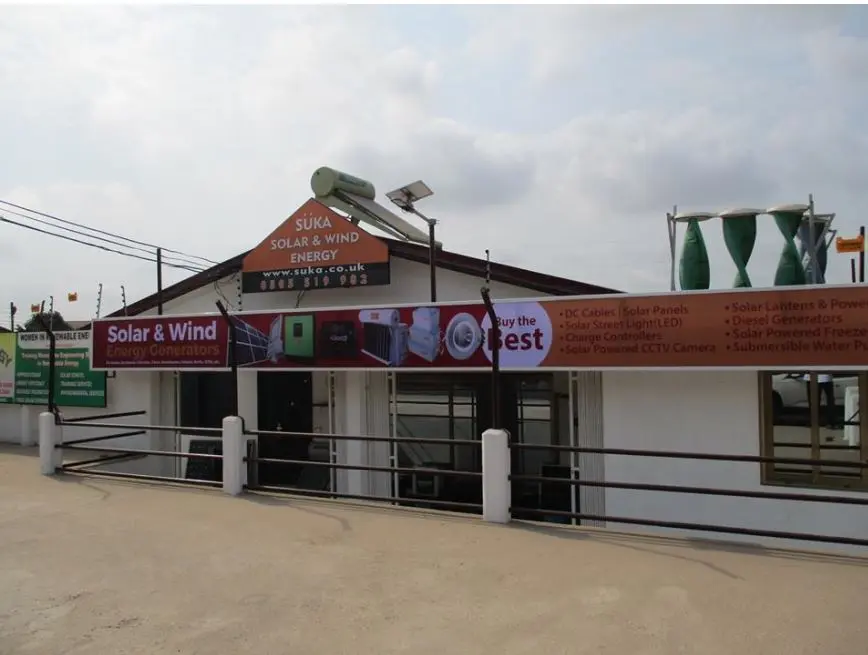
4. Suka Solar Ghana — A Local Company Meeting European Engineering Standards
Operating since 2009, Suka Solar’s parent company, Süka GmbH, has German and British roots. The company serves key Ghanaian regions including Greater Accra, Ashanti, and Volta, providing local invoicing and contract capabilities, reducing post-sales disputes.
Considerations: Suka Solar is not a lighting fixture manufacturer, making it suitable for community or pilot projects with smaller volumes.
Evaluation Recommendation: Well-suited for local support during project bidding due to physical registration, invoicing capabilities, and rapid response times.
How to Get Started: Request a Quote for Your Ghana Project
RFQ Checklist:
- Project Location & Road Type: Urban, suburban, rural, or national highways.
- Road Width & Pole Spacing: Determines lighting calculations and power specifications.
- Target Illuminance (Lux): Reference Ghana Highway Authority or ECG standards.
- Order Quantity & Delivery Schedule: Specify Tema Port or inland delivery.
- Turnkey Supply or Luminaires Only: Define whether light poles, mounting hardware, and civil works are included.
- OEM or Government Branding Requirements: Specify in advance.
- Warranty Requirements: State minimum warranty; do not negotiate after initial screening.
Tip: Issue the RFQ early to verify product certifications. CE certificate verification may take time; do not wait until one week before submission.
Contact SRESKY for Solar Street Light Solutions Tailored to Ghana
For buyers seeking manufacturers with documented Ghanaian project experience, Africa-specific engineering designs, and OEM or customization flexibility, SRESKY is a logical starting point.
ATLAS Series Features: Rainy-season battery management, high ambient temperature performance, and motion sensing on rural roads—all built into the design, providing concrete evaluation materials rather than generic datasheets.
Expert Advice: How to Mitigate Bidding Risks
- Verify Certifications: Ghanaian government tenders often require IEC 60598 compliance. Confirm certificate numbers with the issuing authority.
- Logistics Buffer: Customs clearance at Tema Port may take 2–4 weeks. Factor this into timelines.
- Compliance Verification: Check the Ghana Energy Commission website for valid supplier or installer licenses.
Conclusion: For large government projects, combine WOSEN’s manufacturing scale with Solar Light’s local service. For private or community projects requiring technological resilience, SRESKY is an excellent starting point.
Frequently Asked Questions
1. Recommended Specifications for Ghana:
- IP65 protection, LiFePO4 batteries, operating range up to 60°C, 3–5 days backup (more in northern regions), monocrystalline PERC panels, CE certification.
- For government tenders, IEC 60598 compliance is increasingly required. Add 15–20% panel capacity for Harmattan dust.
2. Harmattan Dust Impact:
- Dust accumulation is the most significant seasonal performance variable.
- Data from Ghana shows unmaintained panels lose 18–30% power in two weeks.
- Countermeasure: Select self-cleaning models, such as the Thermos series from SRESKY.