
Project Snapshot
Project Information Details
- Project Name: Rural Road Solar Lighting Project in Dodoma Province, Tanzania
- Project Owner: Local Road Infrastructure Management Authority
- Main Road Section: County Road R152, 160 lights, 10-meter poles, spacing of 38–42 meters, covering approximately 6.4 kilometers
- Product Model: Sresky THERMOS Series
- Total System Capacity: 160 standalone solar street light systems
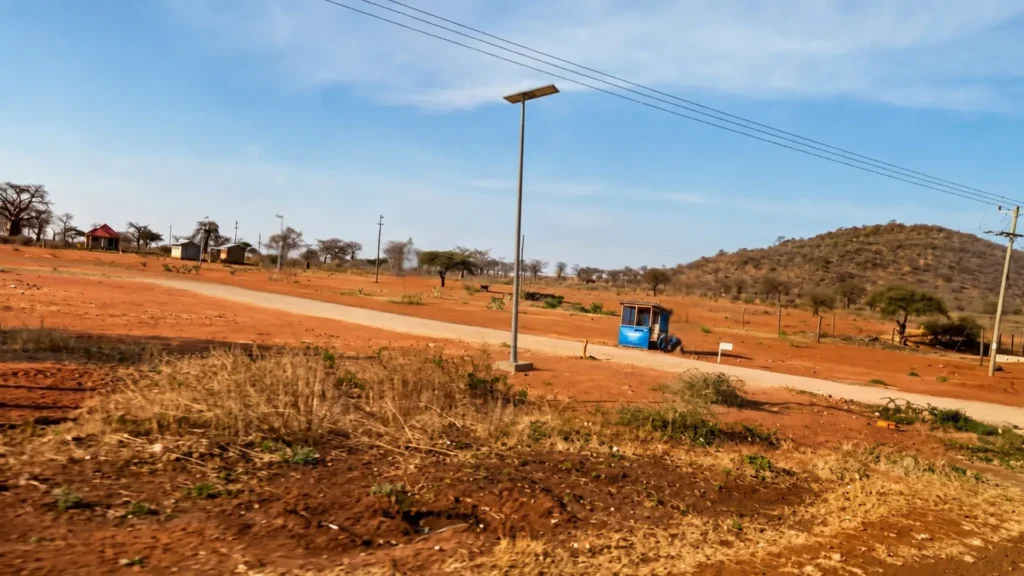
Challenge 1: High-Dust Environments Impact PV Module Efficiency
Dodoma is a semi-arid plateau region with extensive areas of exposed soil and gravel along the roadsides. As vehicles pass by, fine dust particles in the air can easily adhere to the surface of solar modules. Over time, this accumulation can reduce the panels’ ability to absorb sunlight and affect power generation efficiency.
Compared with urban road lighting projects, rural roads are typically characterized by long distances, scattered locations, and difficulties with manual maintenance. Relying on manual cleaning not only increases labor costs but also adds to the long-term operation and maintenance burden of the project.
Key impacts include:
- Dust accumulation reduces light transmittance on the module surface, affecting daily power generation performance;
- Long-term contamination may result in reduced PV module output;
- The dispersed road layout increases the difficulty of manual cleaning;
- Deploying maintenance vehicles and personnel to remote areas involves high costs.
For rural road solar projects in Africa, minimizing the impact of dust accumulation is a critical factor in ensuring long-term and stable system operation.
Sresky THERMOS Series Solution
Designed for high-dust environments, the Sresky THERMOS Series features an Auto Clean active cleaning system.
Unlike traditional methods that rely on manual maintenance or natural cleaning processes, this system uses an automatic cleaning mechanism to reduce the impact of long-term dust accumulation on PV modules.
Its primary functions include:
- Reducing continuous dust accumulation;
- Lowering the frequency of manual cleaning;
- Helping photovoltaic modules maintain optimal power generation performance;
- Providing better suitability for rural road projects with limited maintenance resources.
At the same time, the project utilizes high-efficiency N-type TOPCon photovoltaic modules to increase energy conversion capacity per unit area. This provides the system with greater energy input and improves overall energy utilization efficiency, even in high-dust environments.
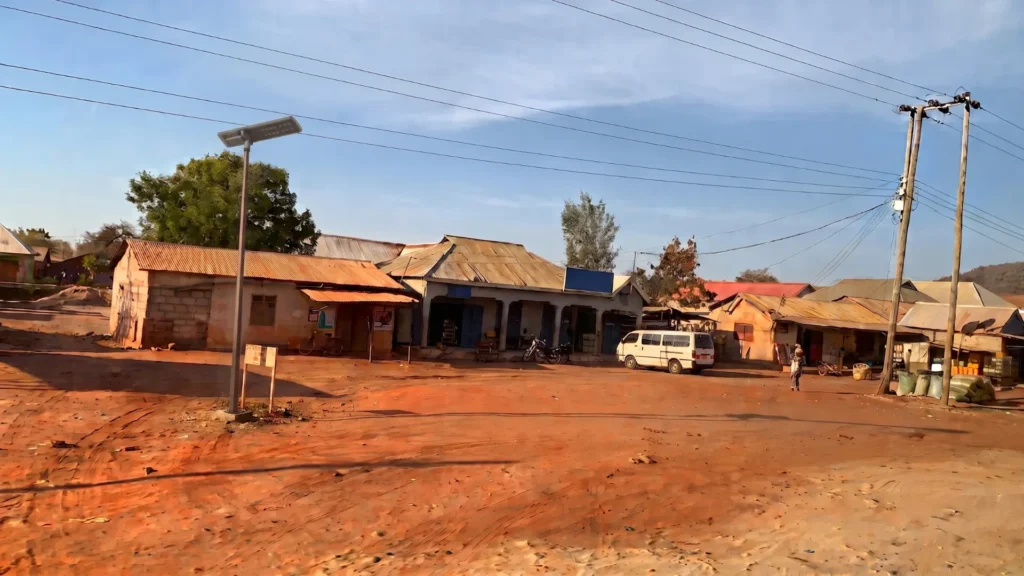
Challenge 2: High Temperatures and Intense Sunlight Affect Battery Lifespan and System Stability
The Dodoma region experiences long hours of sunshine throughout the year. Solar equipment installed outdoors for extended periods must withstand persistent high temperatures and intense solar radiation.
For solar streetlight systems, high temperatures not only affect battery performance but also accelerate the aging of electronic components. Without effective temperature management and intelligent control, issues such as reduced battery capacity and shorter operating times may occur after prolonged use.
Key risks include:
- High-temperature environments reducing battery performance;
- Prolonged exposure to direct sunlight increasing thermal management pressure on the system;
- Reduced battery lifespan, resulting in higher long-term replacement costs;
- Difficulties in maintaining equipment in remote areas, requiring higher system reliability.
Sresky THERMOS Series Solution
This solution focuses on optimization through both hardware management and software control.
On the hardware side, the system incorporates TCS temperature control technology, which regulates the battery operating environment through structural optimization and temperature management, reducing the impact of high temperatures on energy storage performance.
For intelligent control, the ALS 2.4 adaptive lighting algorithm dynamically adjusts lighting strategies based on remaining battery capacity and actual operating conditions.
Additionally, the system is equipped with multiple safety protection mechanisms to manage conditions such as overcharging, over-discharging, overheating, and short circuits. It also supports remote monitoring of equipment operating status, making post-installation maintenance more efficient for project owners.
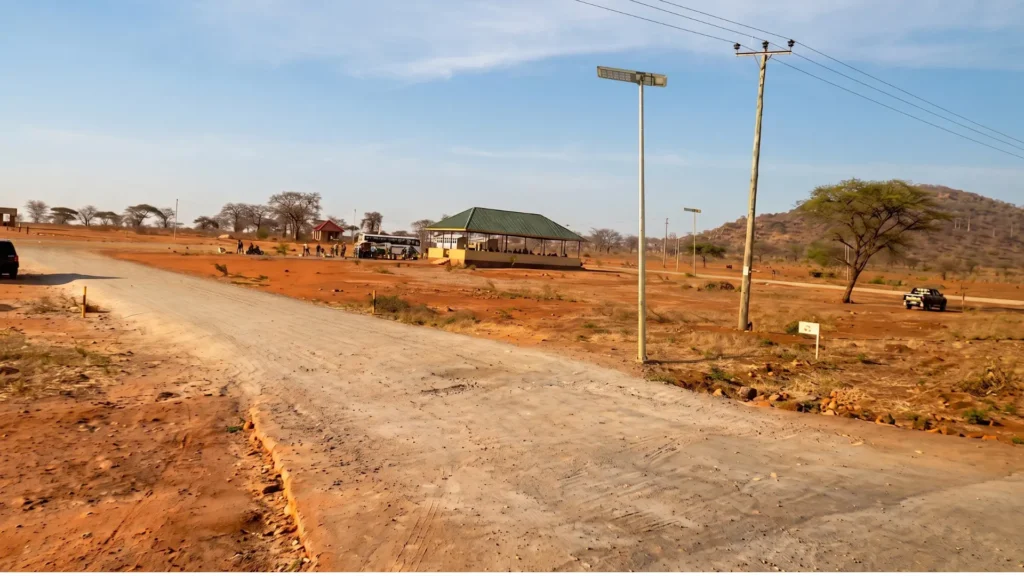
Project Outcomes
- Solid Compliance: The system has passed relevant testing and certification, meets basic compliance requirements for bidding, and includes a warranty for a specified period.
- Stable Power Generation: With regular cleaning and high-quality photovoltaic modules, power generation performance is expected to remain at a satisfactory level.
- Potential Reduction in O&M Costs: Reduced requirements for high-altitude cleaning can help lower long-term maintenance expenses.
- More Proactive Management: The project shifts from “reacting to problems after they occur” to “remote monitoring + proactive prevention,” making it better suited for projects with dispersed locations.
Customer Testimonial
“The biggest challenge of this project was not only completing the equipment installation but also ensuring that the lighting system could operate reliably over the long term without grid support and under limited maintenance conditions. Sresky provided more than just product specifications—they offered a solution specifically designed for local environmental conditions. Automatic cleaning and intelligent battery management were key factors in our decision to select this solution.”
— Abdul Mwakonda, Regional Project Coordinator, TANROADS, Dodoma
FAQ
1. Are solar street lights suitable for installation in high-temperature regions?
Yes, but suitability largely depends on battery management and thermal design.
In high-temperature regions such as Africa and the Middle East, solar street lights must account for the impact of ambient temperatures on batteries and electronic components. Selecting products with temperature control designs, battery protection mechanisms, and intelligent energy management features can help improve long-term operational stability.
2. How Do Solar Street Lights Minimize the Impact of Dust on Power Generation?
Self-cleaning solar street lights reduce surface contamination on photovoltaic panels through automatic cleaning technology:
- Minimizing the impact of long-term dust accumulation;
- Reducing the frequency of manual cleaning;
- Improving suitability for rural African environments and high-dust road conditions.
3. What Certifications Are Required for Solar Street Light Projects in Africa?
Projects exporting to Africa typically require the following:
- IEC test reports;
- Local PVoC compliance certification;
- Product warranty documentation.
These documents help ensure smooth customs clearance, delivery, and subsequent project management.
Conclusion
As more regions advance green infrastructure development, solar lighting for rural roads is gradually shifting from a focus on “low-cost installation” toward “long-term reliable operation.”
For municipal departments, road contractors, and project planners, selecting solar street lights requires attention not only to the initial purchase price but also to:
- The long-term power generation capacity of photovoltaic modules;
- Performance under various weather conditions;
- Ease of maintenance;
- Overall life-cycle value.
The Dodoma project in Tanzania demonstrates that, in environments characterized by high dust levels, high temperatures, and limited maintenance resources, solar streetlight solutions equipped with active cleaning and intelligent energy management capabilities can provide a more stable approach for off-grid road lighting projects.