
Anyone who has participated in infrastructure tenders in the Philippines knows that DPWH compliance is non-negotiable. If a supplier cannot provide test reports in accordance with Department Order No. 19, simply claiming that their products are “suitable for tropical climates” wastes both your time and bid bond.
In 2023, DPWH Secretary Manuel Bonoan issued Department Order No. 19, establishing mandatory standards for solar lighting on national highways, covering uniformity, protection rating, installation height, and power output. By 2026, the DPWH’s 529.6 billion peso budget has fully shifted to a “quality-first” approach—Secretary Vince Dizon has explicitly mandated a shift from quantity to quality. This means every technical specification in a bid will face stricter scrutiny.
Below, I explain the true implications of DPWH compliance at the component level and introduce five suppliers, each with unique strengths. This assessment is based on 15 years of experience in solar lighting procurement across Southeast Asia.
Why DPWH Compliance Is Critical for Philippine Infrastructure
Non-compliant lights will fail, directly affecting project audits. DPWH compliance addresses failure modes specific to the Philippines.
The industry often refers to the “three-month curse”: cheap solar lights installed during the dry season fail within three months once the rainy season arrives. Cloud cover reduces charging efficiency, typhoon-force winds tear apart thin casings and brackets, and internal temperatures exceeding 60°C accelerate battery degradation, leaving areas in darkness.
The metrics specified in DO 19—such as 20–30 lux on main roads and a uniformity ratio ≥0.4—are designed to ensure traffic safety. For bidders, the choice is clear: submit a compliant technical proposal with IES files, test reports, and material certifications, or face elimination during bid evaluation.
Key Technical Standards for Solar Street Lights in Philippine Projects
Typhoon Resistance (Wind Load Analysis)
The Philippines experiences an average of 20 typhoons per year, 70% of which occur between June and October. For 6-meter or 9-meter light poles, wind load is the primary structural concern. NSCP 2015 specifies a minimum wind load of 120 kg/m² for vertical projections, a standard also applied to light poles.
Three key evaluation points:
- Enclosure: A one-piece ADC12 die-cast aluminum enclosure for heat dissipation and structural rigidity. Thin stamped aluminum enclosures crack under repeated wind stress.
- Bracket: A stainless steel bracket secured with dual bolts should be the minimum requirement.
- Validation: Wind tunnel or CFD simulation reports are required; failure to provide them indicates insufficient engineering validation.
Battery System and Rainy Season Runtime
Batteries determine rainy-season performance and service life. Lithium iron phosphate (LiFePO4) batteries provide 2,000–5,000 charge cycles (approximately 5–10 years) and superior thermal stability compared to lead-acid or ternary lithium batteries.
Key factors beyond chemistry:
- Thermal Management: Lamp housings exceeding 60°C require fire-resistant thermal insulation foam. Low-cost manufacturers often cut corners.
- Controller: MPPT controllers are 15%–25% more efficient than PWM chargers under low-light conditions.
- Runtime: DPWH requires 3–5 days at full lumen output, not in dimmed “energy-saving mode.”
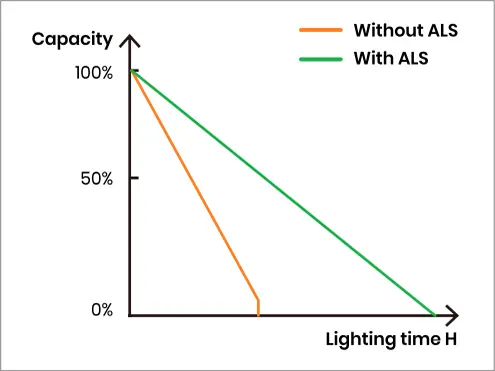
- Smart Control (ALS & TCS): Adaptive Lighting Systems (ALS) and Temperature Control Systems (TCS) ensure continuous illumination during 3–7 consecutive days of rain and prevent thermal battery degradation by over 30%.
Five Solar Streetlight Suppliers to Watch
Supplier 1: Sresky — Climate-Resilient Solutions for Large-Scale Infrastructure
Sresky specializes in synchronized operations of hundreds of luminaires across kilometers of roadways. Its proprietary ALS and TCS systems, refined over two decades, maintain battery performance and illumination even during 3–7 consecutive rainy days.
Advantages for DPWH bids:
- Complete documentation: IES files, wind tunnel/CFD reports, third-party battery cycle tests.
- Proven compliance with DO 19 uniformity and runtime specifications.
- Field-validated performance in large-scale Southeast Asian projects.
Supplier 2: PhilSolar — Local Warehousing and Rapid Response
PhilSolar stocks products locally in the Philippines, reducing delivery time. Their luminaires provide reliable basic performance and are supported by on-site installation guidance. Verify battery production dates and storage conditions to ensure initial capacity is unaffected.
Supplier 3: Signify (Philips) — Optical Quality and Brand Reputation
Signify’s Philips brand emphasizes precise optical design and uniform illumination. Minimal deviation in luminous efficacy and consistent color temperature ensure visual uniformity for large-scale installations. Global supply chains guarantee long-term availability of spare parts.

Supplier 4: Felicitysolar — Cost-Effectiveness and Distributed Deployment Experience
Felicitysolar is experienced in village- and town-level installations. Its products are practical, easy to install, and cost-effective. Buyers must ensure that models meet current DO 19 specifications, focusing on battery performance and protection ratings.
Supplier 5: Lecuso — Smart Control and Battery Technology
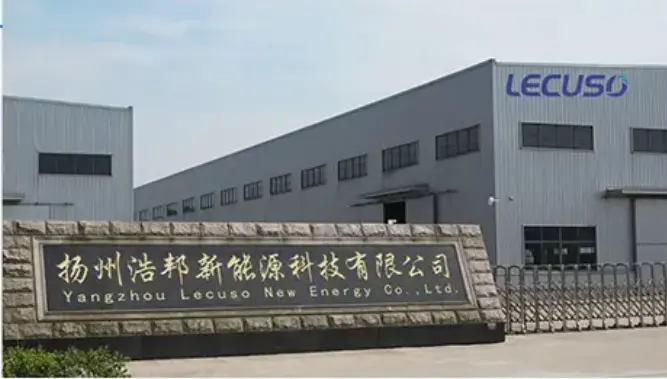
Lecuso’s integrated and split-type solar streetlights feature smart controls including motion/radar sensors and autonomous dimming. Die-cast aluminum housings with hot-dip galvanized lamp posts and stainless steel fasteners withstand the Philippines’ high-humidity and high-salt-fog conditions. Request IES files and IP test reports to verify specifications.
How to Evaluate Solar Lighting Suppliers
Technical Documents Checklist:
- IES photometric files matching claimed output and distribution.
- Third-party LiFePO4 battery cycle reports.
- Wind load certification (wind tunnel or CFD) for typhoon conditions.
- Valid CE, RoHS, IP65/IP66 certifications.
- Corrosion-resistant treatments for coastal projects.
Project Experience Verification:
- Reference installations in Luzon, Visayas, and Mindanao.
- Largest single deployments in Southeast Asia for bids over 100 units.
After-sales and Maintenance:
- Warranty response time and local spare parts availability within 48 hours.
- Modular, independently replaceable components.
- Battery warranty aligns with the 6-year system requirement.
Conclusion
The DPWH’s 2026 quality-first shift and DO 19 thresholds have raised bidding standards. Procurement personnel must evaluate climate resilience, documentation completeness, and verifiable project experience—not just wattage and lumens.
Each supplier has unique strengths. For large-scale projects emphasizing technical bids and DPWH alignment, prioritizing technical documentation and field experience early prevents insufficient supporting materials during evaluation.
Preparing a bid for a DPWH project? Contact Sresky for customized technical solutions and compliant quotations.
Table of Contents