
Solar Street Light Bidding: Product Compliance Is Just the First Step
It is quite common for solar street light bids to be rejected despite competitive products and pricing. In many cases, the reason is not that the products are substandard, but rather that:
- Test reports do not match the models included in the bid.
- IES files are missing or correspond to the wrong models.
- Capacity calculation sheets do not match the parameters specified in the tender documents.
- The BOQ format has been altered.
Government procurement and EPC projects evaluate the entire body of supporting documentation, including product specifications, system design, lighting performance, certifications, project experience, and after-sales service capabilities.
This article outlines the eight most critical categories of bidding documents and highlights the areas where bidders are most likely to lose points. For project-specific requirements, always refer to the tender documents and official addenda.
I. Overview of the Eight Major Categories of Bidding Documents
| Document Category | Main Documents | Review Purpose |
|---|---|---|
| Technical Specifications | Product Specifications, Technical Compliance Table | To verify product parameters |
| Technical Proposal | System Proposal, PV and Battery Capacity Calculation Sheets | To verify design capabilities |
| Lighting Simulation | IES Files, DIALux Reports | To verify road lighting performance |
| Certifications and Test Reports | Product Certifications, Test Reports | To verify product performance and safety |
| Financial Offer | BOQ, Quotations, Commercial Terms | To verify bid completeness |
| Company Compliance | Company Qualifications, Manufacturer Authorization Letter (MAF), Compliance Declarations | To verify bidder eligibility |
| Project References | Project Records and Supporting Documents | To verify project execution experience |
| Warranty and After-Sales Service | Warranty Letters, After-Sales Service Plans | To verify service capabilities |
Priority Recommendations: Mandatory qualification criteria and technical requirements must be satisfied first. Failure to meet these requirements may result in immediate bid rejection. Technical evaluation criteria, such as lighting simulation quality, project experience, and after-sales service capabilities, determine the bid’s overall competitiveness.
II. Review the Tender Documents First: Key Requirements for Different Project Types
Before preparing your bid, carefully identify the mandatory qualification criteria, technical requirements, bid evaluation criteria, and grounds for rejection specified in the tender documents.
- Government Procurement Projects: Focus on company qualifications, technical specifications, certification and test reports, manufacturer authorization letters (if required), bid bonds, and experience with similar projects.
- EPC Projects: In addition to product documentation, these projects typically require capacity calculations, IES files, DIALux simulations, light pole structural data, delivery schedules, and after-sales service plans. Some projects may also require manufacturers to assist with equipment technical submissions and approval processes (Material Submittal Approval).
- Internationally Financed Projects: In addition to standard documentation, further requirements may include anti-corruption declarations, conflict-of-interest declarations, sanctions and eligibility declarations, environmental and social compliance documents, and battery transportation and recycling documentation.
III. Technical Specifications: Product Specification Documents and Technical Compliance Tables
Component Parameters to Include in the Specifications
| Component | Key Parameters |
|---|---|
| LED Luminaires | Rated power, total luminous flux, luminous efficacy, correlated color temperature (CCT), color rendering index (CRI), light distribution type, IP/IK ratings, driver specifications, and operating temperature |
| Solar Modules | Module type, rated power (Wp), conversion efficiency, operating voltage and current, dimensions, and warranty |
| Energy Storage Batteries | Battery chemistry, nominal voltage, capacity (Ah), energy (Wh), allowable depth of discharge (DoD), cycle life, and operating temperature |
| Controllers | MPPT or PWM operating mode, input power, and protection functions |
| Light Poles | Height, material, wall thickness, anti-corrosion treatment, structural drawings, and foundation design requirements |
Note: For batteries, do not specify capacity in Ah alone; always include the nominal voltage. For example, a 12.8 V, 100 Ah battery has a nominal energy capacity of 1,280 Wh. Actual usable energy must also account for the allowable depth of discharge and system losses.
In coastal areas, high-temperature environments, and regions with strong winds, pay particular attention to corrosion protection and wind resistance requirements.
Technical Compliance Table
Submitting only a product catalog is generally insufficient. Bidders should respond to every requirement listed in the tender documents.
| Tender Requirement | Bid Product Parameter | Compliance Status | Supporting Documentation |
|---|---|---|---|
| LED Power | Actual Bid Specification | Compliant/Deviation | Product Datasheet |
| Battery Capacity | Actual Bid Specification | Compliant/Deviation | Battery Specification |
| Protection Rating | Actual Bid Specification | Compliant/Deviation | IP Test Report |
| Autonomous Operating Time | Design Calculation Results | Compliant/Deviation | Calculation Report |
Core Principle: Every compliance statement must be supported by corresponding documentation. Product models, power ratings, and configurations must remain completely consistent across all submitted documents. This is one of the first things evaluation experts check during cross-verification.
IV. Technical Proposal: PV and Battery Capacity Calculation Report
While the technical specifications describe what products will be supplied, the technical proposal must demonstrate that the entire system can meet the project’s requirements.
A typical technical proposal includes the design basis, system configuration, solar panel and battery capacity calculations, dimming strategies, light pole foundation design, installation and commissioning procedures, quality control measures, and delivery schedules.
Among these elements, capacity calculations are particularly important.
Battery Capacity Calculation
Daily Lighting Energy Consumption (Wh) = Luminaire Power (W) × Operating Hours per Night (h)
Nominal Battery Energy (Wh) = Daily Energy Consumption × Days of Autonomy ÷ (Allowable DoD × Discharge Path Efficiency)
Example: A 60 W luminaire operates for 12 hours per night, with 3 days of autonomy, an allowable DoD of 80%, and a discharge path efficiency of 90%.
- Daily energy consumption: 60 × 12 = 720 Wh
- Nominal battery energy: 720 × 3 ÷ (0.8 × 0.9) = 3,000 Wh
This is only a preliminary estimate. The actual design should also account for dimming strategies, temperature effects, battery capacity degradation, and other system loads.
PV Panel Capacity Calculation
PV capacity calculations should consider local peak daily sunshine hours, solar resources during the worst-performing month, module temperature derating, and the charging efficiency of the controller and battery.
In regions with pronounced rainy seasons or prolonged periods of overcast weather, relying solely on annual average daily sunshine hours is not recommended. Instead, conduct a monthly energy balance analysis, paying particular attention to system performance during the month with the lowest solar resource availability.
A reliable calculation report must clearly specify the final system configuration, along with the sources of key parameters and the assumptions used in the design.
V. IES Files and DIALux Reports: Demonstrating Road Lighting Performance
Luminaire power alone does not determine road lighting performance. Even two luminaires with the same rated power can produce different lighting results due to differences in lens design, light distribution, installation height, and pole spacing.
This is also an important area in which differences between suppliers become apparent during EPC technical evaluations.
IES files are photometric data files that comply with the IES LM-63 format. They record luminous intensity distribution data at different angles and directions and are used for lighting simulations.
These files must correspond to the actual product models, wattages, and optical configurations specified in the bid.
LM-79 reports document the test results of the optical and electrical performance of solid-state lighting products. Their purpose differs from that of IES files, and the two cannot be used interchangeably.
DIALux reports must be prepared based on the actual road conditions of the project. Key modeling inputs include road width, number of lanes, pole height and spacing, luminaire models, installation angles, and maintenance factors.
The report should evaluate relevant lighting performance metrics, such as illuminance or luminance, uniformity, and glare, in accordance with the lighting standards specified in the tender documents.
The following materials are recommended for submission:
- Luminaire layout drawings
- Lighting calculation input parameters
- Lighting simulation results
- A comparison table showing compliance with tender requirements
- Verifiable project reference documents (if required)
Lighting and Power Supply Must Be Designed Together: Increasing the power of luminaires in standalone solar street light systems will also affect the required capacities of PV panels, batteries, and controllers. The design must demonstrate that both the road lighting requirements and the system’s power supply requirements can be satisfied.
Case Study: For an EPC technical proposal involving a municipal road project in Ghana, SRESKY conducted a DIALux simulation based on the road width, 9-meter pole height, 25-meter installation spacing, and luminaire photometric data. The simulation verified key performance metrics, including average luminance, uniformity, glare, and power density.
Manufacturers that can provide accurate IES files and project-specific DIALux reports are better positioned to support the preliminary technical review and proposal optimization stages of EPC projects.
VI. Certifications and Test Reports
Certification requirements vary depending on the destination country, product configuration, and project type. The following table is for reference only; not every project requires all the listed reports.
| Product or Project Category | Common Standards and Documents |
|---|---|
| LED Luminaire Performance | LM-79 |
| Photometric Distribution Files | IES LM-63 |
| LED Light Sources | LM-80, TM-21 |
| Luminaire Safety | IEC 60598 Series |
| IP/IK Protection | IEC 60529 / IEC 62262 |
| Photovoltaic Modules | IEC 61215, IEC 61730 |
| Lithium Battery Transportation | UN 38.3 |
| Battery Safety | IEC 62619, etc. |
| Quality Management System | ISO 9001 |
The most critical requirement during document review is that all reports must correspond to the actual products included in the bid.
Verify every relevant detail, including the model number, rated power, configuration, test items, test conditions, and scope of the report. You should also confirm that the testing laboratory has the appropriate testing capabilities.
Market access requirements in the destination country must also be verified in advance. For the European market, prepare a CE Declaration of Conformity and the relevant technical documentation, along with RoHS documentation where required.
For markets such as Nigeria, Saudi Arabia, and India, verify applicable market access requirements, such as SONCAP, SABER, or BIS, based on the product category and import regulations.
VII. Financial Offer: BOQ and Commercial Quotation
Always use the format specified in the tender documents. Do not arbitrarily delete or modify any BOQ items.
Common financial and commercial documents include:
- Bid Form / Tender Submission Form
- Bill of Quantities (BOQ)
- Product and Accessory Quotations
- Transportation and Insurance Costs
- Payment Terms, Delivery Schedule, and Quotation Validity Period
- Bid Bond and Performance Bond (if required)
- Spare Parts and Extended Warranty Quotations
The BOQ must clearly define the entire scope of supply, including solar street lights, photovoltaic modules, batteries, controllers, light poles, foundation accessories, spare parts, packaging, transportation, and installation services.
This helps prevent duplicate quotations and omitted items.
Before submission, carefully check the following:
- Unit price calculations and total prices
- Quotation currency and applicable taxes
- Trade terms, such as FOB, CIF, DAP, and DDP
- Payment terms
- Quotation validity period
If the tender requires a Life Cycle Cost (LCC) analysis, include the costs of battery replacement, maintenance, spare parts, and after-sales service. The assumptions used in the calculations should also be clearly explained.
VIII. Company Compliance: Company Qualifications and Manufacturer Authorization Letter (MAF)
Common Company Qualification Documents
Depending on the tender requirements, the following documents may be required:
- Business license or certificate of registration
- Company profile and factory information
- Tax documentation
- Financial statements and bank credit references
- Organizational structure and personnel information
Manufacturer Authorization Letter (MAF)
Some projects allow agents or trading companies to participate in the bidding process but require them to submit a Manufacturer Authorization Letter (MAF).
If an MAF is required, apply for it in advance. The authorization letter should typically specify:
- Manufacturer’s name
- Bidder’s name
- Project name
- Scope of authorized products
- Authorization validity period
- Authorized signatures and official company seals
Depending on the project requirements, additional documents may include anti-corruption declarations, conflict-of-interest declarations, sanctions and export control declarations, environmental and social responsibility commitments, and joint venture agreements.
Pre-Submission Checklist
Before submitting the documents, verify the following:
- Document validity periods
- Required signatures and official company seals
- Notarization and authentication requirements
- Translation requirements
- Number of original and duplicate copies
- Required electronic file formats
IX. Project References: Proof of Project Experience
Project experience is an important basis for evaluating a bidder’s ability to execute contracts successfully.
It is recommended to prepare a standardized project reference table containing the following information:
- Project name
- Country
- Client
- Product model
- Quantity supplied
- Delivery year
- Current project status
Supporting documents may include contracts or purchase orders, acceptance certificates, client recommendation letters, on-site photographs, and operational records.
If confidential client information is involved, obtain the necessary authorization before submitting any supporting materials.
When selecting project references, prioritize projects with road conditions, pole heights, lighting power ratings, climatic environments, and project scales similar to those of the target project.
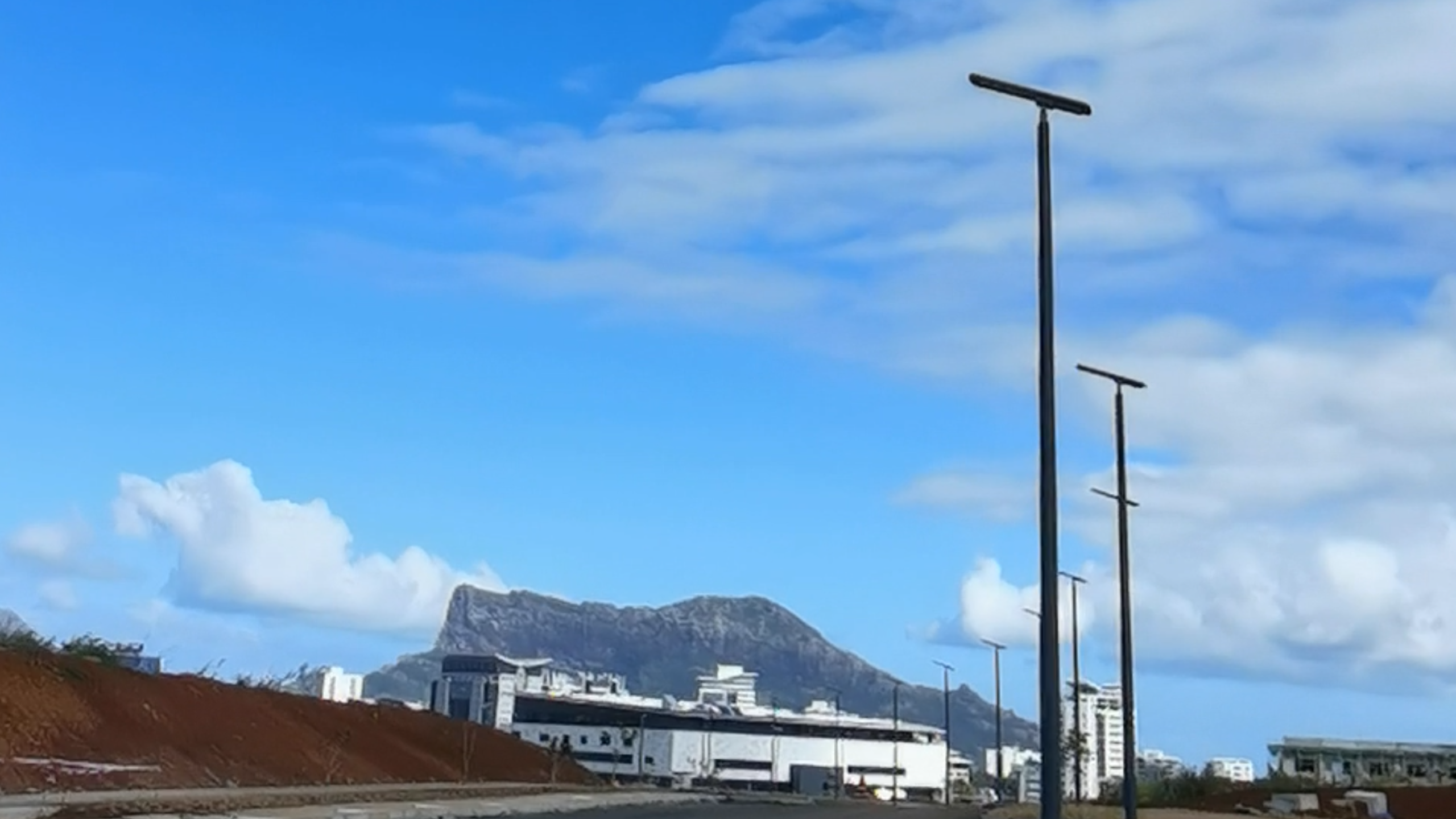
For example, SRESKY has showcased a solar street light project in a Nigerian city and a smart city lighting project in Mauritius. These projects can serve as references for applications in different operating environments.

X. Warranty and After-Sales Service: Warranty Terms and Service Plans
- Specify warranties by component: Clearly list the warranty periods and coverage for LED luminaires, drivers, photovoltaic modules, batteries, controllers, and light poles separately.
- Provide a comprehensive warranty letter: Clearly state the warranty start date, coverage, exclusions, response times for malfunctions, repair and replacement procedures, spare parts availability, and cost-sharing arrangements.
- Address overseas project requirements: Where applicable, include remote technical support, installation and maintenance training, spare parts supply, battery replacement and recycling plans, and local service networks.
Common Misconceptions: Battery cycle life is not the same as the warranty period. Similarly, a photovoltaic module’s product warranty is different from its power output warranty. These terms must be clearly distinguished and specified separately.
XI. Final Checklist Before Bidding
Technical Documentation
-
Product Specifications and Technical Compliance Table
-
Specifications for PV Modules, Batteries, and Controllers
-
Light Pole and Foundation Drawings
-
PV and Battery Capacity Calculation Reports
-
IES Files and DIALux Reports (if required)
Certifications and Qualifications
-
Product Certifications and Test Reports (model numbers must match the products included in the bid)
-
Company Registration and Financial Documents
-
Manufacturer Authorization Letter (if required)
-
Declaration of Conformity and Destination Country Market Access Documents
Commercial and Project Performance
-
Bill of Quantities (BOQ) and Complete Quotation
-
Payment Terms, Trade Terms, and Quotation Validity Period
-
Project Track Record and Supporting Documentation
-
Warranty Letter, Spare Parts List, and After-Sales Service Plan
-
Bid Bond and Performance Bond (if required)
Final Submission
-
All documents are properly signed and stamped.
-
Translations, notarizations, and certifications meet the tender requirements.
-
Document formats, naming conventions, and the required numbers of originals and copies are correct.
-
All attachments can be opened and viewed properly.
-
The bid is submitted before the deadline.
XII. Frequently Asked Questions (FAQ)
Q1: What documents are required for a solar street light bid?
Typical requirements include product specifications, technical proposals, IES/DIALux files, commercial quotations, company qualification documents, certifications and test reports, project references, and warranty and after-sales service plans.
Specific requirements are always subject to the tender documents.
Q2: Are IES files mandatory for a bid?
Not necessarily. However, if the project requires road lighting calculations or specifies luminaire photometric data, you will typically need to provide IES files or other recognized photometric file formats corresponding to the proposed models.
Q3: What is the difference between a DIALux report and an IES file?
IES files provide photometric distribution data for luminaires. DIALux reports use this data together with road parameters and installation conditions to perform lighting simulations.
The two serve different purposes and cannot be used interchangeably.
Q4: Can trading companies participate in government tenders?
This depends on the project’s eligibility requirements. Some projects allow agents or trading companies to participate, but may require them to submit a Manufacturer Authorization Letter (MAF), product documentation, and the manufacturer’s qualification documents.
Q5: What support can manufacturers provide to EPC contractors?
Manufacturers typically provide product specifications, IES files, DIALux simulation support, PV and battery capacity calculations, test reports, light pole technical documentation, delivery schedules, and after-sales support.
Conclusion: A Successful Bid Proposal Is Built on a Complete Chain of Evidence
The product specification sheet outlines the products to be supplied. Capacity calculations demonstrate the suitability of the energy configuration. IES files and DIALux reports validate road lighting performance. Certification and test reports provide evidence of product performance and safety. Project references demonstrate the bidder’s experience in successfully executing contracts, while the Bill of Quantities (BOQ) and warranty documents clarify supply responsibilities and long-term service commitments.
Every submitted document must refer to the same product model and configuration. Maintaining consistency across all documentation is essential to reducing the risk of bid rejection.
Are you preparing a bid for a government or EPC solar street light project?
SRESKY specializes in solar lighting products and project applications. You can send us your tender documents, road parameters, or BOQ, and our team will assist you in evaluating product configurations, PV and battery capacities, IES photometric files, DIALux lighting simulations, technical documentation, and warranty requirements.
Learn More About the SRESKY Solar Street Light Product Line
Disclaimer: This article summarizes general industry experience and does not constitute legal advice or procurement compliance guidance. For project-specific requirements, always refer to the tender documents, official clarification letters, and applicable laws and regulations.
Table of Contents