
Table of Contents
At 5 a.m., the first vehicles have already begun traveling along the eastern coastal highway in Mauritius.
Located adjacent to the Indian Ocean, the region’s salty air, consistently high humidity, and strong winds and heavy rainfall during cyclone season continuously test the durability of road lighting equipment.
For local road authorities, the challenge is not simply whether the lights will “work at night,” but whether the equipment can continue operating reliably for many years after installation, reduce maintenance costs, and minimize the risk of power outages.
To address these needs, the solar streetlight project for this coastal arterial road adopted the Sresky Thermos Series smart solar streetlight solution. The plan calls for the deployment of approximately 280 units to provide long-term, reliable lighting for the coastal city’s main roads and seaside highways.
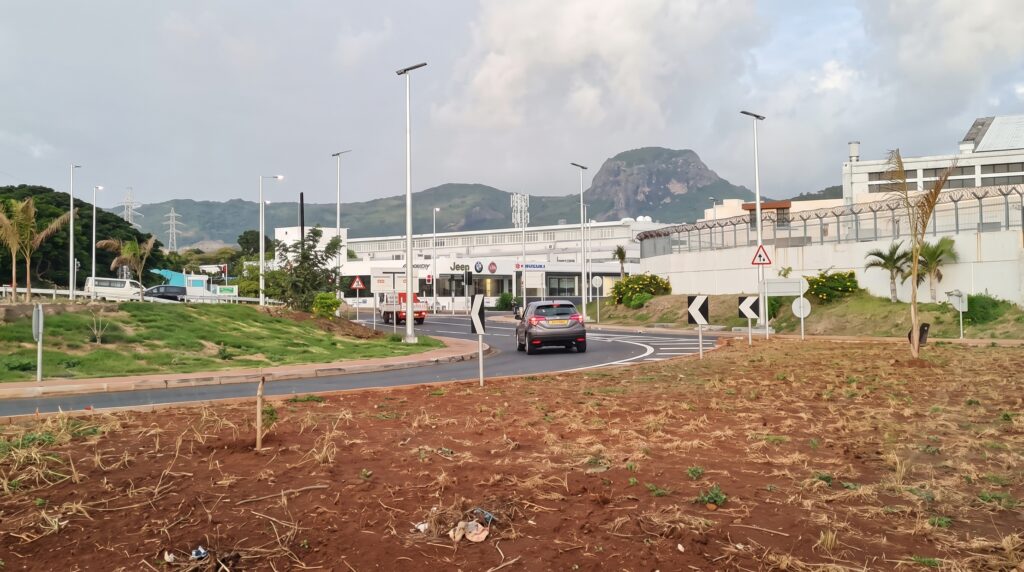
Project Snapshot
Project Information
| Field | Details |
|---|---|
| Project Name | Mauritius Coastal Arterial Roads/Seaside Highway Solar Streetlight Project |
| Project Location | Coastal arterial roads and seaside highways in Mauritius |
| Project Owner | Local government road management department / Municipal Council |
| Project Scale | 280 sets of smart solar streetlights |
| Product Model | Sresky Thermos Series (including high-brightness models such as the SSL-76A) |
Project Challenges and Solutions
Project Challenge 1: Long-Term Corrosion Risks Caused by Salt Fog on a Tropical Island
Mauritius’ coastal roads are constantly exposed to high temperatures, high humidity, and heavy salt fog. Conventional solar street lights are prone to corrosion and aging due to insufficient material protection and structural design.
The main impacts include:
- Corrosion of the lamp body and connecting components, reducing structural stability;
- Rusting and loosening of brackets and fasteners, increasing maintenance risks;
- Moisture ingress into the junction box, affecting the reliability of the electrical system;
- Degradation of battery and control system performance, shortening the equipment’s service life.
Given the high maintenance costs associated with government road projects and the difficulty of conducting frequent inspections in some coastal areas, the equipment must provide long-term corrosion resistance to reduce maintenance requirements at the source.
Sresky Technical Solution 1: Marine-Grade Corrosion-Resistant Structural Design
To address the high salt fog environment found on islands, the Sresky Thermos Series adopts a marine-grade corrosion-resistant design to enhance long-term outdoor operational stability.
Key features include:
- Corrosion-resistant aluminum alloy luminaire structure;
- Corrosion-resistant upgrades for exposed fasteners;
- Dissimilar metal isolation design to reduce the risk of galvanic corrosion;
- Reinforced electrical compartment sealing to reduce moisture ingress.
The Thermos Series features:
- IP65 protection rating;
- IK08 impact resistance rating;
- Waterproof and breathable design.
These features effectively reduce the risk of internal condensation caused by wet-heat cycles.
Through its high-protection structural design, the Thermos Series is well suited for tropical island environments, reducing long-term maintenance requirements and improving the reliability of road lighting systems.
Engineering Challenge 2: How to Ensure Structural and Lighting Stability During Prolonged Rainy Periods Following Cyclonic Gale-Force Winds?
Mauritius lies within the Indian Ocean cyclone belt, and solar streetlights installed along coastal roads are constantly exposed to strong winds and low solar irradiance.
Key challenges include:
- High-mast installations increasing wind load pressure;
- Large photovoltaic modules being subject to greater wind forces;
- Prolonged trade winds causing structural fatigue;
- Continuous overcast and rainy conditions following cyclones affecting energy replenishment.
Insufficient structural integrity and energy management capabilities may reduce equipment stability and even disrupt the continuity of nighttime road lighting.
Sresky Technical Solution 2: Reinforced Structure and Smart Energy Management
To address strong winds and complex weather conditions, the Sresky Thermos Series employs a dual approach combining structural optimization with smart control technology.
Key solutions include:
- Optimizing the installation angle of photovoltaic modules to reduce wind-exposed surface area;
- Reinforcing the mounting bracket locking design to minimize loosening caused by wind vibration;
- Optimizing foundation resistance against uplift and overturning based on site conditions.
Additionally, the Thermos Series is equipped with ALS intelligent control technology, which automatically adjusts output strategies based on battery status and environmental conditions, prioritizing lighting during periods of low solar irradiance.
The product supports continuous lighting for more than 10 days during rainy weather and offers an optional Hybrid power supply solution, enabling grid-assisted charging to improve lighting recovery capabilities following extreme weather events.
Project Outcomes
- Reduced electricity costs: Once operational, the lighting system primarily uses solar energy, reducing reliance on traditional electricity sources.
- Improved lighting stability during the rainy season: Even during prolonged periods of overcast and rainy weather, the system can maintain continuous lighting for several days.
- Reduced long-term maintenance burden: The corrosion-resistant structure, sealed design, and integrated system help minimize equipment failures and on-site maintenance requirements in coastal environments.
Customer Testimonial
“For an island region like Mauritius, the biggest challenge of the project is not installation, but long-term, stable operation. We needed a solution that could withstand the marine environment, reduce maintenance frequency, and quickly restore lighting after extreme weather events. Since installing these 280 THERMOS Series units, we have experienced two cyclone seasons with very few failures caused by wind loads or corrosion.”
FAQ: Common Questions About Procuring Solar Street Lights for Island Projects
1. Are coastal roads suitable for installing solar street lights?
Yes, but it is recommended to choose products specifically designed for marine environments. Unlike ordinary urban roads, coastal areas are exposed to salt fog, high humidity, and strong winds, which accelerate equipment aging.
When procuring solar street lights, do not focus solely on:
- Brightness;
- Price.
You should also prioritize:
- Corrosion-resistant materials;
- Protection ratings;
- Battery life;
- Structural design.
2. When selecting solar street lights for coastal areas, how can one assess their corrosion resistance?
For coastal solar street lights, corrosion resistance cannot be evaluated solely based on the lamp body material. A comprehensive assessment should include:
- Corrosion-resistant surface treatment of the lamp body and pole;
- Material selection of fasteners;
- Whether contact points between dissimilar metals are properly isolated;
- Sealing design of electrical compartments;
- Salt spray testing and related corrosion resistance verification.
For areas close to the coast or with high salt spray exposure, the appropriate protection solution should be selected based on the project’s actual corrosion environment.
3. Can solar street lights be connected to the utility grid as a backup power source?
Yes.
For:
- Airport roads;
- Port roads;
- Key government transportation routes;
a hybrid power supply system can be adopted. During prolonged rainy periods or special weather conditions, grid backup power can further enhance lighting reliability.
Summary
The Mauritius Coastal Arterial Road Project demonstrates an important lesson: solar street lights are not simply replacements for grid-powered fixtures, but independent infrastructure systems designed specifically for local climate conditions, road environments, and operation and maintenance requirements.
For islands, coastal cities, and regions affected by extreme weather, a truly reliable solar lighting solution must address the following factors simultaneously:
- Energy security;
- Structural safety;
- Corrosion resistance and durability;
- Long-term maintenance.
Only by considering these factors comprehensively can solar streetlights achieve long-term, stable operation in complex environments.