
At 5:00 a.m., the coastal road in Flic en Flac, Mauritius, was experiencing heavy rainfall typical of the cyclone season.
Sea breezes carried large amounts of salt spray toward both sides of the road, while salt particles in the air, dust from sugarcane fields, and volcanic soil particles continuously accumulated on the surfaces of the solar panels.
For conventional solar street lights, this type of island environment can easily result in:
- Reduced photovoltaic module efficiency due to surface contamination;
- Insufficient energy storage during extended periods of cloudy and rainy weather;
- Increased structural safety risks under high-wind conditions;
- Higher long-term manual maintenance costs.
To address these challenges, the Mauritius Coastal Road Project deployed 350 sets of Sresky THERMOS smart solar streetlights. Through a self-cleaning design, intelligent energy management, and optimized wind-resistant structures, the project significantly improved the long-term reliability of the solar lighting system in complex island environments.
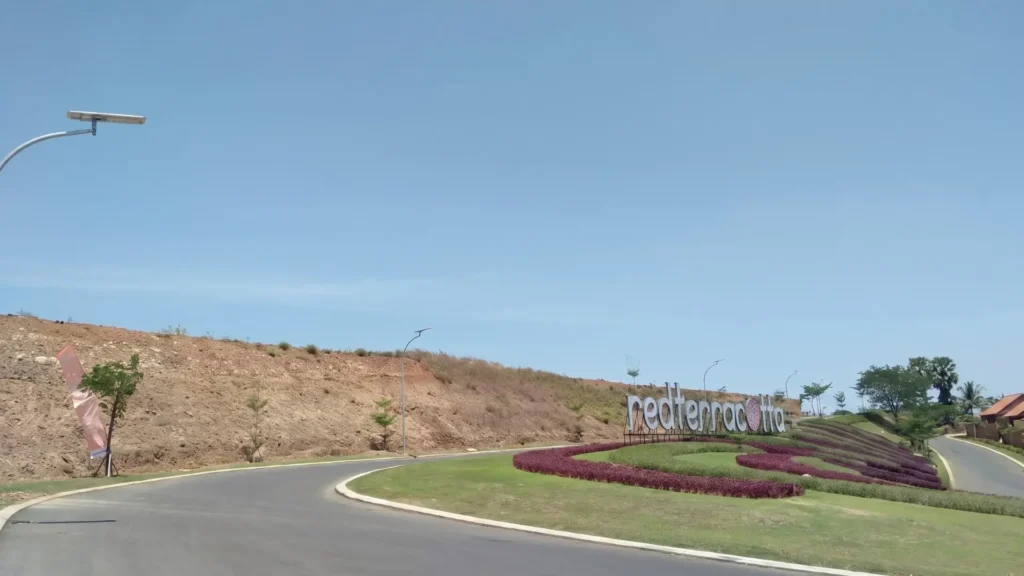
Project Overview
| Project Details | |
|---|---|
| Project Location | Coastal urban roads in Mauritius (including areas around Flic en Flac, Grand Baie, and Port Louis) |
| Project Owner | Local government road management department / municipal council |
| Project Scale | 350 streetlights |
| Product Model | Sresky THERMOS Series |
| Application Scenario | Island municipal road lighting |
| Core Requirements | Salt fog resistance, cyclone resistance, and highly reliable operation |
Two Major Challenges Facing Island Solar Street Lights
Challenge 1: Salt Fog and Composite Pollution Reduce Photovoltaic Efficiency
The coastal environment in Mauritius differs significantly from typical urban areas.
The following factors exist simultaneously:
- Marine salt fog;
- Tropical high-humidity air;
- Dust generated by sugarcane field burning;
- Volcanic soil particles.
When these pollutants accumulate on the surface of solar panels over time, they reduce the light transmittance of photovoltaic modules, thereby decreasing solar conversion efficiency.
Especially in tropical environments, high temperatures and ultraviolet radiation cause dust to gradually harden, while chlorides in salt fog further increase pollutant adhesion.
For off-grid solar street lights, reduced power generation efficiency can lead to:
- Insufficient battery charging;
- Shorter operating time during cloudy or rainy weather;
- Reduced stability of nighttime lighting.
Solution: Self-Cleaning Design Enhances Photovoltaic System Reliability
The Sresky THERMOS series adopts a smart cleaning structure combined with surface protection technology to reduce the impact of long-term salt fog and dust accumulation.
Key advantages include:
- Self-Cleaning Structure Reduces Contaminant Buildup
The mechanical cleaning structure helps remove deposits from the solar panel surface, reducing the frequency of manual cleaning.
At the same time, the hydrophobic and salt-resistant surface treatment reduces the long-term adhesion of salt crystals, moisture, and dust, improving the stability of photovoltaic modules in island environments. - Optimized Installation Angle Enhances Natural Contaminant Removal
The project optimized the orientation and tilt angle of the solar panels based on Mauritius’s latitude, solar altitude angle, and road conditions.
An appropriate installation angle helps to:
• Allow rainwater to naturally wash away contaminants;
• Reduce saltwater retention time;
• Improve long-term photovoltaic power generation performance.
For island solar streetlight projects, the installation angle affects not only power generation efficiency but also the maintenance cycle of the entire system.
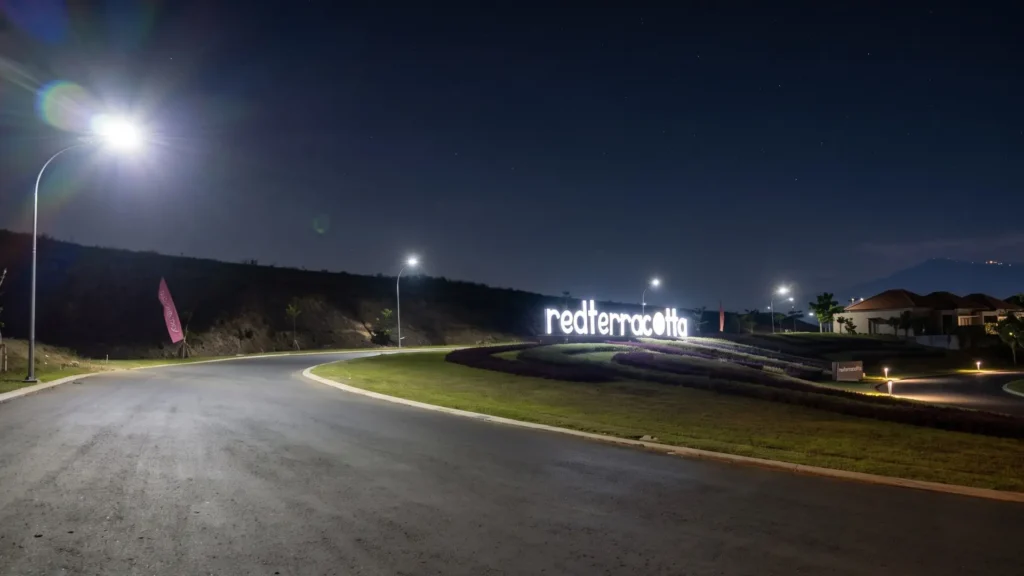
Challenge 2: Cyclonic Winds Affect Pole Structural Safety
Mauritius is located within the Indian Ocean cyclone zone and faces strong winds and heavy rainfall during the annual cyclone season.
For solar street lights:
- The taller the pole, the greater the wind load;
- The larger the solar panel area, the greater the wind-exposed surface;
- Long-term wind vibrations may affect the stability of connection structures.
Under prolonged high-wind conditions, standard adjustable mounting systems may experience:
- Loose bolts;
- Mounting fatigue;
- Light fixture misalignment.
Therefore, island road lighting projects must prioritize structural reliability rather than focusing only on installation convenience.
Solution: Optimized Wind-Resistant Structural Design
In response to Mauritius’s high-wind environment, the project implemented several structural optimizations:
- Reinforced Light Pole Connection Structures
Higher-strength steel connection structures were adopted, and wind resistance performance was verified through structural analysis to improve equipment stability under high-wind conditions. - Integrated Mounting Design
The number of movable connection components used in traditional adjustable structures was reduced, lowering the risk of loosening caused by long-term wind-induced vibrations. - Smart Energy Management
The Sresky THERMOS series is equipped with a smart energy management system that dynamically adjusts lighting strategies according to changes in sunlight conditions, improving energy efficiency during cloudy and rainy weather.
Project Outcomes
After experiencing continuous heavy rainfall during the cyclone season, 350 sets of streetlights maintained stable operation, providing reliable lighting support for local residents’ transportation, municipal management, and road safety.
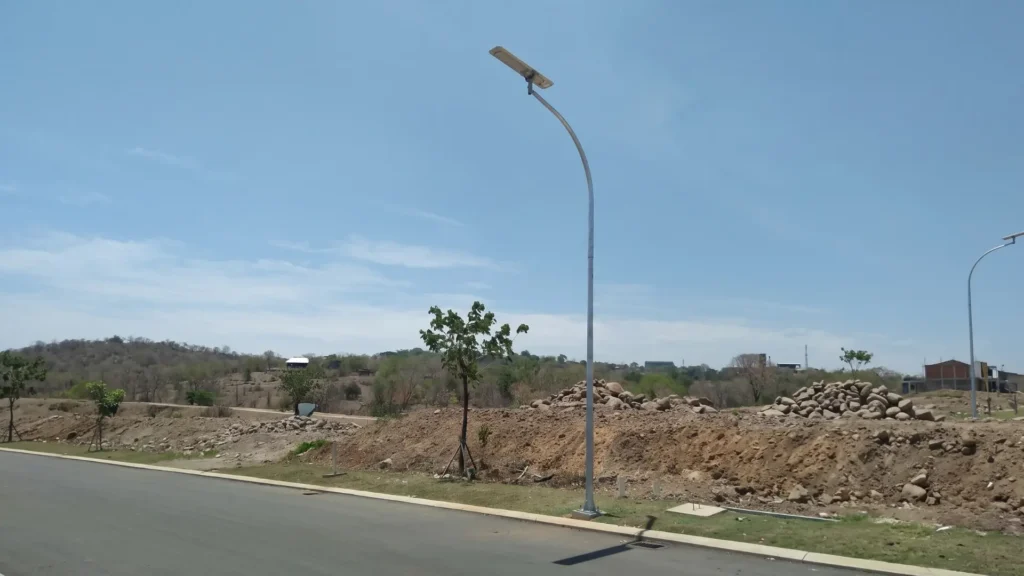
Project Achievements
- Enhanced Adaptability to Island Environments
Through photovoltaic protection, structural optimization, and smart energy management, the reliability of solar street lights in coastal environments has been significantly improved. - Reduced Maintenance Burden
The self-cleaning design minimizes the need for manual cleaning, while remote management capabilities allow administrators to monitor equipment status in real time. - Enhanced Infrastructure Investment Value
Compared with simply increasing equipment capacity, designing the system according to local environmental conditions reduces long-term operational risks and improves lifecycle value.
Customer Feedback
“In the past, our biggest concern was conducting inspections after the cyclone season, as we often found some lights tilted or providing insufficient illumination. Since these solar street lights were installed, they have operated stably through the first rainy season, providing consistent nighttime road lighting, and resident complaints have significantly decreased.”
— Local Road Management Department, Mauritius
Frequently Asked Questions About Island Solar Street Lights
- Are solar street lights installed near the coast prone to salt fog corrosion?
Yes.
The biggest challenge in coastal areas is not ordinary dust, but the long-term accumulation of chlorides from salt fog.
When selecting solar street lights for island environments, attention should be given to:
• Protection rating;
• Anti-corrosion treatment of metal structures;
• Photovoltaic module resistance to contamination.
The Sresky THERMOS series features an IP65-rated design and has been structurally optimized for outdoor environments. - How often do coastal solar street lights require maintenance?
The maintenance cycle depends on local environmental conditions.
In typical areas, regular inspections may be sufficient. However, in islands and regions with high salt fog levels, special attention should be paid to:
• Solar panel contamination;
• Light pole connection structures;
• Battery operating status.
Products equipped with self-cleaning functions and smart monitoring features can effectively reduce maintenance requirements. - What should be considered when selecting solar street lights for island projects?
We recommend focusing on:
• Maximum local wind speed;
• Salt fog corrosion conditions;
• Duration of the rainy season;
• Post-installation maintenance conditions.
Many solar streetlight projects fail not because of insufficient brightness, but because the system was not designed according to local environmental conditions.
Conclusion: The Core of Island Solar Street Lighting Is Reliability, Not Merely Brightness
The coastal road project in Mauritius demonstrates that, in complex natural environments, the key to successful solar street light applications is not simply increasing power output or battery capacity.
What truly matters is:
- A photovoltaic system adapted to the local environment;
- Structural design that meets wind load requirements;
- Energy management that ensures continuous lighting;
- Maintenance strategies that reduce lifecycle costs.
For coastal nations, island regions, and projects located in high-wind environments, solar streetlight solutions designed for environmental adaptability can help infrastructure projects achieve more stable and long-term operational value.