
Table of Contents
During the project planning phase, the client’s primary concern was not simply lighting brightness but whether the solar street lights could meet long-term operational requirements under challenging conditions, including low temperatures, snow accumulation, wind and sand exposure, and prolonged cloudy or snowy weather.
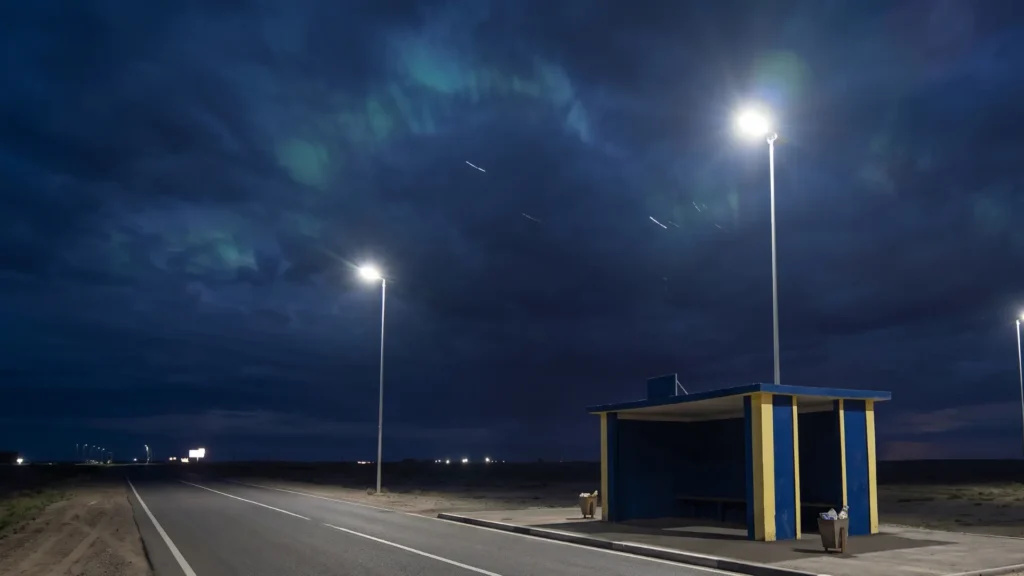
Ultimately, the project adopted Sresky Atlas Max SSL-370 solar street lights, with a total of 161 units installed to cover approximately 2.5–3.5 kilometers of highway sections and parking areas.
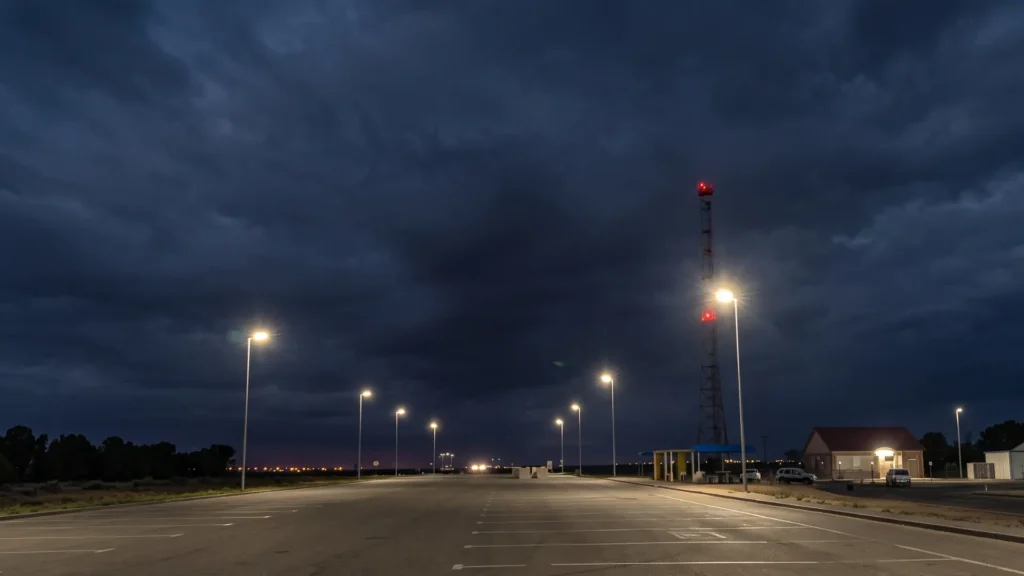
Project Snapshot
| Item | Details |
|---|---|
| Project Location | Service area nodes along national and provincial highways in southeastern Kazakhstan |
| Project Type | Solar lighting for highway service areas and logistics parking areas |
| Project Owner | Private highway service area operator/logistics hub company |
| Product Model | Sresky Atlas Max SSL-370 Solar Street Lights |
| Number Installed | 161 units |
Engineering Challenge 1: Winter Operation Challenges for Solar Systems in Sub-Zero Environments
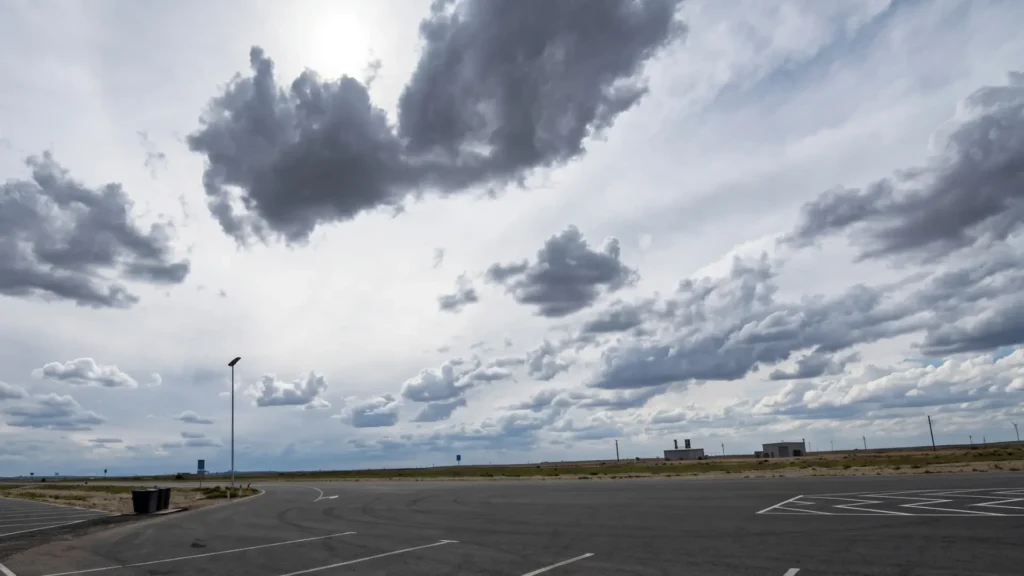
Southeastern Kazakhstan experiences multiple winter challenges, including low temperatures, low solar elevation angles, short daylight hours, and prolonged cloudy and snowy weather conditions.
Conventional solar systems may encounter the following issues:
- Reduced photovoltaic power generation, resulting in insufficient charging during winter;
- Lower battery charging efficiency at low temperatures, affecting capacity and service life during long-term operation;
- Reduced nighttime brightness due to power-saving strategies, potentially failing to meet the safety lighting requirements of service areas.
Therefore, the system needed to balance stable energy generation, reliable energy storage, and continuous lighting performance in extremely cold environments.
Sresky Technical Solution 1: Winter-Adapted Energy Storage and Intelligent Control System
Sresky improves winter reliability through three key technologies: active battery heating, photovoltaic optimization, and intelligent energy management.
Active Battery Heating Design
Based on the X-STORM double-layer insulation structure, PTC heating modules or silicone heating films are added. When the BMS detects that the battery temperature falls below 0°C, the system automatically activates preheating to maintain the battery within the high-efficiency operating range of 5°C–35°C. This helps prevent insufficient charging caused by low temperatures.
Optimized PV Installation Angle
Based on the local winter solar trajectory, the photovoltaic panel tilt angle is adjusted to 40°–45° to improve energy generation efficiency under low solar elevation conditions.
ALS2.4 Smart Winter Mode
The system detects prolonged cloudy conditions and low-temperature environments, automatically switching to an energy-saving mode. This reduces power consumption while maintaining a minimum base illumination level of 5 lux, ensuring road safety during extreme weather conditions.
Engineering Challenge 2: Protection and Weather Resistance Requirements for Lighting Fixtures in Windy and Sandy Environments with Significant Temperature Fluctuations
The project area experiences frequent windy and sandy conditions, with daily temperature variations exceeding 15°C. Long-term exposure to these conditions can cause a “breathing effect” in lighting fixtures, increasing the risk of dust and moisture entering the enclosure.
Traditional IP65 protection structures may face the following challenges:
- Fine dust entering the interior of the luminaire;
- Reduced heat dissipation efficiency, resulting in higher LED operating temperatures;
- Moisture intrusion into electrical components, increasing the risk of failure;
- Accelerated light degradation caused by prolonged operation.
Therefore, the luminaires require enhanced sealing, dust protection, and heat dissipation capabilities.
Sresky Technical Solution 2: High-Protection Structure for Harsh Environments
Through enhanced protection and optimized thermal management, Sresky improves the long-term stability of luminaires in dusty and windy environments.
IP66/IK08-Rated Protection Structure
A silicone rubber composite sealing structure and labyrinth-style dust-blocking design are used to reinforce critical sealing areas and improve resistance to dust and water intrusion.
Dust-Proof Breathing Valve Design
The design balances internal and external pressure within the luminaire, reducing condensation caused by temperature differences while preventing fine dust particles from entering. This improves the reliability of internal components.
Integrated Heat Dissipation Design
A die-cast aluminum heat sink optimizes passive heat dissipation efficiency, effectively reducing LED junction temperature, minimizing light degradation, and extending the service life of the luminaire.
Project Outcomes
By customizing the system design according to local climatic conditions, this project achieved the following results:
- 161 solar street lights installed along highway service areas, roads, and parking areas;
- Maximum output of 15,400 lumens per light, meeting the lighting requirements for heavy vehicle traffic and large parking areas;
- Support for standalone lighting applications in areas without access to municipal power infrastructure;
- Improved lighting continuity under various weather conditions through intelligent control strategies;
- Reduced long-term maintenance requirements through enhanced protective designs.
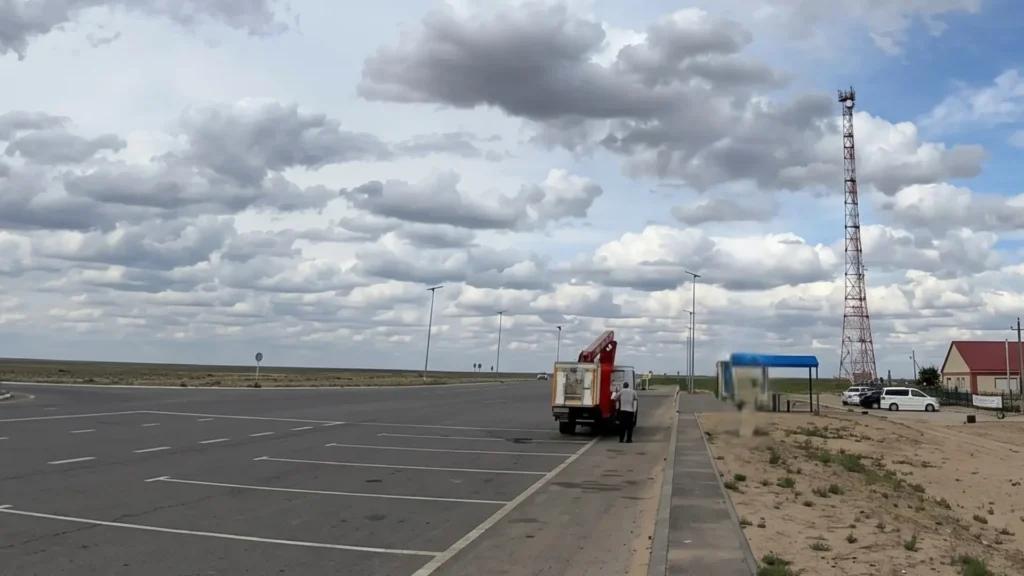
Customer Testimonial
“Our focus is not simply on installing lighting fixtures, but on ensuring the normal operation of the service area during winter and under challenging weather conditions. During the project design phase, Sresky made targeted adjustments to address low temperatures, battery protection, and dusty, windy environments. This is far more important than simply comparing lighting fixture prices.”
— Representative of the project operator
FAQ: Frequently Asked Questions About Solar Street Light Projects in Extremely Cold Regions
1. In Which Scenarios Are 10-Meter Solar Street Lights Suitable?
Solar street lights installed on 10-meter poles with high lumen output are typically suitable for highway interchanges, large parking lots, logistics centers, industrial parks, and outdoor areas requiring extensive lighting coverage.
2. Are Solar Street Lights Suitable for Highway Service Areas?
Yes. For highway service areas, logistics parking lots, and areas surrounding toll plazas that are located far from urban power grids, solar street lights can reduce the need for underground cable installation while minimizing the impact of grid outages on lighting systems.
3. What Protection Rating Is Required for Installing Solar Street Lights in Windy and Sandy Areas?
In typical urban environments, IP65-rated products are generally sufficient. However, for harsh environments such as deserts, Gobi regions, and arid areas, it is recommended to pay greater attention to luminaire sealing designs, dust protection structures, and heat dissipation solutions.
Conclusion: Project Guidelines for Outdoor Lighting in Challenging Environments
With the continued development of infrastructure in remote areas, the growing adoption of renewable energy, and increasing demand for off-grid lighting solutions, regions with extreme cold, wind and sand exposure, and limited grid access are placing higher demands on solar street light systems.
Future outdoor lighting projects should prioritize not only lighting output but also system reliability, maintenance convenience, and long-term operational value.
Municipal authorities, engineering contractors, and road planners should conduct comprehensive evaluations of solar street lighting solutions by considering local climate conditions, lighting requirements, energy storage systems, and post-installation operation and maintenance capabilities, rather than focusing solely on initial purchase costs.
This case study provides a reference for outdoor lighting planning on highways, in service areas, at logistics hubs, and in remote regions with extreme climates, offering valuable insights for project teams during the preliminary design stage.