
I. Project Background and Needs Analysis
As one of Europe’s most ecologically diverse nations, Hungary’s nature reserves often serve as habitats for rare flora and fauna. This project is located within a key Hungarian nature reserve, characterized by vast expanses of dense vegetation including ancient forests, wetlands, and gravel paths. It serves as a home for numerous nocturnal animals—such as foxes, owls, and bats—while attracting substantial numbers of ecotourists and researchers. However, the tranquil nighttime environment offers extremely low visibility, particularly under Hungary’s rainy climate where winter daylight hours are short (averaging only 6-8 hours). This poses safety risks for rangers and visitors.
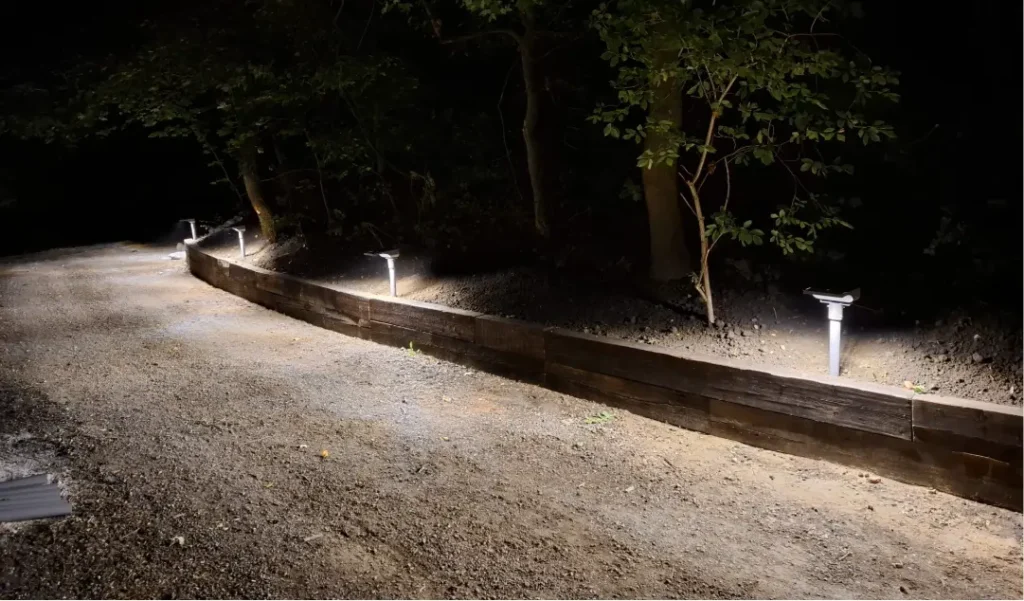
Environmental Characteristics and Challenges
-
Vegetation and Soil Sensitivity: The reserve features extensive tree root systems and complex soil structures. Any large-scale construction (e.g., digging cable trenches) risks disrupting ecological balance, causing soil erosion or plant mortality.
-
Climate Factors: Hungary receives annual rainfall of 800-1000mm, with cold, foggy winters and insufficient daylight. This necessitates lighting equipment with efficient energy storage and weather resistance to ensure reliable operation during prolonged rainy periods.
-
Wildlife Protection: Conventional lighting often causes severe light pollution, disrupting nocturnal animals’ circadian rhythms and foraging behaviors. Per EU ecological regulations, lighting design must minimize disturbance to wildlife.
Core Requirements
Through detailed research, the project team identified the following key requirements:
-
Ecological Conservation Priority: Lighting systems must feature cable-free designs to prevent any surface disruption.
-
Wildlife-Friendly: Employ low-light-pollution technologies, such as adjustable color temperature and on-demand lighting modes, to minimize disturbance to nocturnal species.
-
High Weather Resistance: Equipment must withstand temperatures ranging from -20°C to +60°C and support over three days of continuous operation during rainy periods.
-
Safety Assurance: Provide clear, soft guidance lighting for rangers and visitors, ensuring visibility on gravel paths without compromising the reserve’s natural aesthetics.
These requirements directly point to solar lighting applications, and the SRESKY Alpha series, with its intelligent features, emerges as the ideal choice. Offering brightness levels ranging from 3000LM to 9000LM, this series accommodates varying path widths, enabling the reserve to achieve a “green lighting upgrade.”
II. Technical Solution Design
Addressing the reserve’s unique challenges, the project selected SRESKY Alpha Series smart solar streetlights. Featuring an integrated design combining monocrystalline silicon solar panels, lithium-ion batteries, and OSRAM LED chips, this series achieves up to 230lm/W efficiency for optimal energy conversion. Key technical highlights include:
1. Automatic Rain-Temperature Adjustment Technology (Rain Sensor + Dual Color Temperature)
The Alpha series incorporates precision rain sensors that monitor weather conditions in real time. On clear days, it delivers 5700K white light for high-definition illumination. Upon detecting rainfall, it automatically switches to 3000K warm yellow light. This dual CCT (Correlated Color Temperature) design not only enhances penetration during rainy or foggy conditions (warm light scatters less in fog) but also reduces light disturbance to wildlife. Research indicates warm light minimizes disruption to nocturnal animals’ circadian rhythms, reducing disturbance by over 30%.
Technical Value: In Hungary’s rainy climate, this feature significantly improves path visibility while preserving ecological balance. Compared to traditional streetlights, the Alpha Series‘ Ra>70 color rendering index ensures true color reproduction, preventing visitor misjudgment of terrain.
2. Smart PIR Motion Detection System
Streetlights default to 30% low-brightness mode, switching to full brightness (sustained for 30 seconds) only when the PIR sensor (120° detection range, max 8m) detects human presence. This “on-demand lighting” mode drastically reduces energy consumption and minimizes light pollution.
Ecological Adaptability: For nocturnal wildlife within protected areas, this design avoids habitat disturbance caused by constant intense light. According to Wildlife Conservation Society data, similar smart sensor systems can reduce light pollution by 50%, contributing to biodiversity preservation.
3. Core Power Supply Technology (ALS 2.4 & APC)
-
ALS 2.4 Technology: Optimizes charging efficiency even during prolonged rainy periods, ensuring >3 days of lighting endurance. Solar panel power ranges from 10W to 20W (monocrystalline silicon, efficiency >20%), with battery capacities from 38.48Wh to 115.44Wh, supporting discharge at temperatures from -10°C to 60°C.
-
APC Technology (Adaptive Power Control): Continuously monitors battery temperature and charge level, automatically adjusting charge/discharge strategies. During Hungary’s low-sunlight winter period, this feature boosts efficiency by 15%, ensuring stable streetlight operation.
Additionally, the LED display shows real-time battery capacity (0-100%), charging status, PIR switch, and rain sensor icons for easy maintenance monitoring. A low-battery icon automatically illuminates when capacity drops below 20%, prompting timely intervention.
4. Minimal Installation & Scalability
The Alpha series supports horizontal, vertical, or wall mounting with adjustable angles from 0° to 90°, eliminating complex infrastructure. Unique expansion ports enable connection to external solar panels, adapters, or backup batteries, providing redundant power for shaded areas with insufficient illumination.
This design is particularly suited for forest paths within protected areas. Installed at heights of 3-5m, it illuminates distances of 10-20m, ensuring coverage of gravel trails without impacting tree growth.
III. Project Implementation & Execution
From requirements assessment to installation completion, the project was executed in just 3 months, demonstrating the plug-and-play advantage of SRESKY products.
Model Selection & Adaptation
Based on path width, SSL-53 (3000LM, 3m installation height) was selected for narrow forest trails; SSL-56 (6000LM, 4m) and SSL-59 (9000LM, 5m) were deployed along primary patrol routes. The TYPE-4M light distribution ensures uniform illumination, eliminating hotspots or dark zones.
Non-Invasive Installation
Thanks to the integrated solar design, no cabling is required. Installation teams only need to secure the lightweight brackets (aluminum + PC material, IP65/IK08 protection). The entire process causes zero surface disturbance, meeting EU environmental standards. Post-installation, a multifunctional remote control adjusts lighting modes (M1/M2/M3), CCT, brightness, and PIR switch settings for personalized configurations.
Landscape Integration
The Alpha Series‘ modern aluminum aesthetic harmonizes seamlessly with forest environments. Soft path lighting creates tranquil ambiance, enhancing visitor experiences while serving as an ecological education tool showcasing green technology applications.
In summary, the SRESKY Alpha Series demonstrates green technology’s potential in ecological conservation. Let’s advance the sustainable lighting revolution together!