
I. Project Executive Summary
The Myanmar Remote Village Community Road Lighting Livelihood Project stands as SRESKY‘s flagship initiative in the Southeast Asian market, dedicated to illuminating long-darkened “off-grid” regions. The initiative focuses on rural dirt roads, gravel paths, and key village thoroughfares—areas lacking conventional grid support, where nighttime travel poses significant risks.
-
Project Name: Myanmar Remote Village Community Road Lighting Initiative
-
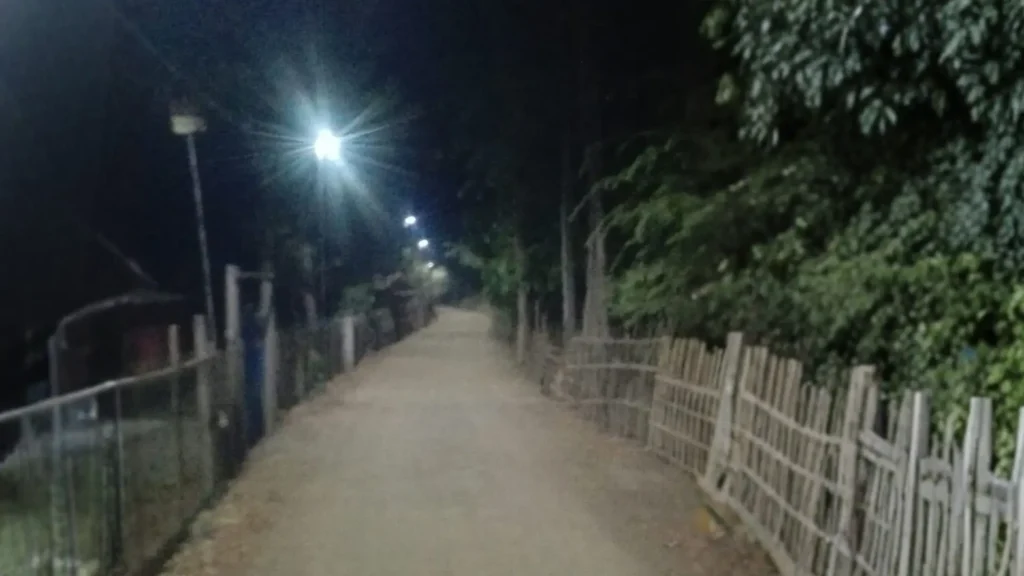
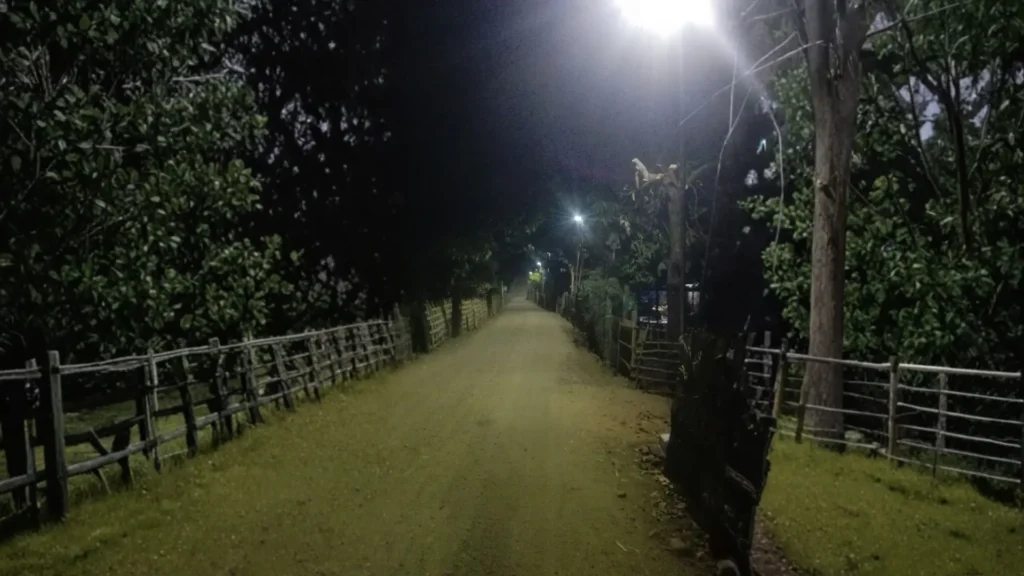
Application Scenarios: Rural dirt/gravel roads, village thoroughfares, and grid-uncovered zones. These areas are often surrounded by dense vegetation and simple fencing, with rugged terrain suited for low-height installations to cover pedestrians and light vehicles.
-
Core Configuration: SRESKY ATLAS Series Solar Street Lights. Models range from 2,000LM to 10,000LM depending on brightness requirements, such as the SSL-32A for narrow village roads and the SSL-310A for main thoroughfares.
-
Installation Parameters: Mounted at 3 meters (suitable for pedestrians and light vehicles) to ensure uniform illumination across rough surfaces while minimizing installation complexity and costs.
This project not only enhances local residents’ quality of life but also demonstrates the versatility of the SRESKY ATLAS Series in rural revitalization, supporting Myanmar’s progress toward achieving the United Nations Sustainable Development Goal (SDG) of energy access.
II. Project Background & Needs Analysis
As a developing nation in Southeast Asia, Myanmar’s rural areas face severe energy poverty. Data indicate that approximately 40% of Myanmar’s population resides in remote villages without grid access, where nights descend into absolute darkness, severely limiting socioeconomic activities. This project originated from collaboration between local governments and international aid organizations, aiming to improve livelihoods through a “Rural Lighting Solution.”
1. Geographic and Social Context
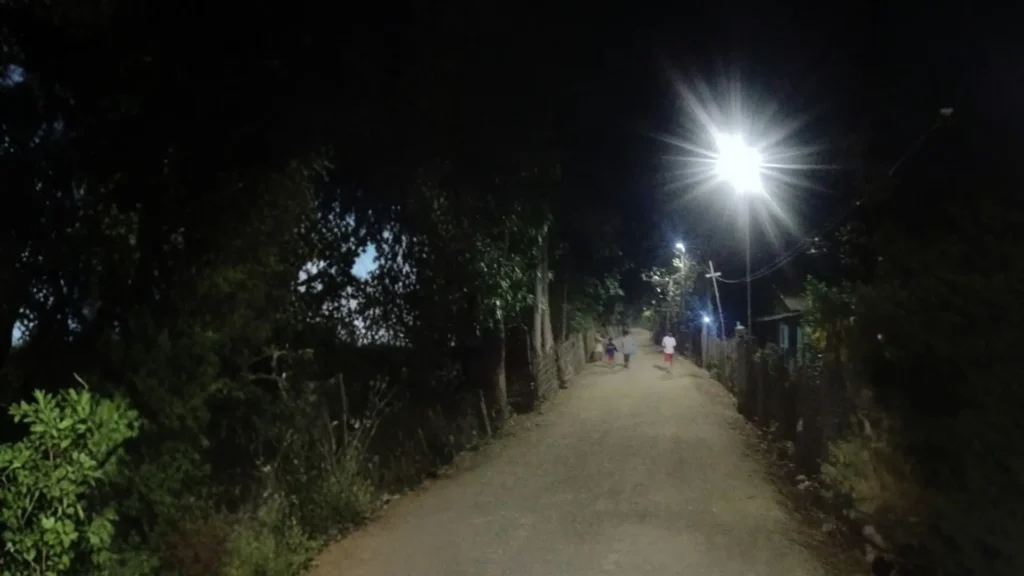
Myanmar’s rural landscape is complex and varied, with many remote villages situated in mountainous regions or along riverine peripheries, characterized by weak infrastructure. Roads are predominantly dirt or gravel, becoming muddy during the rainy season and dusty during the dry season. Project sites experience no urban light pollution, offering deep blue, pristine night skies. However, this absolute darkness poses significant risks for nighttime travel: tripping on uneven surfaces, encounters with wildlife, and frequent security threats. Imagine elderly villagers and children navigating unlit paths through dense vegetation—a common sight in rural Myanmar.
Myanmar’s climate further exacerbates lighting challenges. While annual sunshine hours are abundant (approximately 2,000 hours), the prolonged rainy season (May–October) brings humidity levels up to 90% and frequent tropical storms. This requires lighting equipment with exceptional waterproofing and resistance to rain and humidity, alongside battery management systems capable of withstanding high temperatures (exceeding 40°C).
2. Core Requirements
Project requirements prioritize practicality and sustainability:
-
Low-cost deployment: Off-grid areas preclude expensive cable installation. Modular, plug-and-play “off-grid streetlights” are needed, adaptable to terrain with dense vegetation and simple fencing to avoid large-scale excavation that damages ecosystems.
-
High brightness requirement: Installed at just 3 meters (suitable for rural walkways), lights must provide sufficient luminous flux to illuminate rough surfaces. Light distribution must be uniform and glare-free, creating a bright halo effect that enhances nighttime visibility.
-
Durability requirements: Myanmar’s monsoon season features high humidity and significant temperature fluctuations. Equipment must meet IP65 waterproofing standards, utilize corrosion-resistant materials, and sustain operation for over 10 consecutive rainy days. Considering limited local maintenance resources, designs must incorporate self-diagnostic capabilities and easily replaceable components.
Meeting these requirements, the SRESKY ATLAS Series emerges as the ideal solution. Its “sustainable lighting” features perfectly address the pain points of Myanmar’s rural areas, providing valuable insights for the “Myanmar Solar Streetlight Case Study.”
III. Technical Solution Design
The project’s technical solution centers on the SRESKY ATLAS Series, precisely tailored to Myanmar’s unique rural environment. This series integrates multiple patented technologies to ensure efficient illumination even at low mounting heights.
1. Product Selection: Why Choose the SRESKY ATLAS Series?
The ATLAS Series represents SRESKY‘s flagship solar street lights, offering a wide brightness range and supporting monocrystalline silicon solar panels (efficiency >23%) and lithium-ion batteries (cycle life >1,500 cycles). Its core advantage lies in patented technology for extreme environments:
-
ALS 2.2 Core Patent Technology:
ALS (Adaptive Lighting System) 2.2 dynamically adjusts power distribution via intelligent algorithms, ensuring continuous illumination for at least 10 days even during Myanmar’s prolonged rainy season. This significantly exceeds the 5-day limit of traditional solar street lights. During insufficient charging, the system automatically reduces brightness to energy-saving mode while maintaining basic illumination, preventing complete shutdown. -
TCS Temperature Control System:
TCS (Temperature Control System) continuously monitors battery temperature, automatically adjusting charge/discharge logic in Myanmar’s hot climate to prevent overheating damage. Compared to standard LiFePO4 batteries, TCS extends lifespan by 30% and supports discharge temperatures from -20°C to 60°C, ensuring stable operation in high-heat environments. -
Scientifically Optimized for 3m Installation Height:
At 3m height, ATLAS employs a Type 2 wide-angle optical design to achieve uniform light distribution (15m coverage distance), creating a bright halo effect that minimizes visual blind spots—ideal for pedestrian scenarios on dirt/gravel roads. PIR motion sensing (120°, 8m detection range) integrates with remote DIY modes, allowing villagers to select:-
M1: 30% constant on + PIR activation
-
M2: 100% for first 5 hours + 25% PIR + 70% until dawn
-
M3: 70% constant on
-
This saves energy during late-night periods with no pedestrians while automatically brightening upon detection.
Furthermore, the product utilizes aluminum alloy + PC materials (IP65/IK08 protection) for corrosion resistance and durability. OSRAM 3030 LED chips deliver efficiency up to 230 lm/W, ensuring high brightness with low energy consumption. This solution not only features advanced technology but also prioritizes user-friendliness, infusing intelligent elements into “rural lighting solutions.”
IV. Project Outcomes & Impact
1. Social Value: From “Dark Silence” to “Community Vitality”
-
Safe Travel: Significantly reduces nighttime walking risks, especially for the elderly and children. Enhanced lighting coverage minimizes falls and animal disturbances, extending village activity hours and fostering social interaction and goods exchange.
-
Economic Activation: Lighting stimulates nighttime economies, such as small-scale markets or home-based crafts, supporting rural revitalization.
2. Technical Adaptability Validation
-
Zero Energy Consumption & Zero Emissions: Fully powered by Myanmar’s abundant sunlight, achieving carbon-neutral lighting and significantly reducing annual carbon emissions.
-
Stability: In villages lacking professional maintenance, ATLAS earns trust through high reliability and a 3-year warranty. The BMS system boosts charging efficiency by 30%, ensuring long-term dependability.
This project sets a benchmark for off-grid streetlight applications, demonstrating the social impact of “sustainable lighting.”
V. Risk Control and Mitigation Strategies
Project design thoroughly considers potential risks in rural environments to ensure system robustness.
-
Risk: Vegetation Shading – Dense trees may obstruct solar panels.
Strategy: Utilize ATLAS‘s adjustable mounting angles to avoid shade; recommend periodic manual clearing or selecting open installation sites. -
Risk: Battery Damage from Extreme Heat – Myanmar temperatures can exceed 45°C.
Strategy: The TCS system automatically optimizes charging/discharging, reducing power output during high temperatures to protect battery lifespan.
These strategies ensure stable system operation under harsh conditions, providing risk management guidelines for similar projects.
Conclusion
The Myanmar Rural Streetlight Project represents not only the product output of the SRESKY ATLAS Series but also the technological contribution of “Chinese Smart Manufacturing” to sustainable development in remote global regions. It demonstrates that whether illuminating 9-meter-high urban renewal projects or 3-meter-high rural paths, ATLAS delivers optimally tailored smart lighting. As a benchmark “Myanmar solar streetlight case study,” this project showcases the limitless potential of “rural lighting solutions” for clients.