
Amid the global wave of sustainable development, solar street light projects have become a key driver in upgrading infrastructure in remote areas. In India’s highway lighting sector in particular—where high temperatures, heavy dust, and unstable power supply are common—selecting a reliable, self-cleaning solar street light is critical.
The Sresky THERMOS series, engineered as a smart lighting solution for extreme environments, not only enhances suburban road safety but also sets a benchmark for smart city infrastructure development.
I. Project Background & Needs Analysis
As a major South Asian nation, India’s suburban arterial roads often function as vital economic links between cities and rural areas. However, lighting infrastructure in these regions has long faced severe challenges.
1.1 Geographical and Environmental Challenges
The project site is located on a suburban arterial road in India. The area features open terrain surrounded by vast fields and vegetation and lies far from the core urban power grid. As a result, power supply is highly unstable, making traditional grid-based lighting difficult to implement.
Climate conditions further complicate the situation. Much of India experiences average annual temperatures above 30°C, with summer peaks reaching up to 45°C. Such extreme heat significantly shortens battery lifespan by accelerating degradation, reducing charging efficiency, and increasing system failure rates.
Additionally, suburban roads are heavily exposed to dust, gravel, and loose soil. Solar panels are highly susceptible to dust accumulation, which can reduce charging efficiency by more than 30%. If not cleaned in time, dust buildup not only lowers photovoltaic performance but can also cause system overheating.
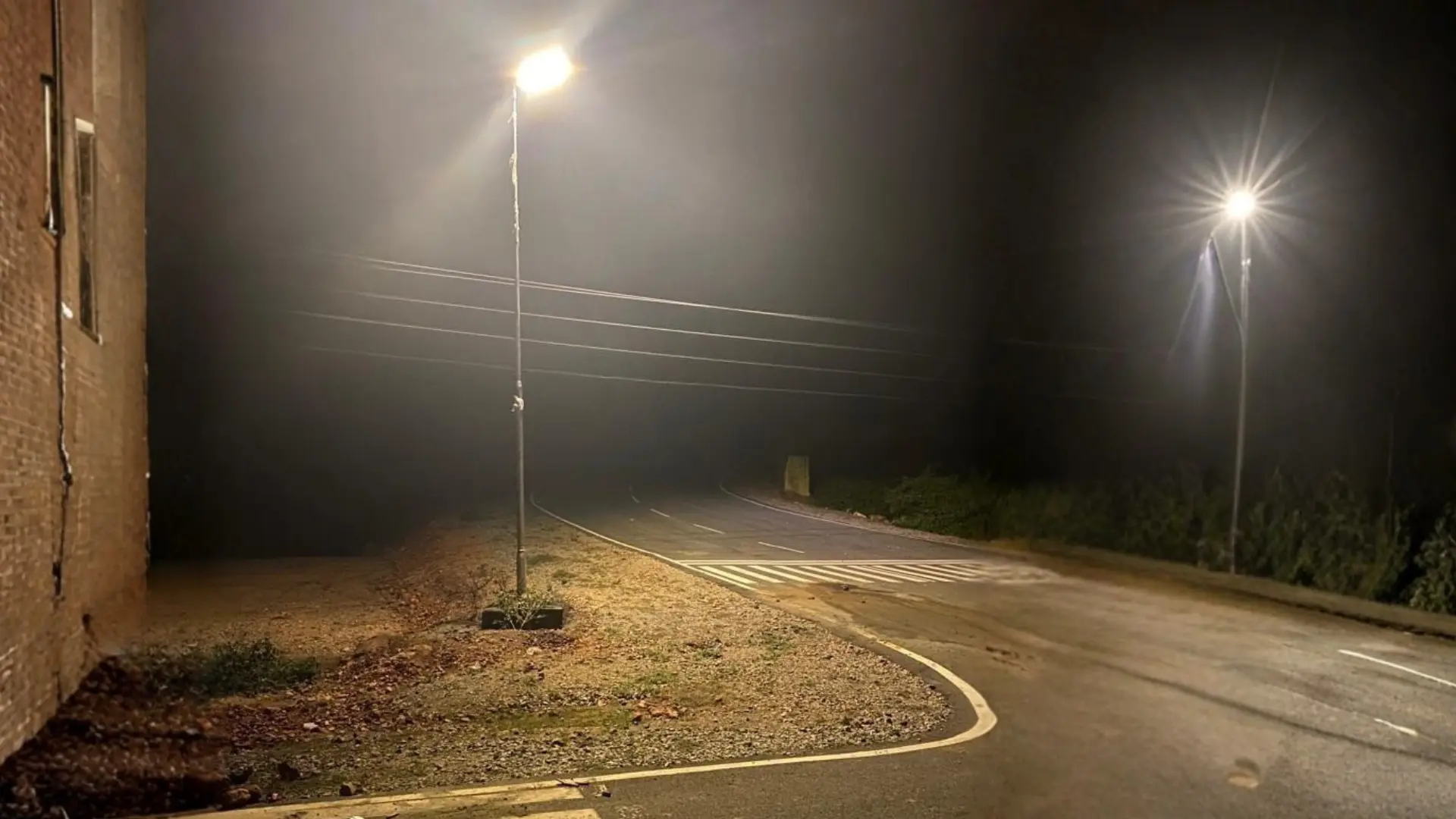
Weather variability adds another layer of complexity. Frequent fog, overcast skies, and extended cloudy periods reduce solar input, while foggy nights demand lighting with strong penetration to ensure visibility. These combined challenges render conventional streetlights ineffective and create an urgent need for a solar street lighting solution with automatic cleaning and high-temperature protection.
1.2 Safety and Lighting Requirements
Nighttime driving safety is the project’s primary requirement. The road includes multiple curves and pedestrian crossings, where poor visibility significantly increases accident risk. According to data from India’s Ministry of Transport, nighttime accident rates on suburban roads are substantially higher than in urban areas, largely due to insufficient lighting.
High-lumen, high-CRI lighting is therefore essential to clearly define road contours and improve visual comfort for both drivers and pedestrians.
Infrastructure independence is another critical factor. Cable installation is costly and difficult to maintain, especially in remote areas. The project requires an off-grid lighting system with low-maintenance or maintenance-free characteristics. Streetlights must operate entirely on solar power and remain stable under extreme weather conditions.
The Sresky THERMOS series was designed specifically for these demands. Equipped with an Adaptive Light Control System (ALS), it ensures continuous illumination even during extended rainy periods, aligning perfectly with India’s suburban road safety requirements.
II. Technical Solution Design
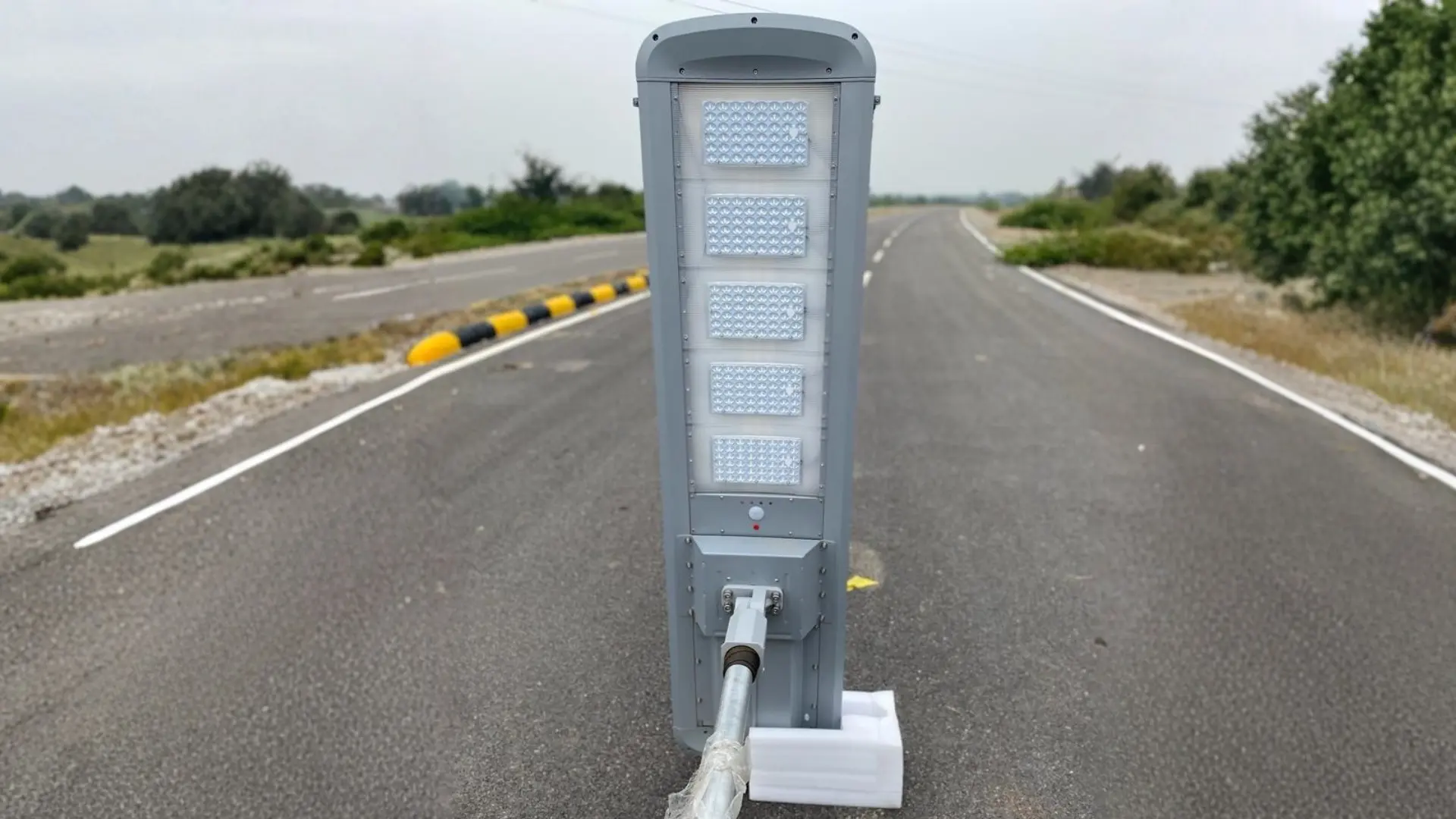
To address India’s unique suburban environment, the project team selected the Sresky THERMOS series as the core lighting solution, leveraging its advanced thermal management and self-cleaning technologies.
2.1 Product Selection: Sresky THERMOS Series
The THERMOS series was chosen for its optimization for extreme environments, making it especially suitable for India’s high temperatures and dusty conditions. Unlike standard solar streetlights, this series integrates automatic solar panel cleaning and high-temperature protection systems, ensuring long-term stable operation.
2.2 Core Technology Adaptability (Targeted Solutions)
The THERMOS series directly addresses key environmental pain points through the following technologies:
Auto-Cleaning Technology
Designed for dusty suburban environments, the built-in side brush system automatically cleans the solar panel at scheduled intervals each day. Made from wear-resistant materials, the brushes effectively remove dust and debris, maintaining optimal charging efficiency. This eliminates the need for manual cleaning, significantly reducing maintenance costs and safety risks. In India’s dusty conditions, this technology improves charging efficiency by over 20%.
High-Temperature Protection System (TCS)
Extreme heat is one of the main causes of battery failure. The THERMOS series integrates TCS temperature control, which automatically prevents overcharging during abnormal temperature spikes and reduces the risk of thermal runaway. Battery operation is kept within safe temperature ranges, extending service life to over three years. Compared with standard LiFePO₄ batteries, TCS technology increases cycle life by approximately 50%, ensuring reliable performance in high-temperature regions.
Adaptive Lighting System (ALS 2.1)
ALS 2.1 dynamically adjusts brightness based on battery capacity and weather conditions. During cloudy, rainy, or foggy periods, the system optimizes energy use to ensure uninterrupted lighting for more than 10 consecutive rainy days. This effectively prevents “dead light” failures and makes the system highly suitable for India’s monsoon climate.
Through FAS automatic fault detection, component status is monitored in real time, further improving system reliability. In addition, PIR motion sensors (120° angle, 8 m detection range), combined with Ray Sensor light detection, enable intelligent energy-saving operation. ALS 2.1 also supports seamless integration into smart city infrastructure.
III. Project Implementation and Deployment
Project execution focused on efficiency and simplicity, taking advantage of the THERMOS series’ integrated design.
3.1 Minimal Installation and Layout
Installation requires only four steps:
-
Excavate the foundation pit according to the cage dimensions and secure it with C20 concrete.
-
Bolt the bracket to the luminaire.
-
Mount the luminaire onto the pole.
-
Hoist the pole manually or mechanically, align the flange, and tighten the bolts.
The bracket angle is adjustable from 0° to 180°. The solar panel tilt angle was optimized according to India’s latitude (approximately 20°–30°N) to maximize solar exposure.
Pole height and spacing were configured based on road width:
-
SSL-72A: 4 m height with 18 m spacing
-
SSL-76A: 12 m height with 54 m spacing
The fixtures are constructed from corrosion-resistant aluminum alloy and Panlite PC, ensuring long-term structural stability.
3.2 Smart Commissioning
System parameters are configured via the Super Remote Control. The lighting mode is set to M2 Hybrid Mode: 100% brightness for the first 5 hours, followed by 25% base brightness with PIR activation (70% brightness when motion is detected).
Real-time capacity indicators provide clear feedback. LEDs flash sequentially during charging and fade progressively during discharge based on remaining battery power. This configuration balances energy efficiency with reliable illumination, making it ideal for low-traffic suburban roads.
IV. Risk Management & Sustainability
The project accounts for environmental erosion caused by wind and weather. All fixtures feature IP65 waterproof protection and IK08 impact resistance to withstand harsh outdoor conditions. Batteries are managed by an advanced BMS and backed by a 3-year warranty to ensure stable performance in high-temperature environments.
From a sustainability perspective, the project minimizes carbon emissions through fully solar-powered operation, supporting India’s long-term green energy transition.
Conclusion
This Indian suburban highway lighting project represents more than an infrastructure upgrade—it is a practical demonstration of the Sresky THERMOS series’ core technologies, including automatic cleaning, high-temperature protection, and the Adaptive Light Control System (ALS).
The project proves that in harsh environments characterized by heavy dust, extreme heat, and unreliable power grids, high-specification solar street lighting solutions can deliver safety, reliability, and long-term sustainability to remote communities.
Table of Contents