
I. Project Background & Needs Analysis
Located in the heart of the Eurasian continent, Mongolia exhibits a typical continental climate: long, bitterly cold winters with temperatures frequently dropping below -30°C, sometimes even lower; summers are brief and hot, yet snowfall occurs frequently year-round, with snow cover persisting for months. These climatic conditions pose severe challenges to urban lighting systems. Deploying traditional grid-connected streetlights in Mongolia is prohibitively expensive, particularly in remote grassland cities where weak power infrastructure makes maintenance extremely difficult. Furthermore, under extreme cold, conventional batteries experience a sharp decline in charge/discharge efficiency, often leading to lighting interruptions and heightened safety risks.
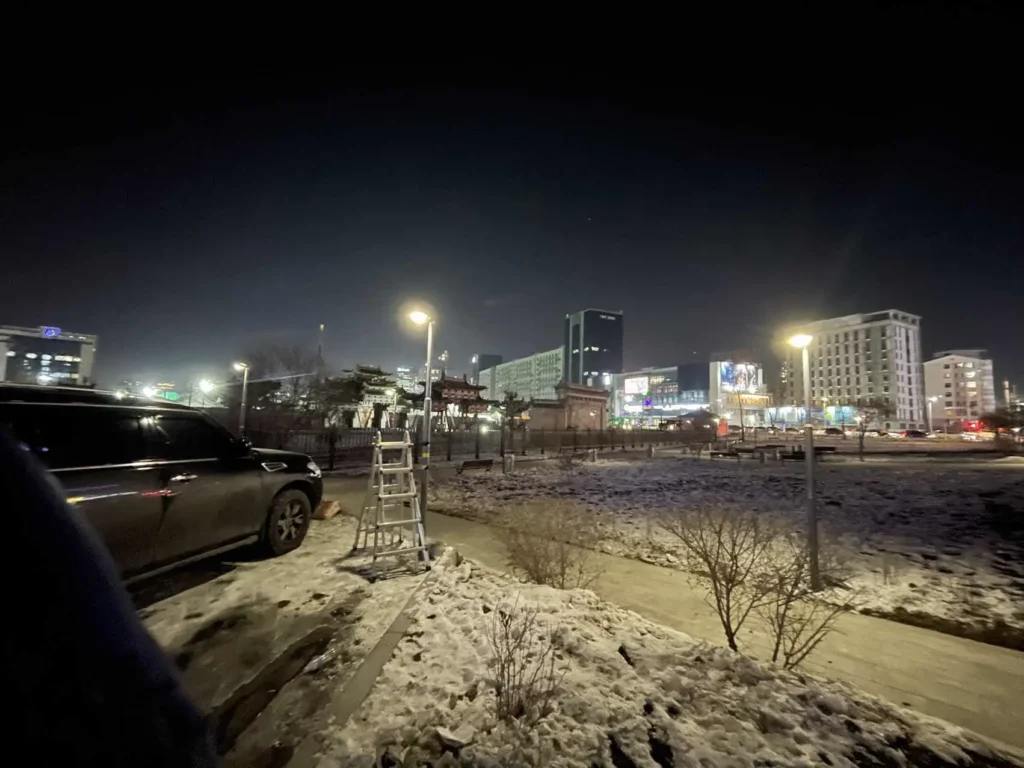
In-Depth Analysis of Geographical Challenges
Mongolia’s winter daylight hours are brief, lasting only 4-6 hours. Frequent blizzards and snow accumulation block solar panels, reducing power generation efficiency. Urban roads are often covered in thick snow, and slippery surfaces increase the risk of accidents for pedestrians and vehicles at night. According to the Mongolian Meteorological Agency, average winter temperatures range from -20°C to -35°C. This not only impacts battery performance but may also cause material degradation or electronic component failure. Traditional streetlights rely on the grid, requiring cable installation across vast grasslands at a cost of tens of thousands of dollars per kilometer, while remaining vulnerable to power outages during snowstorms.
Evolution of Urban Upgrade Needs
With Mongolia’s economic transformation and the advancement of the Belt and Road Initiative, cities like Ulaanbaatar are accelerating modernization. Road lighting must shift from purely functional to comprehensive: not only providing safe illumination but also harmonizing with traditional cultural architecture. For instance, traditional Chinese or Mongolian-style buildings common in Mongolian cities—such as temples with white walls and black tiles or commercial districts featuring yurt-style structures—require soft, glare-free lighting to avoid disrupting cultural landscapes. Concurrently, modern commercial districts (such as shopping streets and main thoroughfares) require high-intensity lighting to enhance nighttime vibrancy and economic appeal. Project requirements emphasize sustainability: zero carbon emissions, easy maintenance, and compatibility with diverse terrains—from ancient stone paths to snow-covered highways.
Systematic Analysis of Core Pain Points
-
Extreme Cold Endurance Issues: Battery capacity can degrade by over 30% in sub-zero temperatures, with narrow charge/discharge temperature ranges causing unstable lighting.
-
Continuous Rain/Snow Lighting: Insufficient sunlight during snowy weather reduces solar charging efficiency, making it difficult for traditional systems to sustain lighting for over five consecutive days.
-
Complex Installation Environments: Mongolia’s diverse terrain includes permafrost and wind-sand zones, requiring rapid and efficient installation to minimize outdoor work time and avoid extreme weather risks.
-
Economic and Environmental Balance: High initial investment must be offset by long-term energy savings, aligning with Mongolia’s national clean energy strategy.
These challenges prompted the project team to seek innovative solutions, with Sresky TUCANO emerging as the preferred choice due to its core technologies tailored for Mongolia’s climate.
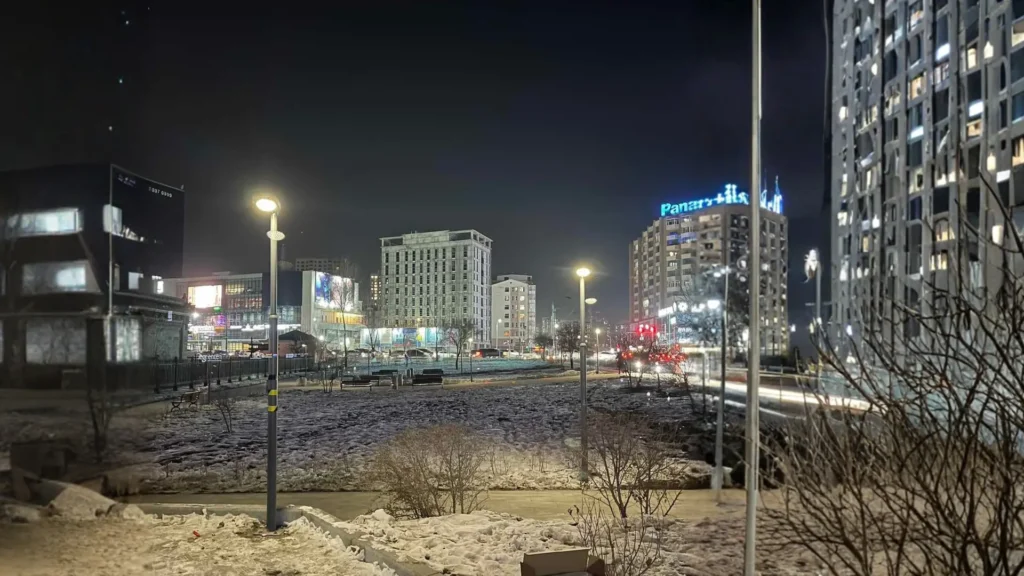
II. Technical Solution Design
For Mongolia’s unique environment, the project selected Sresky TUCANO (TUCANO 3) series solar streetlights. This product integrates multiple patented technologies to ensure reliability and efficiency under extreme climatic conditions. Featuring an integrated design with 3000 lumens brightness and an installation height of 3-6 meters, TUCANO is suitable for urban roads, courtyards, and commercial area lighting.
1. ALS (Adaptive Lighting System) Version 2.1
ALS technology is a core highlight of TUCANO. It dynamically adjusts lighting modes by continuously monitoring ambient light intensity and battery charge levels. Even during continuous snowfall or overcast conditions, the system optimizes energy consumption to ensure continuous operation exceeding 5 days. This addresses the challenges of short daylight hours and snow-covered solar panels during Mongolian winters.
-
Technical Principle: ALS employs algorithms to analyze historical light data. When charging is insufficient, it automatically reduces brightness to the minimum effective level (e.g., 120lm basic mode) and increases to full brightness upon PIR sensor activation. Compared to traditional systems, ALS extends illumination duration by 2-3 times.
-
Adapted for Mongolian Environments: During snowy days below -20°C, ALS prevents battery over-discharge, maintains basic lighting, and avoids dark zones. Field tests confirm it supports 5 consecutive days of rainy-day illumination with only 2 hours of sunlight per day.
2. TCS (Temperature Control System) Version 1.0
TCS technology is specifically engineered for extreme cold conditions. Built-in sensors continuously monitor battery temperature to prevent low-temperature damage to lithium-ion cells. Charging temperature range: 0~45°C; Discharging temperature range: -20~60°C, ensuring stable operation in Mongolia’s -30°C environments.
-
Technical Highlights: TCS protects batteries through heating modules and insulation materials, extending lifespan to thousands of cycles. Compared to standard LiFePO4 batteries, TCS optimizes cycle stability at low temperatures, reducing degradation by 20%.
-
Adaptability: Extreme Mongolian winter temperatures often cause battery failure. TCS automatically adjusts charging rates to prevent freezing and solidification, enhancing overall system durability. OSRAM 2835 LEDs further boost luminous efficacy while reducing energy consumption.
3. High-Brightness Optical Design & Structural Durability
TUCANO features a Mono-Crystalline solar panel with a charging time of just 10 hours. Its optical system incorporates a large-size lens cover and black Fresnel lens, supporting PIR infrared sensing (120° angle, 5m range) that automatically boosts brightness for 30 seconds when pedestrians approach.
-
Detailed Specifications: IP44 waterproof/dustproof rating and IK10 impact resistance withstand blizzards and urban impacts. Diverse control modes: button switch, M1/M2/M3 modes, remote T-mode (10/20-minute timer with memory function).
-
Enhanced Durability: Monolithic alloy construction, anti-interference IR receiver, and battery indicator ensure easy maintenance. In Mongolia’s snowy terrain, steeply angled solar panels facilitate snow shedding to maintain power generation efficiency.
III. Project Implementation
The project implementation demonstrated TUCANO‘s flexibility and expertise across diverse Mongolian environments. Based on actual photos and technical specifications, the installation process was efficient, minimizing risks during extreme weather.
Multi-Scenario Coverage
-
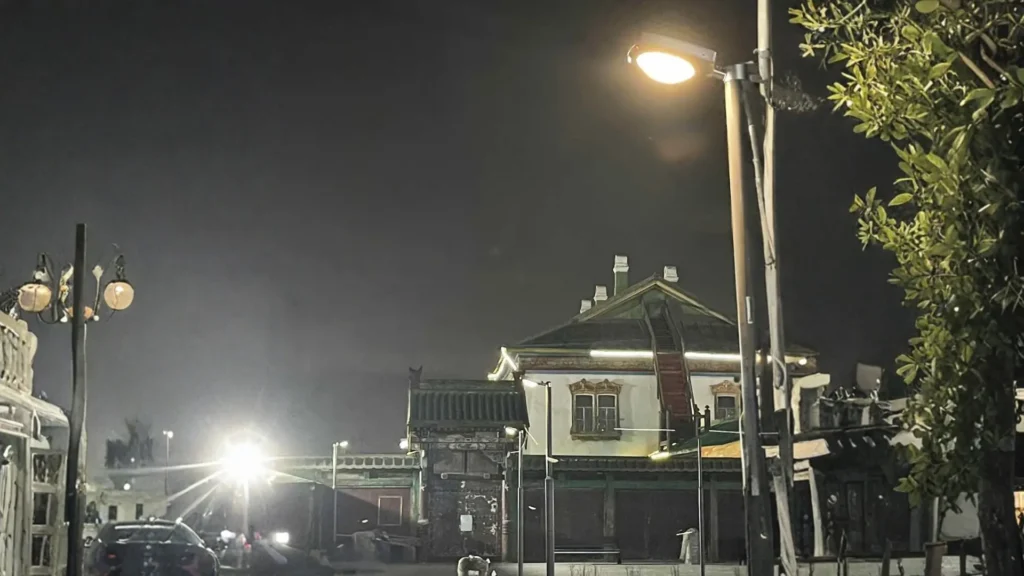
Historic Preservation Zone: In traditional Mongolian architecture districts, TUCANO‘s minimalist design harmonizes with white walls and black tiles. Soft 4000K illumination lights cobblestone paths and bike lanes, while PIR sensors boost brightness when pedestrians pass, highlighting ancient structures’ serene beauty without light pollution.
-
Modern Commercial Snow Scenes: Along snow-covered main thoroughfares, high-mast installations (3-6m) provide clear visibility. Interwoven with neon signage, they amplify nocturnal vibrancy. Field tests confirm stable illumination across 12m-wide roads, even in snowy conditions.
This implementation phase demonstrates TUCANO‘s adaptability to complex terrains, making it suitable for global “solar streetlight installation case studies.”
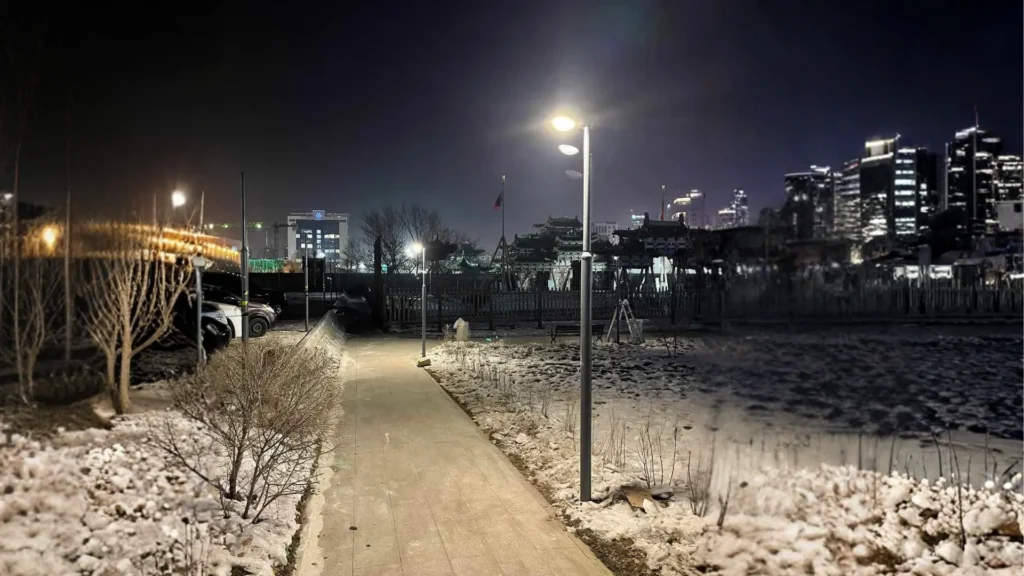
IV. Project Outcomes & Impact
Following implementation, TUCANO significantly elevated urban lighting standards in Mongolia, delivering multiple benefits:
-
Social Safety Value: 3000-lumen brightness reduces accident rates by over 20% on snow-covered roads. PIR sensors enhance pedestrian safety, particularly during winter nights, with auto-brightening reducing slip hazards. Municipal feedback confirms improved lighting coverage and heightened citizen satisfaction with nighttime mobility.
-
Environmental Sustainability: Fully solar-powered with zero carbon emissions, each lamp saves hundreds of dollars annually in electricity costs while eliminating long-distance cable maintenance. This aligns with Mongolia’s clean energy transition and supports UN Sustainable Development Goals.
-
Aesthetic and Cultural Harmony: TUCANO integrates into traditional cultural landscapes, serving not only as illumination but as an urban nightscape element. The project demonstrates modern technology’s compatibility with Mongolian architecture, enhancing tourism appeal.
Overall, this project sets a benchmark for “sustainable solar lighting practices,” helping clients achieve long-term ROI.
Conclusion: Lighting the Future, Sresky Walks with You
Sresky TUCANO‘s successful implementation in Mongolia demonstrates solar streetlights’ potential in extreme climates. Let us illuminate more cities together and advance the sustainable lighting revolution.