
I. Project Background and Demand Analysis
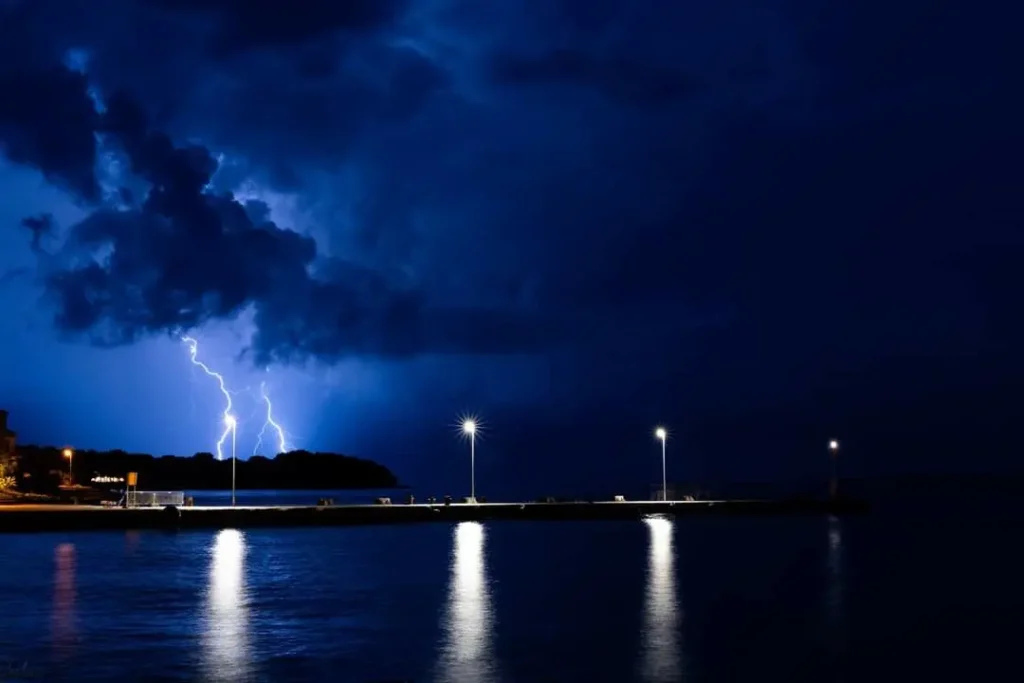
Croatia has approximately 5,800 kilometers of coastline and features a distinct Mediterranean climate: summers are hot and dry, with average temperatures exceeding 30°C, while winters are cold, damp, and rainy, accompanied by strong winds and brief downpours. According to data from the Croatian Meteorological Service (DHMZ), the region’s annual average rainfall exceeds 1,000 mm, with winter storms occurring 5–10 times per month. The humidity from salt-laden sea breezes remains consistently between 70% and 90% year-round. These factors make coastal piers particularly challenging environments for lighting design, especially during the peak tourist and fishing seasons.
This project focuses on multiple docks and breakwaters along Croatia’s Adriatic coast, including well-known ports such as Dubrovnik and Split. These areas serve not only as hubs for vessel berthing and cargo transshipment but also as popular nighttime walking destinations for tourists. The client’s key pain points include:
- High corrosion challenges: Salt fog carried by sea breezes erodes the casings and circuitry of traditional streetlights, leading to frequent rusting and malfunctions. The service life of traditional metal fixtures is often less than two years, with maintenance costs accounting for over 30% of total expenditures.
- Lack of power infrastructure: Docks are located far from urban power grids, and laying cables requires excavating beaches and rocky terrain. This is not only costly (over €100,000 per kilometer) but also risks damaging fragile coastal ecosystems and violating EU environmental regulations.
- High reliability requirements: During extreme nighttime storms, lightning and heavy rain can cause power outages. In high lightning-frequency scenarios, the lighting system must provide a stable light source to ensure the safe return of vessels and prevent pedestrians from slipping or colliding. International Maritime Organization (IMO) standards require dock lighting to provide an illuminance of no less than 50 lux and to include lightning protection.
- Aesthetic requirements: As a tourist destination, the lighting solution must blend seamlessly with the natural seascape. A modern, minimalist design enhances both the technological appeal and visual harmony while preserving the Mediterranean landscape of blue skies, white clouds, and rolling waves.
This analysis highlights the necessity of selecting weather-resistant, zero-emission solar streetlights. The SRESKY ATLAS series stands out in such Croatian solar streetlight projects, offering customized solutions for coastal pier lighting.
II. Technical Solution Design
To address the extreme environmental conditions of Croatian coastal piers, the project team selected the SRESKY ATLAS series of solar streetlights. This series offers brightness levels ranging from 2,000 lm to 10,000 lm, utilizes monocrystalline silicon solar panels and lithium-ion batteries, and achieves a luminous efficacy of up to 230 lm/W. Key technical features include:
- ALS 2.2 Patent Technology (Key Selling Point):
Designed for prolonged cloudy and stormy conditions, ALS 2.2 (Adaptive Lighting System) uses intelligent algorithms to optimize energy distribution, maintaining illumination for over 10 days even during extended periods without sunlight. This is critical during Croatia’s rainy season and eliminates the “sunlight dependency” common in conventional solar streetlights. Combined with BMS technology, ALS 2.2 increases charging speed by 30%, ensuring efficient energy storage even on cloudy days. - High-standard protection and weather resistance:
The ATLAS series uses aluminum alloy and PC materials, featuring an IP65 waterproof rating and IK08 impact resistance. The surface undergoes specialized anti-corrosion treatment (such as a double-layer anti-rust coating), making it resistant to salt fog corrosion. The operating temperature range is 0°C–45°C (charging) and -20°C–60°C (discharging), suitable for cold and damp winter conditions. The TCS (Temperature Control System) further protects the battery from temperature-related degradation. - Lightning and circuit protection:
Designed for high-frequency lightning environments, the system integrates a lightning protection module and electromagnetic interference shielding, capable of withstanding surges up to 10 kV. OSRAM LED chips ensure stable output with a color temperature of 5700K and CRI (Ra) > 70, delivering highly penetrative lighting even during heavy rain. -
Smart PIR sensing and brightness control:
The PIR sensor offers a detection range of 120° and up to 8 meters, with multiple operating modes:- M1: 30% brightness + PIR until dawn
- M2: 100% (first 5 hours) + 25% PIR (next 5 hours) + 70% until dawn
- M3: 70% all night
This system conserves energy during low-activity periods while automatically switching to full brightness when motion is detected, ensuring both safety and efficiency. The Super Remote Control allows customizable parameter settings for seasonal adaptation.
- Hybrid power support:
The ATLAS series supports hybrid power supply (Hybrid Mode), automatically switching to AC charging when battery capacity drops below a preset level, enhancing overall system reliability. Its Type II lighting distribution and modular design—such as pole-mounted battery replacement—perfectly meet marina requirements.
III. Project Implementation
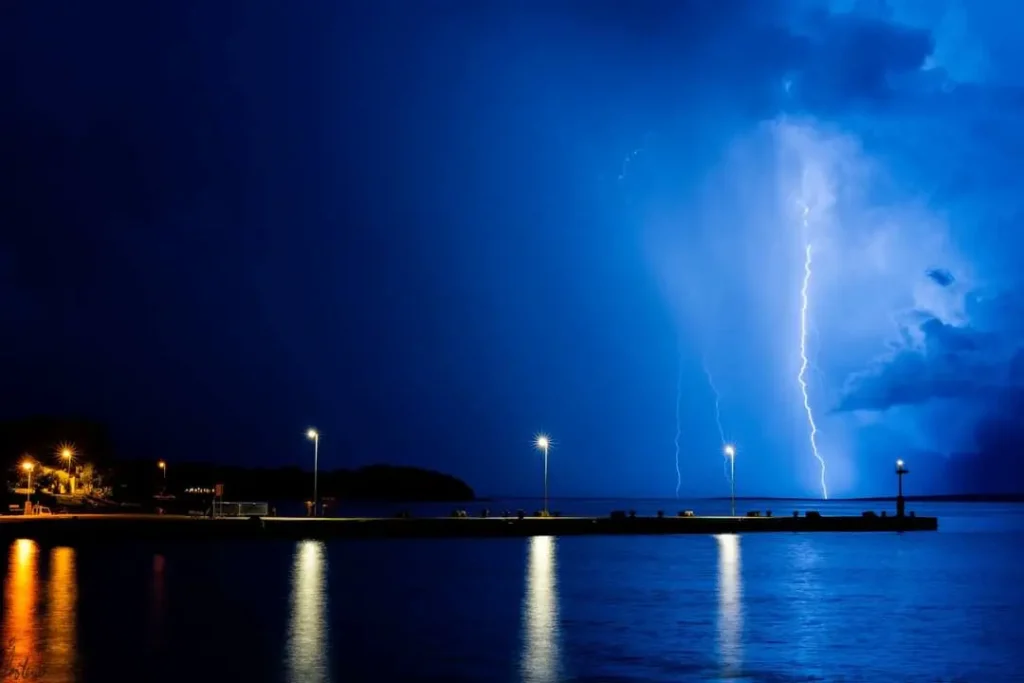
Project implementation began with a site assessment and was completed within four months. Streetlights were installed along the edges of piers and breakwaters at intervals of 15–32 meters. With lamp heads angled downward to form vertical light bands, the system illuminates walking surfaces while also providing auxiliary navigation lighting for nearby vessels. Installation heights range from 3 to 10 meters, and the integrated design blends harmoniously with the Mediterranean coastal landscape.
The construction process offers significant advantages: the ATLAS integrated structure requires no trenching or cabling. Installation involves excavating a foundation pit, securing the pole with C20 concrete, mounting the bracket and luminaire, and lifting the assembly into position. This method protects coastal ecosystems by avoiding damage to beaches and rocky terrain typically caused by traditional construction. The process is highly efficient, enabling rapid illumination of several kilometers of coastline.
Visually, the modern and minimalist ATLAS lamp design creates a futuristic industrial aesthetic against the deep blue sea and lightning backdrop. LED indicators (Charging: red/orange/green flashing; Discharging: green/orange/red) allow real-time system monitoring, ensuring stable operation during storms. The project also integrates a customized smart lighting system, enabling remote control of lighting modes and battery monitoring via app or PC, significantly improving operational convenience.
IV. Risks and Mitigation Strategies (Risk & Mitigation)
Although the ATLAS series is highly weather-resistant, potential risks must still be addressed:
- Risk 1: Physical damage from extreme lightning strikes
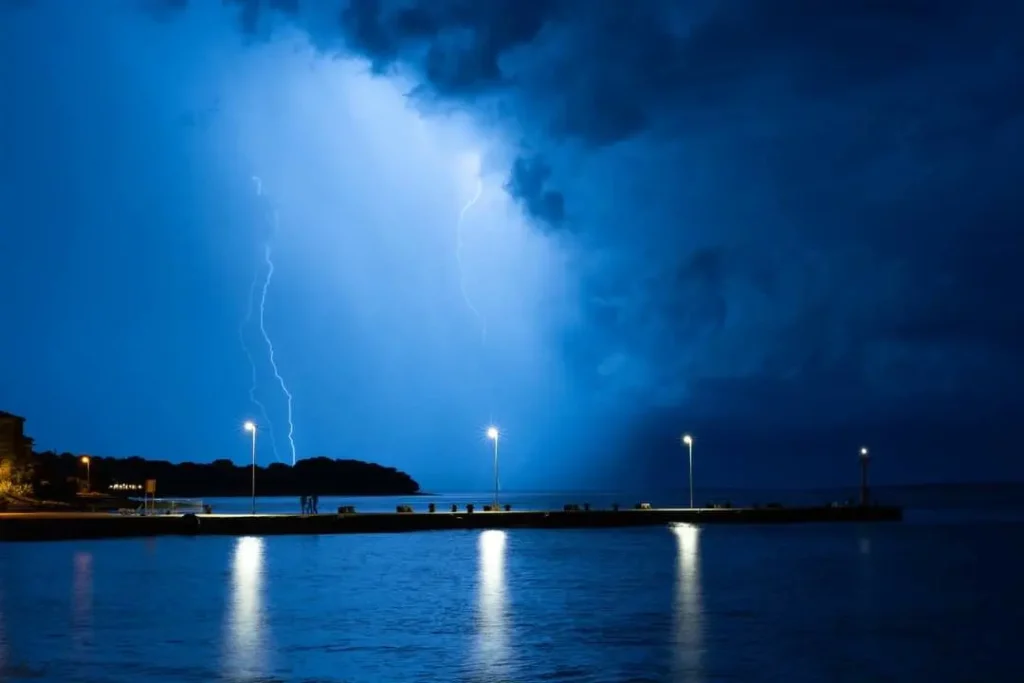
Croatia experiences frequent lightning, which may damage luminaires.
Mitigation: The ATLAS series features robust structural integrity (IK08 rating). Its modular design allows quick replacement of components (such as batteries or LEDs) directly on the pole, with restoration completed in under one hour. - Risk 2: Lens fogging from long-term salt spray exposure
High humidity may reduce luminous efficacy.
Mitigation: High-transmittance, UV-resistant, and corrosion-resistant PC materials ensure sustained performance at 230 lm/W. Regular cleaning, combined with IP65 sealing, prevents salt intrusion. The BMS system monitors lumen depreciation for proactive maintenance.
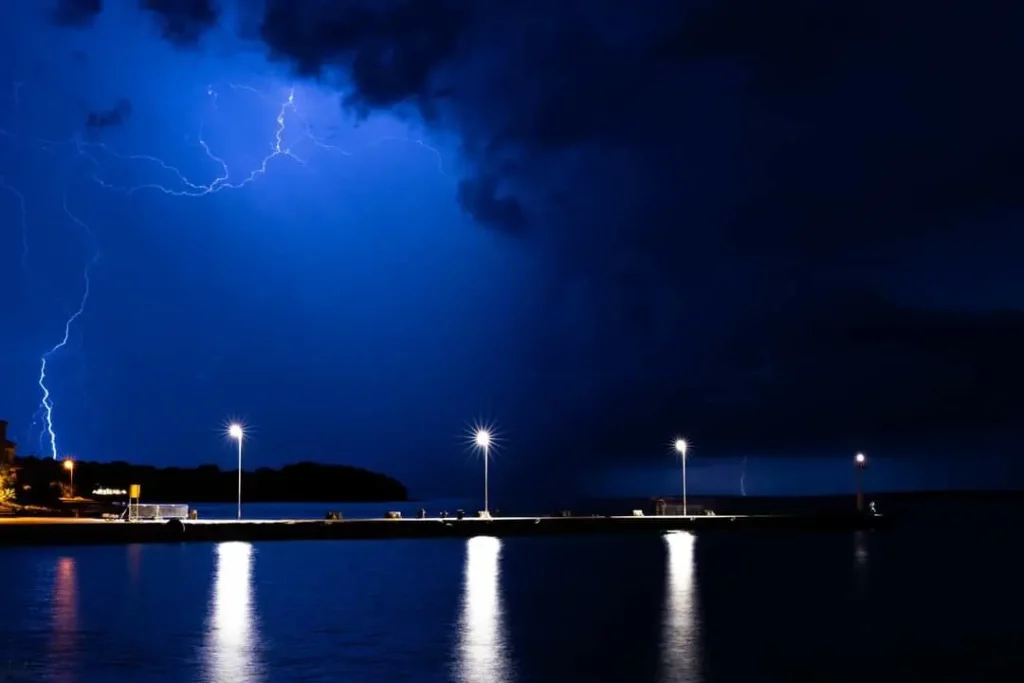
Through these measures, project risks are effectively minimized, ensuring long-term stable operation.
As a solar streetlight supplier, SRESKY is committed to delivering reliable solutions for extreme environments worldwide. Explore more coastal dock lighting solutions and European green energy projects with us. We help you achieve efficient, sustainable lighting upgrades—enhancing both your operational performance and long-term competitiveness.