
I. Project Background & Demand Analysis
Located in the southeastern Arabian Peninsula, Oman exhibits a typical tropical desert climate. Annual average temperatures range from 30-40°C, with summer peaks exceeding 50°C, accompanied by intense solar radiation and coastal salt fog corrosion. This environment poses severe challenges for lighting equipment: high temperatures accelerate battery degradation, accumulated dust and sand reduce solar panel efficiency, while salt fog corrodes metal components. Simultaneously, as a major tourist destination, Oman’s resorts are often situated in coastal areas surrounded by palm groves. Architectural styles predominantly feature white, multi-story modern designs emphasizing luxury and harmony with nature.
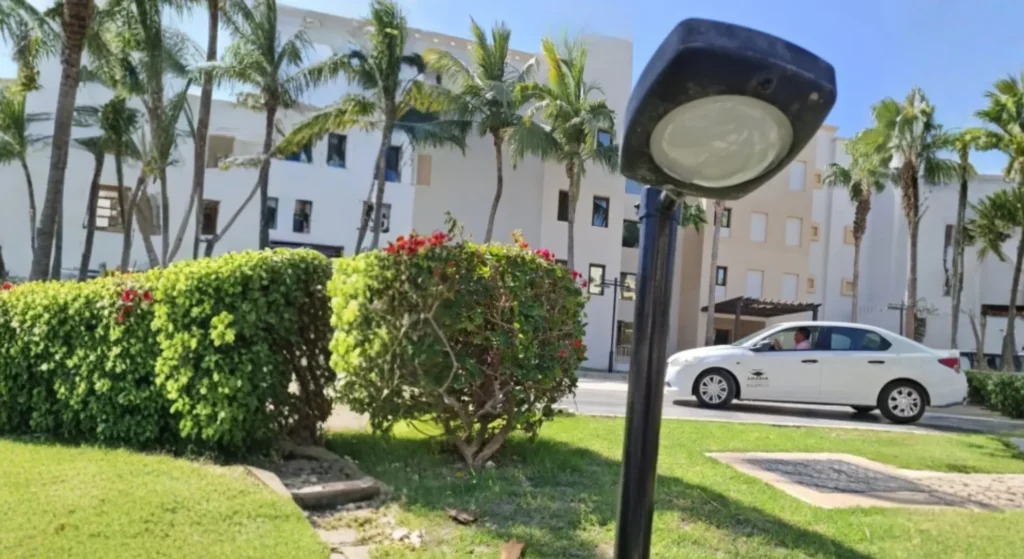
In this project, the client is a high-end resort hotel where the main thoroughfare serves as the entrance “façade,” bearing the responsibility of welcoming global visitors. Core pain points include:
-
Stability Requirements: The hotel’s main road must ensure round-the-clock nighttime illumination, preventing brightness degradation that could compromise the guest experience. Traditional grid-connected fixtures are susceptible to power fluctuations, and unstable electricity supply is commonplace in remote resort areas. The client requires the lighting system to maintain normal operation for at least five days after continuous rainy days or dust storms to ensure safe passage.
-
Durability Challenge: In high-temperature environments, traditional lithium batteries often have a shortened lifespan of 1-2 years, leading to high maintenance costs. The hotel seeks a solution resistant to extreme temperatures (charging: 0~45°C, discharging: -20~60°C) while reducing the hassle of frequent component replacements.
-
Aesthetic Integration: Lighting must harmonize with the hotel’s surroundings—palm groves, white architecture, and gray stone pavements. Designs should be modern and minimalist, avoiding bulky appearances that disrupt the landscape’s visual appeal.
Through in-depth research into client requirements, the Sresky team identified solar street lights as the ideal solution. Not only do they leverage Oman’s abundant sunlight resources (with an average annual sunshine duration exceeding 3,000 hours), but they also align with global green tourism trends, helping the hotel reduce its carbon footprint and enhance its sustainable brand image.
II. Technical Solution Design
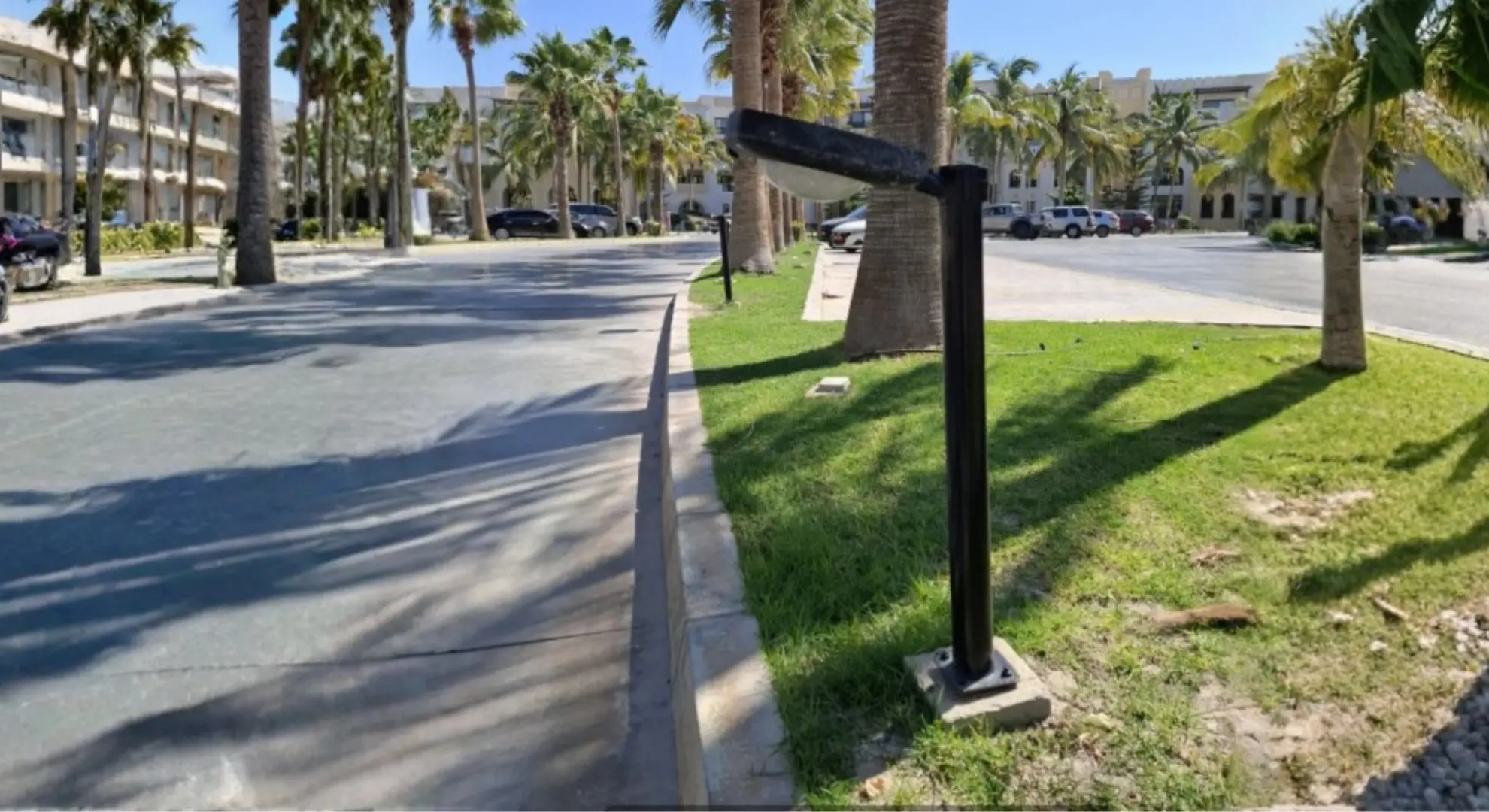
For the Oman Hotel’s specific requirements, Sresky selected the SCL-03 (TUCANO 3) courtyard solar streetlight. This product centers on an integrated design, combining advanced photovoltaic technology and patented algorithms to ensure high efficiency in tropical climates.
-
Core Selection: Sresky SCL-03 (TUCANO 3) Courtyard Solar Streetlight
The SCL-03 series is specifically engineered for outdoor lighting, featuring an all-aluminum alloy housing with an IP44 protection rating. This effectively resists salt spray and dust erosion. While some comparable products achieve IP65, the SCL-03’s IP44 rating provides sufficient durability for Oman’s non-extreme humid conditions. Its optimized heat dissipation structure further enhances overall anti-aging performance.
Key Technical Specifications
-
High Brightness & Luminous Efficiency: Delivers 3,000 lumens brightness at a 4,000K color temperature with a Color Rendering Index (Ra) of 80+, achieving luminous efficiency up to 190lm/W. This ensures clear visibility on main pathways while creating a warm, comfortable lighting environment at night, avoiding glare or dimness issues.
-
Energy System: Equipped with monocrystalline silicon solar panels for superior charging efficiency. Supports charging at 0~45°C and discharging at -20~60°C, with a charging time of only 10 hours. Under rainy conditions, it can sustain illumination for over 5 days, far exceeding the 3-4 days of traditional products.
-
Control and Modes: Supports button switch (long press 1.5s to turn on/off) and remote control operation. Lighting modes include:
-
M1: 120lm constant light + PIR sensor 30s high brightness
-
M2: 240lm constant light + PIR sensor triggers 30s high brightness
-
M3: 400lm continuous for 5 hours + 80lm PIR sensor triggers 30s high brightness until dawn
-
Additionally, the remote-controlled T mode allows scheduling 10 or 20-minute high brightness intervals. The memory function ensures automatic restoration the next day, enabling hotels to adjust based on guest traffic.
Patented Technology Support
Sresky’s patented technologies form the core competitive advantage of the solution:
-
ALS 2.1 Technology: The Adaptive Lighting System automatically adjusts output power based on weather conditions. Even during prolonged rainy periods, it optimizes energy distribution to ensure continuous illumination for over 5 days, preventing abrupt brightness decay. Charts demonstrate a smoother brightness decay curve compared to systems without ALS, guaranteeing stable performance.
-
TCS 1.0 Temperature Control System: Designed for Oman’s high temperatures, this system continuously monitors battery temperature to prevent capacity loss from overheating. Data indicates that at 60°C, the battery’s cycle life significantly exceeds standard LiFePO4 batteries, extending overall service life to over 5 years.
These technologies not only enhance product durability but also ensure long-term reliability in tropical desert environments, perfectly matching the hotel’s requirements for stability and longevity.
III. Project Outcomes & Impact
Post-implementation, the hotel reported that the SCL-03 series maintained excellent performance after years of operation, validating Sresky’s hardware quality and system stability.
-
Durability Validation: Customer reports indicate luminaire brightness decay rates below 5% per year, significantly outperforming industry averages. PIR sensor accuracy reaches 95%, ensuring nighttime safety lighting without energy waste.
-
Social and Environmental Value
-
Zero Carbon Emissions: Fully solar-powered, helping the hotel reduce its carbon footprint while aligning with Oman’s national sustainability goals and global green tourism standards.
-
Economic Benefits: Eliminating cable installation saves 30% in initial costs. Zero electricity bills, low maintenance frequency (1-2 cleanings per year), and an ROI cycle shortened to 2-3 years.
-
Environmental Enhancement: Modern industrial design elevates the hotel’s day-night aesthetics, providing guests with a safe and comfortable nighttime environment while boosting brand appeal.
-
Overall, this project not only resolves lighting challenges but also establishes a sustainable lighting benchmark for Oman’s tourism industry.
IV. Risks & Mitigation Strategies
Despite comprehensive design, tropical environments present inherent risks. Sresky offers holistic mitigation strategies:
-
High Temperature Risk: TCS 1.0 monitors battery temperature in real-time, automatically reducing load to prevent thermal runaway. If temperatures exceed thresholds, the system enters protection mode to ensure battery longevity.
-
Long-Term Dust Accumulation: Given Oman’s high dust levels, quarterly cleaning of solar panels is recommended to maintain charging efficiency >19%. The SCL-03’s smooth surface design facilitates easy cleaning.
-
Human Interference: PIR sensors utilize anti-interference Fresnel lenses to filter non-human targets. The remote control memory function prevents accidental operation.
These measures minimize project risks, ensuring long-term stable operation.
For inquiries about Sresky SCL-03 solar street lights or customized hotel lighting solutions in Oman, visit the Sresky official website.