
I. Project Background and Requirements Analysis
1.1 Project Location: Premium Residential Community in Australia
Australia’s premium residential communities are renowned for their spacious layouts and livable environments. This project is situated in a quintessential high-end neighborhood in southeastern Australia, where modern architecture seamlessly blends with natural landscapes: light-toned single-story homes, warm yellow window lights, low-growing green shrubs, and the occasional parked RV.
However, Australia’s variable climate presents a major challenge. Despite abundant sunshine—with over 2,000 daylight hours annually—coastal regions frequently experience fog and sudden downpours. This demands exceptional endurance and light penetration from streetlights. Traditional grid-based lighting not only increases carbon footprints but also risks compromising nighttime safety during power outages.
1.2 Core Owner Requirements
As the community property manager, the owner articulated multi-dimensional requirements:
-
Comprehensive Coverage: Main roads require 9000LM high-brightness lighting, while sidewalks need 3000LM–6000LM soft illumination to accommodate varying usage intensities.
-
Extreme Weather Resilience: Lights must maintain high visibility during prolonged rainy periods to reduce slip or collision risks.
-
Low-Carbon Sustainability: Aligning with Australia’s “Zero Emissions Neighbourhoods” initiative, the property owner aims to achieve zero electricity costs through solar streetlights while minimizing long-term maintenance expenses.
-
Intelligent Management: Streetlights must support real-time status monitoring, enabling property staff to remotely adjust settings and diagnose faults for efficient operations.
These requirements align with Australia’s national policies. According to the Australian Clean Energy Council, solar installations grew by 15% year-on-year in 2023, signaling a shift toward smart and sustainable residential lighting solutions. Within this context, the SRESKY Alpha Series emerges as the ideal choice.
II. Technical Solution Design: Alpha Series’ Core Adaptability
For this complex community environment, we selected the SRESKY Alpha Series as the core product. Its patented technology and modular design perfectly suit Australian residential lighting needs. Featuring OSRAM LED chips with efficiency up to 230 lm/W, the series offers three brightness options: 3000LM, 6000LM, and 9000LM. Color temperature can be switched between 3000K (warm yellow) and 5700K (pure white). Key technical highlights include:
2.1 Smart Dual-Color Temperature Switching (Rainy Weather Sensing Technology)
The Alpha Series incorporates a built-in rain sensor that detects weather changes in real time. Under clear conditions, it emits 5700K white light for crisp, high-contrast illumination. When rain or fog is detected, it automatically switches to 3000K warm yellow light. This warm light offers superior penetration, reducing glare from rain reflection and boosting visibility by over 20%. In Australian communities prone to rainy seasons, this technology directly enhances nighttime safety, eliminating the risk of traditional streetlights failing during adverse weather.
2.2 ALS 2.4 Core Algorithm & Energy Management
Battery life is a core challenge for solar streetlights. The Alpha Series uses the patented ALS 2.4 algorithm, dynamically adjusting brightness based on ambient light intensity. Even during continuous overcast conditions lasting more than three days, the lights remain operational, providing over 72 hours of illumination. Additionally, the APC Temperature Control System (TCS) ensures safe charging and discharging of lithium-ion batteries across extreme temperatures from -10°C to 55°C. These features make the system highly suitable for Australia’s variable climate, ensuring stable operation in both scorching summers and cool winters.
2.3 Visual Interaction: LED Smart Display
For simplified management, the Alpha Series features an LED screen that displays battery capacity (0–100%), operating mode (M1/M2/M3), PIR sensor status, rain mode, and low-battery warnings (icon flashes below 20%). The screen also supports external device indicators, showing real-time charging status when connected to solar panels, adapters, or backup batteries. This enables property staff to monitor streetlight health without specialized tools, significantly reducing maintenance barriers.
2.4 Flexible Installation and Expandability
Installation flexibility is another advantage of the Alpha Series. It supports horizontal bar, vertical pole, and wall mounting with adjustable angles from 0° to 90°, adapting to various terrains. Reserved expansion ports allow connection of additional solar panels or backup batteries, supporting hybrid power modes (solar + AC). The PIR motion sensor covers a 120° angle with a maximum detection range of 8 m. It automatically dims to 30% brightness in unoccupied areas to conserve energy. Constructed from aluminum alloy and PC, the product boasts IP65/IK08 protection ratings for weather resistance.
These technologies stem from SRESKY’s years of R&D and are certified to Australian standards, ensuring compliance and reliability.
III. Project Implementation & Deployment: Full-Scene Precision Lighting
During implementation, we designed precise lighting layouts tailored to the community’s conditions. The Alpha Series’ modular design allows selection of different models based on area requirements, ensuring uniform light distribution without blind spots. Key area implementations include:
Main Community Roadway:
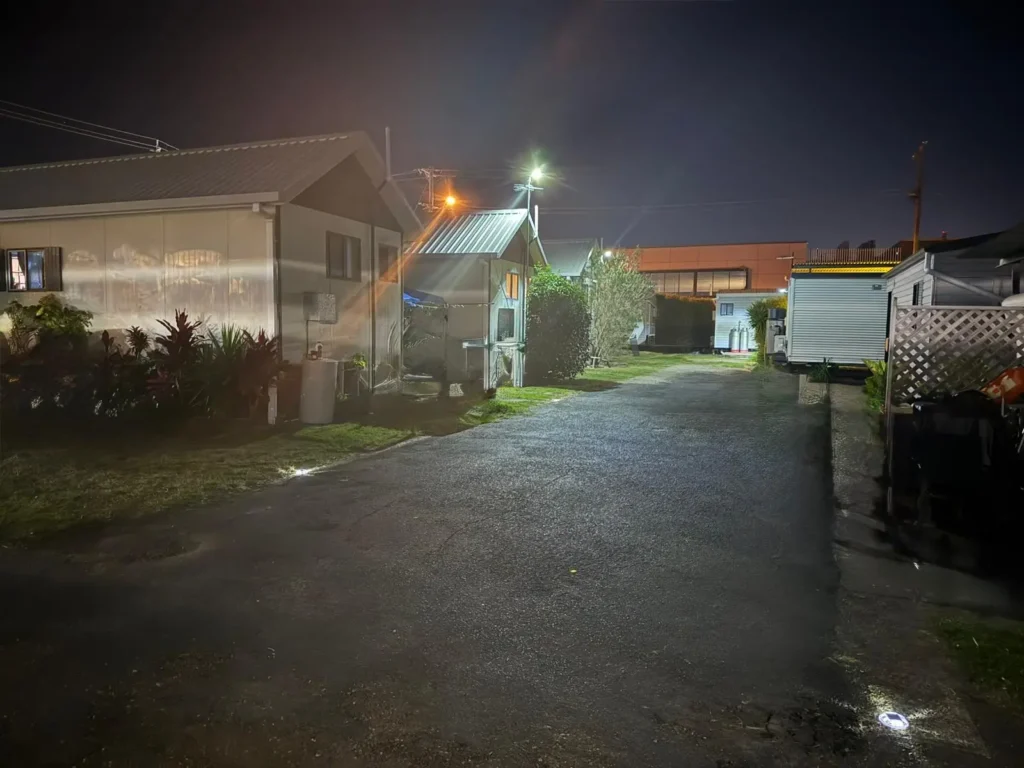
SSL-59 (9000LM) units were installed along both sides of the wide concrete roadway. At night, white light illuminates the pavement, blending with the light-colored homes and warm yellow window lights to create a safe, welcoming ambiance. Type-4M light distribution ensures coverage up to 20 m, eliminating vehicle blind spots.
Walkways and Green Areas:
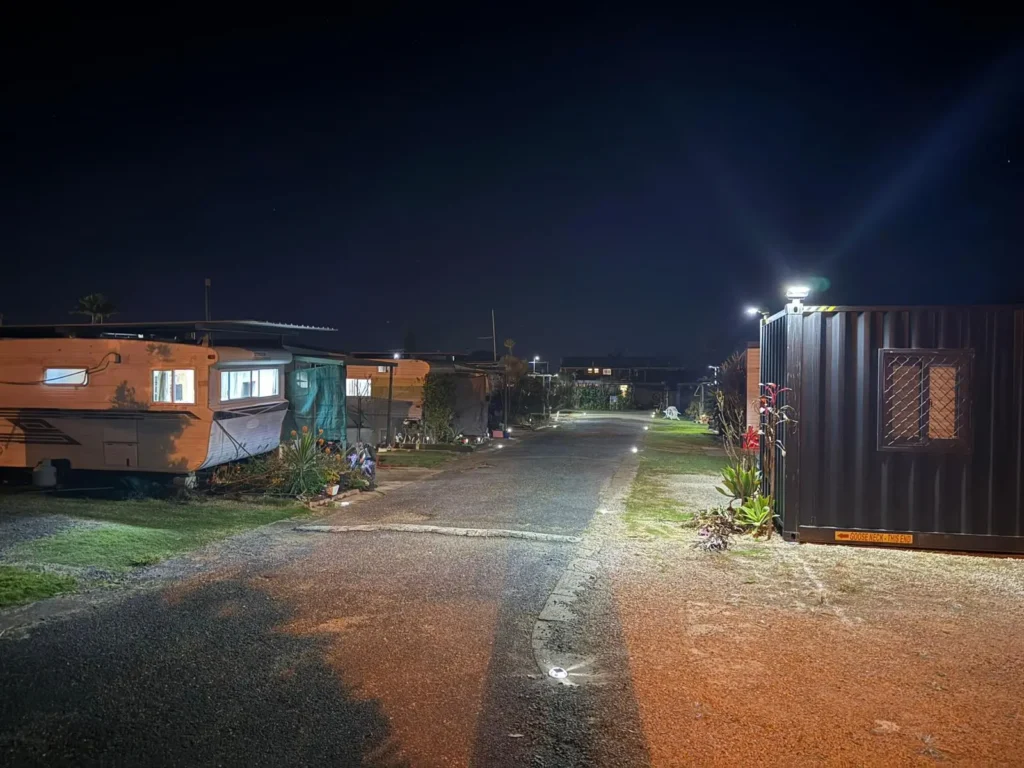
SSL-56 (6000LM) fixtures with PIR sensors illuminate one side of pedestrian paths. Soft lighting over low shrubs minimizes light pollution. Brightness automatically increases to 100% when motion is detected and drops to 20% when unoccupied, saving energy while protecting the ecosystem.
Office & Entrance Areas:
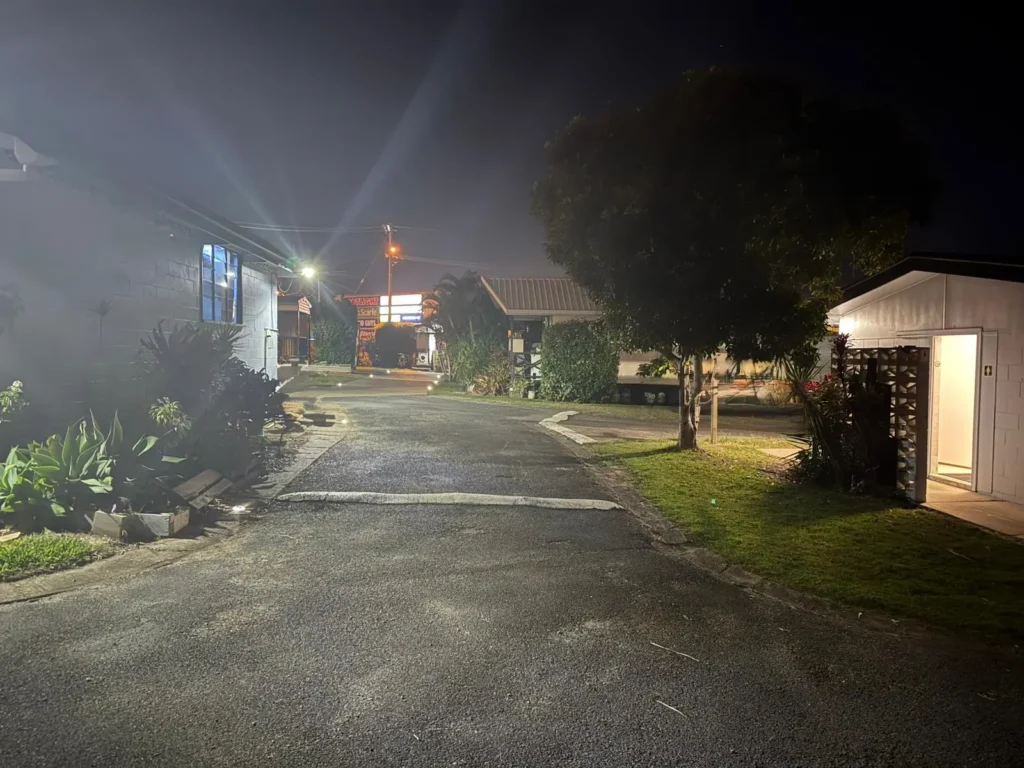
SSL-53 (3000LM) enhances illumination of “Office” signage and main gates. High brightness ensures clear surveillance camera images, boosting security. Rain mode activates automatically, with warm light penetrating fog to safeguard visitors.
RV Parking Zone:
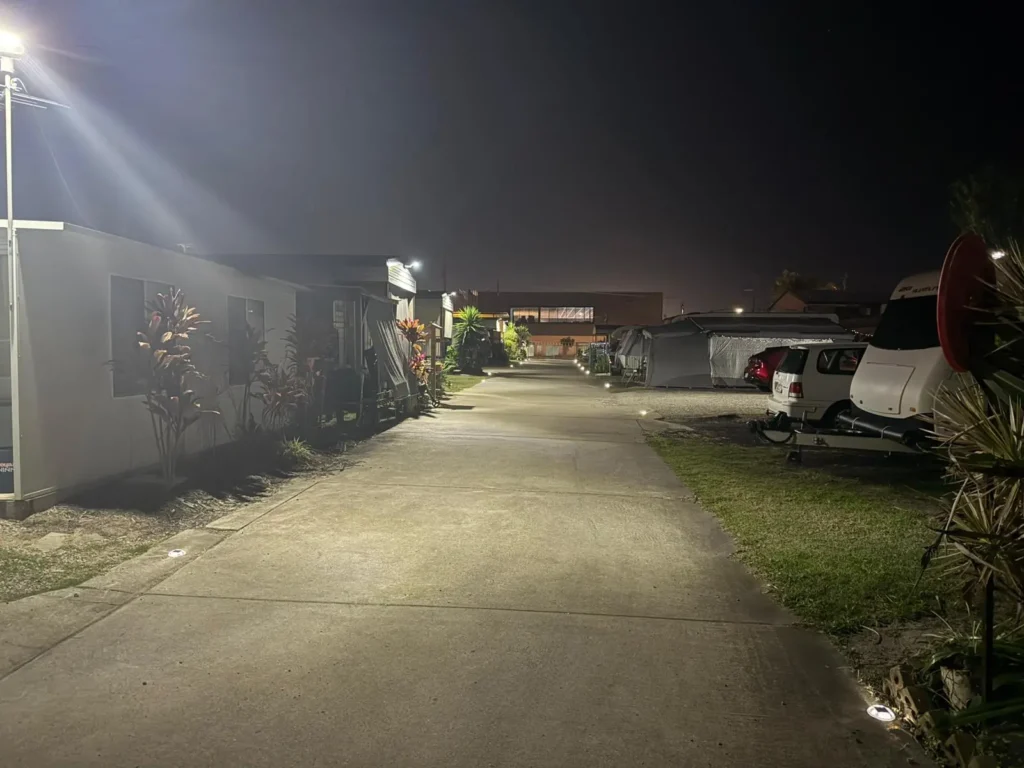
A hybrid of SSL-56 and SSL-59 provides bright illumination for high-traffic areas. Expansion ports connect backup batteries, ensuring uninterrupted service during prolonged rainy periods for resident parking and cargo handling.
The entire implementation took only one week. Simple installation required no trenching or wiring, reducing costs by 30%. On-site results demonstrate seamless integration of streetlights with modern Australian architecture, elevating the community’s aesthetic appeal.
IV. Risk Mitigation Strategies
Despite project success, we proactively addressed potential risks:
-
Rainy-day endurance: Dynamic brightness adjustment via ALS 2.4 algorithm and rain sensor-triggered color temperature switching ensure stable operation.
-
Extreme temperatures: Aluminum alloy + PC materials and TCS system withstand -10°C to 55°C with 99% fault-free performance.
-
Post-installation maintenance: FAS fault self-diagnosis combined with LED screens enables property staff to troubleshoot quickly, reducing maintenance costs by 50%.
These strategies ensure long-term reliability.
Conclusion
The application of SRESKY Alpha Series solar street lights in Australian residential communities not only solves lighting challenges but also sets a benchmark for green, intelligent lighting. For reliable solar street light solutions, visit the SRESKY official website to explore more case studies and technical details.